

 Home



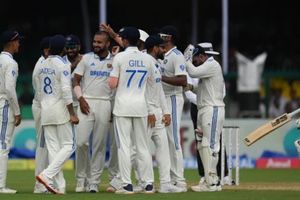
India's star pacer Akash Deep delivered a candid assessment of his team’s opening-day performance in the second Test against New Zealand in Christchurch, acknowledging that the bowling unit let the hosts off the hook after putting them in deep trouble. Speaking at the post-day press conference after New Zealand recovered from 110/4 to finish Day 1 at 246/5, Akash admitted that India 'could have done better' despite putting in a disciplined shift across three sessions.
ADVERTISEMENT
Akash Deep on India's bowling lapse on Day 1
The second and final Test of the two-match series carries immense weight for Shubman Gill’s side, who entered the contest needing to win all six of their remaining matches in the 2025–27 ICC World Test Championship cycle to keep their final hopes alive. After winning the toss on a green-tinged Christchurch surface, Gill elected to bowl first, handing a Test debut to Punjab pacer Gurnoor Brar in place of Prasidh Krishna while keeping senior speedster Mohammed Siraj and veteran all-rounder Ravindra Jadeja out of the playing XI.
The opening session belonged largely to New Zealand’s left-handed opening pair of Tom Latham and Devon Conway. Despite regular movement off the seam and play-and-misses against Jasprit Bumrah and Akash Deep, Latham, bouncing back from a pair of ducks in the first Test at Wellington, and Conway stitched together a steady 77-run stand. Brar provided India with a crucial breakthrough on the stroke of lunch, trapping Conway lbw for 31 off 79 balls to claim his maiden Test wicket and send the hosts into the interval at 77 for one.
The afternoon session saw India’s seamers execute a much tighter plan. Building pressure through maiden overs and disciplined lines, Anshul Kamboj and Akash Deep triggered a dramatic collapse in the space of 17 deliveries. Akash removed the set Latham for 59 off 128 balls, caught behind by Rishabh Pant, before Kamboj dismissed Henry Nicholls (16) on the very next over via a top-edged pull caught at long leg by Akash. Two overs later, Akash induced an edge off Rachin Ravindra for a nine-ball duck, leaving New Zealand reeling at 110/4.
However, India failed to press home their advantage against New Zealand’s lower-middle order. Daryl Mitchell (31) and Tom Blundell weathered the storm with a 74-run partnership for the fifth wicket before off-spinner Washington Sundar had Mitchell caught at leg slip by Dhruv Jurel at 184 for five. From there, Blundell (53 not out) and Glenn Phillips (36 not out) compiled an unbroken 62-run stand through the final session, even navigating the second new ball taken after 80 overs, to steer New Zealand to a position of strength at 246 for five.
We could have done better: Akash Deep
Addressing reporters after stumps, Akash Deep offered a transparent technical explanation for why India’s four-pronged pace attack struggled to make early inroads despite favorable overhead and pitch conditions. According to the Bengal pacer, excessive lateral movement in the morning session inadvertently worked against the bowlers by beating the bat without finding the outside edge.
"Overall, it was a pretty good day, but we could have done better. We knew it was the first day and there was assistance for the bowlers, so we wanted to make the most of it," Akash said after the day's play.
His personal approach centered on maximising the number of deliveries the New Zealand batters were forced to play rather than allowing them to leave comfortably outside off stump.
"My focus was on making the batter play as many deliveries as possible. I bowled five or six overs in my first spell and tried to get the batter playing at 80-90 per cent of the deliveries. It's not easy for a fast bowler to maintain that, because sometimes you try to hit the stumps but your line can drift a little," he explained.
Akash also highlighted the delicate balance required in New Zealand conditions between aggressive wicket-taking and run containment, noting that once a batter survives the initial movement, scoring becomes significantly easier.
"We have to keep the runs down as well, because we don't want to let the opposition get away. We can't always attack; we have to balance that with controlling the scoring. Once a batter gets set, he finds it easier; a new batter finds it difficult. That's how the game goes in these conditions."
Context of India's inexperienced pace attack
Outside of Jasprit Bumrah, who bowled with characteristic thrift (0 for 37 in 19 overs) without luck—India fielded a remarkably green seam unit. With Mohammed Siraj left out of the XI, the supporting cast comprised Akash Deep, Anshul Kamboj, and debutant Gurnoor Brar.
While the trio showed discipline in patches, evidenced by 19 maiden overs collectively bowled by the four fast bowlers—they struggled to sustain relentless pressure at both ends once the ball softened between overs 50 and 80. Kamboj’s economy rate drifted above 3.2 runs per over during the afternoon and evening sessions, allowing Blundell and Phillips to rotate strike freely and punish anything slightly short or overpitched.
From the opposing dressing room, New Zealand wicketkeeper-batter Tom Blundell acknowledged the challenge posed by the Indian attack while emphasizing how crucial the late partnership was for the hosts. "Going to the Indian bowlers, I think they bowled pretty well all day. It was pretty tough out there facing all of them with that nipping ball," Blundell remarked, adding that pushing the first-innings total past 300 on Day 2 would put New Zealand in an ideal position.
What lies ahead on Day 2
With the second new ball only five overs old at stumps, the opening hour of Day 2 presents a decisive window for India. If Jasprit Bumrah and Akash Deep can exploit the fresh lacquer early on Saturday morning to break the Blundell-Phillips stand, India can still restrict New Zealand under 300 and keep the match evenly poised. On the other hand, if the hosts survive the morning burst and extend their total toward 350, India’s batters will face an uphill climb to keep their World Test Championship (WTC) final aspirations alive.
ADVERTISEMENT