

 Home


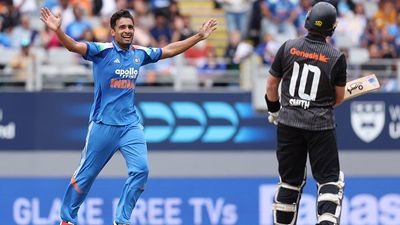
Rightly so Anshul Kamboj was adjudged Player of the Match for his stingy spell in India's five-wicket win over New Zealand in the first ODI, played at the Auckland's Eden Park on October 4. In high-scoring modern ODIs, match-winning bowling displays are often evaluated not merely by wicket tallies, but by the systemic leverage, game control, and relentless pressure a bowler exerts on the match script. India's opening clash of the five-match ODI series against New Zealand at Eden Park, Auckland provided a masterclass in this distinction.
ADVERTISEMENT
While left-arm pacer Arshdeep Singh recorded a headline-grabbing four-wicket haul (4/70), it was 25-year-old Haryana seam bowler Anshul Kamboj who was rightfully adjudged the Player of the Match for his extraordinary figures of 2/22 in 10 overs. Kamboj delivered a spell of suffocating accuracy that dismantled New Zealand's upper order and completely broke the back of their batting line-up on a surface traditionally favorable to run-scoring.
ALSO READ: Virat Kohli breaks Sachin Tendulkar's all-time record for most runs in ODI run chases
Taking the ball as first change, Anshul Kamboj put on an absolute clinic in seam bowling. Rather than striving for outright pace, Kamboj relied on flawless discipline, probing seam movement, and relentless consistency of line and length. Pitching in the hard-to-hit good length zone continuously, Kamboj squeezed the Blackcaps from his first over.
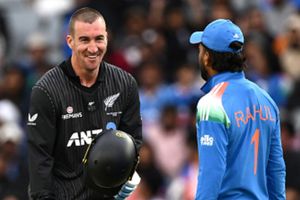
He struck two crucial blows that punctured New Zealand's top order before their innings could find any momentum. Kamboj first removed Kiwi skipper Mitchell Santner (4) with an absolute ripper and then trapped Nathan Smith (1) in the 29th over.
Beyond the two wickets, it was the sustained pressure across his 10-over allotment, which included two maiden overs—that paralyzed the Kiwi batting unit. Operating at an unbelievable economy rate of 2.20, Kamboj ensured New Zealand could never rebuild or accelerate through the middle overs. His spell broke the backbone of their top-order setup, forcing the middle and lower order to play out of their comfort zones.
Joint-Best ODI Spell by an Indian Pacer in New Zealand in 21 Years
Kamboj’s final figures of 10-2-22-2 were not just match-winning; they etched his name into Indian cricketing history. His economy rate of 2.20 in a complete 10-over spell in New Zealand stands as the joint-best performance by an Indian fast bowler in the country over the last 21 years.
India pacer with best economy in an ODI innings since 2005 (10 overs bowled)
| Bowler | Spell | Economy | Opposition | Venue | Date |
| Ashish Nehra | 10-1-22-2 | 2.20 | Sri Lanka | Dambulla | 3 Aug 2005 |
| Ajit Agarkar | 10-1-22-2 | 2.20 | West Indies | Kuala Lumpur (KAO) | 20 Sep 2006 |
| Jasprit Bumrah | 10-1-22-4 | 2.20 | Zimbabwe | Harare | 15 Jun 2016 |
| Anshul Kamboj | 10-2-22-2 | 2.20 | New Zealand | Auckland | 4 Nov 2026 |
Kamboj's West Indies nightmare to Auckland glory
This brilliant performance in Auckland marked a sensational story of redemption for Anshul Kamboj. Just weeks prior, Kamboj endured a nightmarish ODI debut against the West Indies. In that match, he was taken to the task by the Windies batters, conceding 82 runs in his 9 overs without picking up a single wicket. That high-scoring thriller saw the West Indies successfully chase down a massive target of 352 runs, leaving the young pacer under heavy scrutiny regarding his international pedigree.
To step onto Eden Park for his second ODI appearance, put the trauma of his debut completely behind him, and bowl one of the most economical 10-over spells in recent Indian ODI history speaks volumes about his mental toughness and adaptable skill set. Kamboj transformed his approach, tightening his lengths and trusting his natural bounce to script a remarkable turnaround on international cricket's big stage.
Records notched by Anshul Kamboj in the 1st ODI
Most Economical 10-Over Spell by an Indian Pacer in NZ (21 Years): His economy rate of 2.20 (2/22 in 10 overs) is the joint-cheapest 10-over spell by an Indian fast bowler on New Zealand soil in 21 years.
Best Bowling Figures for an Indian Bowler at Eden Park, Auckland: Conceding just 22 runs in a full quota of 10 overs is the most economical completed 10-over spell by any Indian bowler in an ODI match at Auckland’s Eden Park.
Exclusive POTM Club: Kamboj joined a rare list of Indian players to win a Player of the Match award in ODIs without facing a single ball with the bat and taking 2 or fewer wickets.
ALSO READ: Not Hardik, CSK show interest in Livingstone but what could they offer in return?
How was Kamboj's spell different from Arshdeep's?
While Kamboj provided the structural lock, left-arm fast bowler Arshdeep Singh served as India’s strike weapon, picking up four wickets (4/70 in 10 overs).
Arshdeep cleaned up the middle and lower order, ensuring New Zealand were bundled out for a modest total of 185. However, Arshdeep's spell came at an economy rate of 7.00 per over, as batters found success attacking his wider and fuller deliveries. While Arshdeep’s 4-fer was vital in halting New Zealand’s innings prematurely, the adjudicators awarded Player of the Match to Kamboj because his 2/22 fundamentally set up the collapse, suffocated the run rate, and dictated the outcome of the entire match.
I think the key was just consistent length and line: Anshul Kamboj
Speaking at the presentation ceremony after collecting his Player of the Match award, Anshul Kamboj reflected on the technical adjustments and mindset behind his game-changing spell:
"I think the key was just consistent length and line, not thinking about how the wicket is behaving, just the basic plan, bowling on right lines and right areas. I think the wobble seam ball was working very well, so I was using that again and again."
[On preparations for the series] Just working on lengths and good lines, and just looking at the strengths and weaknesses of the batsmen and just working on that."
[On adjusting lengths in New Zealand] No, it doesn't matter, because I also get a good amount of bounce off the wicket as well. So it's like it's only about the length which I am bowling, just focusing on that."
[On assessing conditions] You just have to look at the wicket and see what is happening on the wicket, what is the best ball to bowl, what is the right length to bowl, just focus on that."
How did the match unfold?
The Men in Blue kicked off their ODI tour on a high note, cruising to a comfortable five-wicket victory over New Zealand. India's bowling attack set up the game by bundling out the hosts for a paltry 185, laying the groundwork for a swift run-chase that was wrapped up in less than 23 overs, putting the visitors 1-0 up in the series.
The Black Caps' innings never truly found its rhythm after a sluggish start cost them both Will Young and Henry Nicholls during the powerplay overs. Brief revivals from Tim Seifert (38 off 43) and Daryl Mitchell (28 off 41) flamed out just as they looked dangerous, leaving the batting lineup in serious trouble at 115/7. While Glenn Phillips offered some stability with a patient 30, it was a late, aggressive cameo from tailender Blair Tickner—who smashed 34 off just 23 balls, including four massive sixes—that managed to drag New Zealand up to a total of 185.
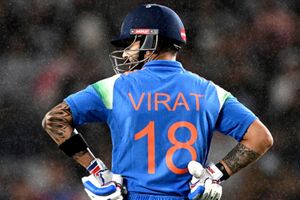
India’s pursuit got off to a rocky start when skipper Rohit Sharma was dismissed for a six-ball duck, but Virat Kohli and Shubman Gill quickly took control of the contest. Even a rain delay—which revised the target to 143 runs from 32 overs—could not stall India's momentum, as Kohli (74 off 51 balls) and Gill (37 off 55 balls) picked up right where they left off to stitch together a decisive century stand. Kohli's explosive half-century ensured that despite a minor flurry of late wickets, India crossed the finish line with five wickets to spare via DLS method.
For the first time in 12 home ODI series, New Zealand lost the opening match of a home series. The last time the Blackcaps dropped a home ODI series opener was back in January 2019 which, coincidentally, was also against India, marking their last overall series defeat on home soil.
Meanwhile, the second ODI will be played on November 7 in Wellington.
ADVERTISEMENT