





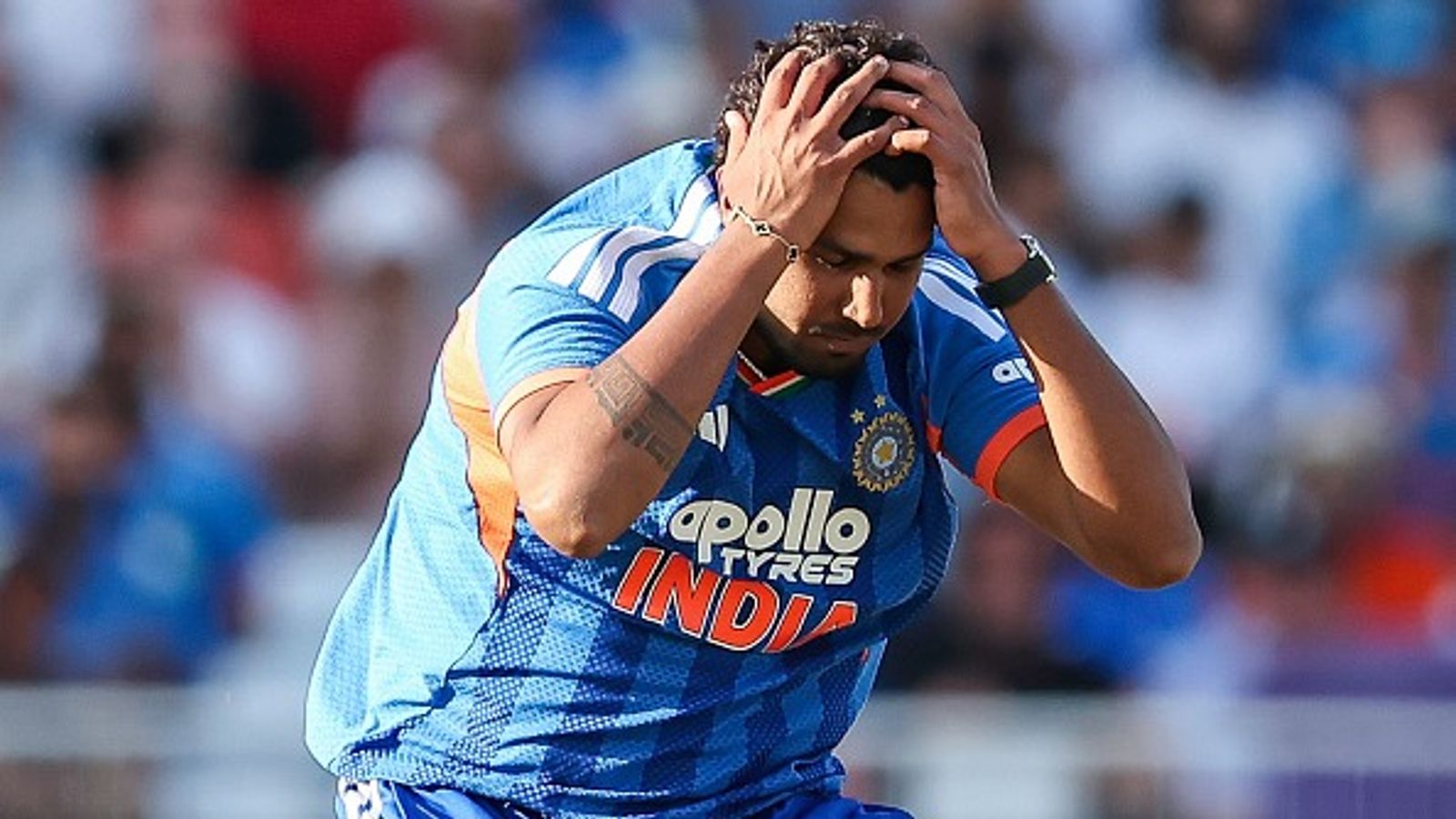
To combat the rising wave of player injuries, the BCCI has reportedly approved a massive funding boost for its Bengaluru-based Centre of Excellence (CoE). The facility's annual allocation has been expanded by roughly Rs 35 crore, raising its operational budget from Rs 92 crore in the last financial year to Rs 127 crore for the current fiscal term.
BCCI's CoE budget swells to Rs 127 crore to address India's injury woes
The high-stakes world of Indian cricket is facing a quiet but severe crisis behind closed doors, a relentless surge of player breakdowns. As per a report by Times of India, over the last 20 months, a staggering 68 Indian players across the men's and women's setups have walked through the doors of CoE in Bengaluru for medical treatment and rehabilitation. What was once considered an occasional injury setback has metastasised into a systemic issue, one that has repeatedly stripped the national team of its biggest superstars ahead of crucial series and continental events.
ALSO READ: Stage set for another India vs Pakistan clash on Diwali, Know tournament, schedule, timings and more
Big stars in the Treatment Room, Big Names, Big series missed
The depth of this crisis becomes glaringly clear when examining the prominent names forced into medical isolation. The Centre of Excellence has evolved into a frequent pitstop for India's premier match-winners.
Rohit Sharma: The veteran opener spent time at the CoE earlier this year undergoing targeted rehabilitation to recover from a recurring hamstring injury.
Virat Kohli: In a rare occurrence, Kohli, long regarded as the benchmark of modern athletic fitness, made his debut visit to the Bengaluru rehabilitation facility this year to manage physical wear and tear.
Jasprit Bumrah & Hardik Pandya: India's primary fast-bowling linchpin and top seam-bowling all-rounder remain regular visitors to the CoE, continually managing physical workloads to prevent catastrophic breakdowns.Rishabh Pant: Pant suffered a fractured foot during the Manchester Test match on the England tour, representing the sole major impact-related structural injury noted among the recent wave of rehabilitation cases.
Prasidh Krishna, Harshit Rana, Nitish Kumar Reddy, Washington Sundar:
A vast pool of frontline and emerging bowling options, including fast bowlers Prasidh Krishna and Harshit Rana alongside seam all-rounder Nitish Kumar Reddy and spin-allrounder Washington Sundar, have frequented the facility to address lower-body and workload-induced issues.
| Player Name | Primary Injury Nature | Management Context |
| Rohit Sharma | Hamstring strain | Underwent CoE rehab earlier this year |
| Rishabh Pant | Foot Fracture | Impact injury during Manchester Test |
| Virat Kohli | Wear-and-tear management | First-time CoE rehab visit this year |
| Jasprit Bumrah | Workload/Seam-stress | Regular CoE visitor for preventive rehab |
| Hardik Pandya | All-rounder physical load | Frequent CoE physical conditioning user |
| Prasidh Krishna | Pace-bowling soft-tissue | Recurrent fast-bowling rehabilitation |
| Harshit Rana | Pace-bowling strain | Ongoing monitor & recovery at CoE |
| Nitish Kumar Reddy | Seam-all-round stress | Targeted recovery protocol at CoE |
ALSO READ: New Zealand batter with 10,432 runs in red-ball cricket retires from professional cricket
Going by the report, the overwhelming majority of the 68 player cases involved soft-tissue injuries—strains, tears, and inflammation affecting muscles, tendons, and ligaments. Unlike impact injuries, which stem from field collisions or ball strikes, soft-tissue breakdowns are almost exclusively linked to fatigue, schedule congestion, and improper workload management.
Medical visits to the Bengaluru facility surged dramatically following the conclusion of the IPL 2026 season. The grueling two-month, high-intensity tournament schedule, coupled with constant travel, left a majority of India's top stars physically compromised just as crucial international assignments approached.
Team Management Under Fire: Scrutiny on Gambhir, Gill, and Selection line
The frequent breakdown of key match-winners has placed head coach Gautam Gambhir and captain Shubman Gill directly under the spotlight. Critics and former players have openly questioned whether the national setup's fitness standards, rotational policies, and workload protocols are fit for purpose.
THE INJURY CRISIS IN NUMBERS
• 68 Total Players Treated (Past 20 Months)
• 32 Top Men's Cricketers Treated (Past Year)
• Rs 127 Crore New CoE Budget (Up from ₹92 Crore)
• Primary Culprit: Soft-Tissue Strains & Fatigue
Former Indian opener Wasim Jaffer publicly aired these concerns, questioning the management's selection criteria and squad rotation regarding experienced pacers like Mohammed Shami and Mohammed Siraj. Jaffer argued that ignoring battle-hardened options like Shami, who offers proven resilience in Test and ODI formats, places an unbearable burden on Jasprit Bumrah. Leaving top pacers on the sidelines while active starters repeatedly break down has triggered widespread debate over whether India's player-management system is failing to protect its most valuable assets.
The BCCI’s Response: A Rs 35 Crore budget surge
Faced with growing alarm from Gambhir and Gill, the BCCI has taken defensive action.
Massive Budget Expansion: The board increased the CoE's annual operating budget by nearly ₹35 crore, elevating its total funding from ₹92 crore in the previous financial year to ₹127 crore.
Search for Sports Science Leadership: Recognising the need for top-tier medical expertise, the BCCI invited applications for a full-time Head of Sports Science and Medicine at the CoE. Currently, Dhananjay Kaushik oversees operations under the supervision of CoE chief VVS Laxman.
Why Team India need to address injury riddle ahead of ODI World Cup 2027?
With the ODI World Cup 2027 approaching in South Africa, Zimbabwe, and Namibia, structured injury management is no longer an option for Team India, it is an absolute necessity. The recent surge in player breakdowns, which saw 68 players receive treatment at the BCCI CoE over a 20-month span, serves as a glaring warning. When core match-winners like Jasprit Bumrah, Hardik Pandya, and Rohit Sharma suffer recurring soft-tissue injuries or structural setbacks, the national team’s tactical stability and long-term planning are thrown into chaos.
A successful 50-over World Cup campaign demands sustained physical endurance. Unlike short-format T20s, ODI cricket places immense physical strain on pacers and all-rounders, requiring long spells, heavy workloads, and sharp multi-day turnarounds. If India’s primary fast-bowling unit and top-order stars enter a high-stakes tournament carrying chronic fatigue or unmanaged strains, the risk of mid-tournament structural failure increases dramatically.
To build a World Cup-winning squad, Indian team management alongside head coach Gautam Gambhir must execute a proactive, scientific workload monitoring protocol.
Strict IPL workload rotation: Monitoring bowling overs, high-intensity fielding loads, and recovery protocols for central-contracted players during IPL seasons.
Format-Specific Rotation: Resting multi-format fast bowlers and key all-rounders during non-essential bilateral series to prevent soft-tissue wear and tear. Building Dynamic Bench Depth: Integrating experienced pacers and reliable backup options into regular playing XIs to avoid over-exerting the primary bowling unit.
By increasing the CoE's sports science budget to ₹127 crore, the BCCI has provided the necessary infrastructure. While financial investment in facilities provides immediate relief, the core question remains: unless international calendars and player workloads are actively regulated, money alone cannot stop India's stars from collapsing under the strain of modern cricket.