





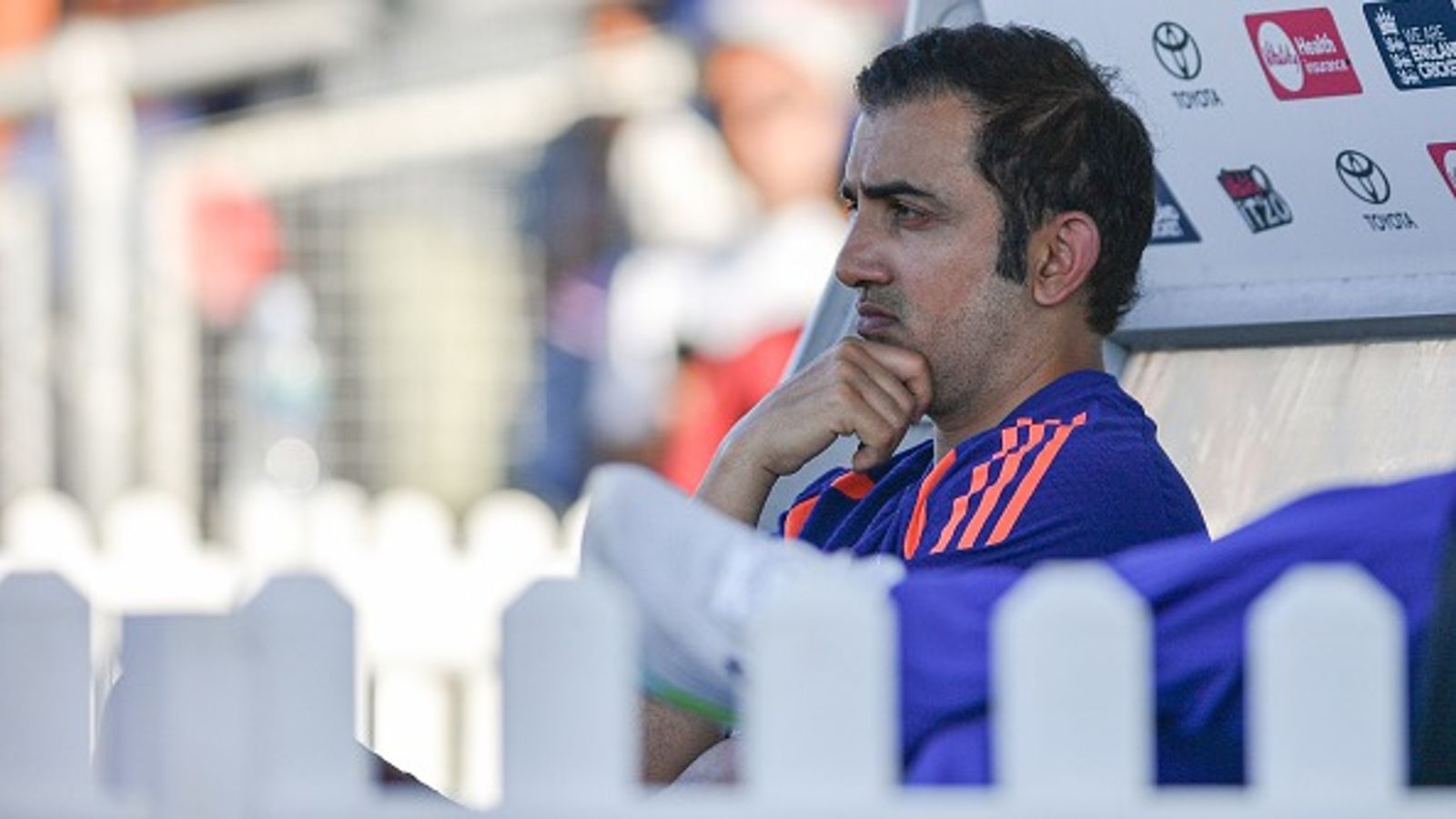
Following India’s six-wicket defeat against West Indies in the second T20I at the JSCA Stadium, head coach Gautam Gambhir addressed the media, shedding light on the team's strategic decisions and reinforcing his philosophy on squad management in the shortest format of the game. A significant talking point from the match was India's experimental batting order, particularly the decision to promote hard-hitting all-rounder Shivam Dube to the no.4 position. While the move did not yield the desired result on this occasion, Gambhir stood firmly behind the decision, using the opportunity to reiterate a core tenet of his coaching philosophy: in T20 cricket, flexibility is paramount, and only the opening slots are permanent.
ALSO READ: Star New Zealand bowler ruled out vs India Test and ODI series; Targets comeback in…
Why Gambhir said 'only openers' spots are permanent' after India's rout vs WI?
The decision to send Dube in at No. 4 came after the fall of opener Ishan Kishan. In a surprise tactical shift, instead of sending in the in-form captain Shreyas Iyer, the team management opted for Dube to counter the middle-overs phase. However, the all-rounder struggled to find his rhythm, laboring to a subdued seven runs off 10 balls before becoming off-spinner Roston Chase's third victim of the innings. The sudden loss of momentum in the middle overs proved costly for the visitors, allowing the West Indies to claw their way back and eventually seal a comfortable six-wicket victory.
Despite the setback, Gambhir was quick to defend the team's tactical blueprint, emphasizing that Dube’s promotion was not a knee-jerk reaction to a shifting match situation, but rather part of a well-established template.
"We have used him like this for a long time, including during the World Cup and before it. It is not as though this was a one-off decision today," Gambhir stated during the post-match press conference.
The coach acknowledged the unpredictable nature of top-flight sport, noting that execution does not always align with intent.
"This is international cricket. Sometimes things go your way, and sometimes they don't," he added.
Gambhir also highlighted the broader risk-reward balance associated with such tactical gambles. While pointing out that India lost crucial momentum on the night, he reminded critics that this very approach had previously yielded significant rewards for the side.
"We lost momentum today, but we have also gained a lot of momentum by sending him in at No. 4, where he has taken on the opposition bowlers," he explained, pointing to Dube’s ability to act as an enforcer against spinners and pace alike when the strategy clicks.
Expanding on his overarching vision for the side, Gambhir drove home the point that rigidity has no place in modern T20 internationals. He underlined that the team management's priority is maximising match-ups and situational awareness rather than locking players into fixed batting slots.
"More importantly, I think we have always been flexible with our batting order, and we will continue to do that," Gambhir asserted. Defining the framework clearly, he added, "I have always said since taking over that in T20 cricket, only the openers are permanent. The rest of the batting order should remain flexible."
As India looks to regroup ahead of the remainder of the series, Gambhir’s stance makes it clear that the team will not abandon its fluid approach due to a single defeat. By backing strategic flexibility and trusting players in unconventional roles, the coaching staff aims to build a dynamic, adaptable squad capable of handling diverse match conditions and opposition tactics moving forward.
West Indies make mincemeat of Indian bowlers
The Indian bowling attack endured a brutal night in Ranchi, receiving a thorough belt treatment from a relentless West Indies batters, especially Shai Hope. Defending a formidable total of 249/5, the Indian bowlers looked entirely helpless under heavy dew and on a flat surface as the Caribbean batters pulverised them to script the second-highest successful run-chase in T20I history, overhauling the target with nine balls to spare (252/4 in 18.3 overs).
Despite a couple of early strikes from pace spearhead Mayank Yadav, who removed the openers inside the powerplay with raw pace, the rest of the bowling unit was subjected to an unrelenting onslaught. Mayank finished as the pick of the Indian bowlers with respectable figures of 3/36.
The sheer scale of the Caribbean carnage was laid bare in the match figures, as every single member of the Indian bowling unit was taken to the cleaners. Even Arshdeep Singh, who finished with the side’s most 'economical' figures on a night to forget, went wicketless while leaking 45 runs from his four overs at an economy rate of 11.25. The day proved even more grueling for primary spinner Axar Patel, who endured an absolute nightmare with the ball. Axar ended up as the most expensive bowler of the innings, giving away a staggering 63 runs in his four-over quota without finding a single breakthrough. India's supporting and part-time options offered virtually no cushion against the relentless assault. All-rounder Shivam Dube was hit for 30 runs in his brief two-over stint, while Naman Dhir surrendered 25 runs across his two overs. Premier wrist-spinner Kuldeep Yadav managed to break through once, but even he could not stem the flow of runs, finishing with figures of 1/53 in four overs as Shai Hope and his partner repeatedly sent the leather flying into the stands.
Shai Hope's carnage-filled knock rocks India
The centerpiece of this destruction was West Indies captain Shai Hope, who played a masterclass of an innings. Hope launched a ferocious assault on the Indian attack, striking a blistering, unbeaten 102 off just 45 balls, punctuated by six boundaries and nine towering sixes. Whether it was pace or spin, Hope treated every bowler with equal disdain, racing to his half-century in just 24 balls before bringing up his second T20I hundred with a massive hit off Axar Patel. Hope found a devastating partner in Sherfane Rutherford, who smashed a 37-ball 84 (featuring seven fours and seven sixes). Together, the duo stitched a breathtaking 120-run partnership off just 54 balls, reducing world-class Indian bowlers to mere spectators. Fielders dropped catches under pressure, bowlers missed their lengths, and captain Shreyas Iyer ran out of tactical answers as Hope and Rutherford plundered the attack all over the park. Romario Shepherd added a quickfire cameo (34 off 13) to finish off the game, leaving the Indian bowling unit utterly defenceless on a night to forget.