




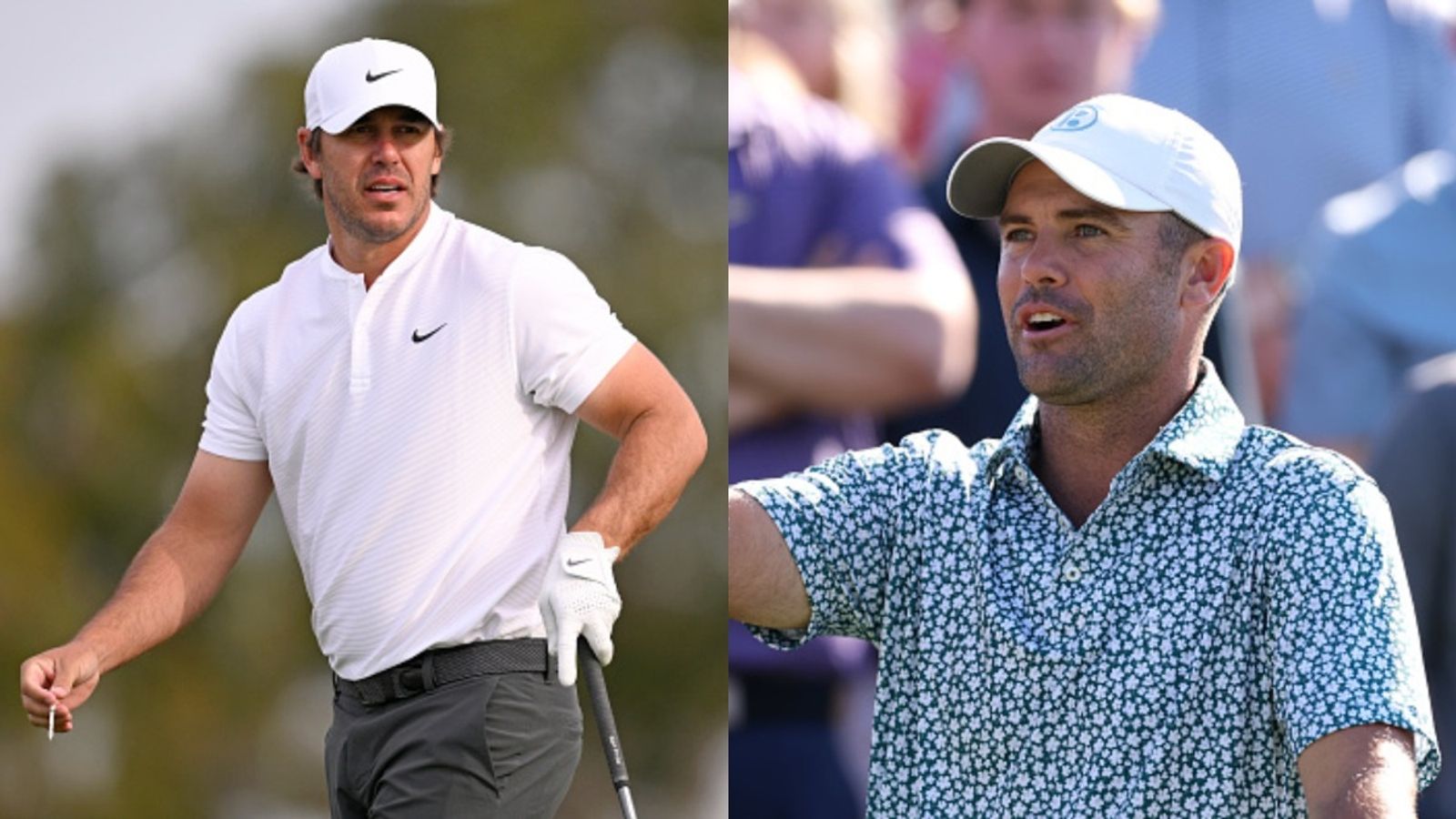
Wesley Bryan’s uncertain standing with the PGA Tour has come back into focus following Brooks Koepka’s reinstatement, but contrary to fan speculation, the former insists that the high-profile return does little to alter his own situation.
Brooks Koepka’s return sparks comparisons
Koepka’s path back to the PGA Tour has reignited debate around consistency in disciplinary decisions, especially for players with past LIV Golf affiliations.
His reinstatement has led many observers to question whether similar leniency could extend to others who stepped outside traditional Tour boundaries. Bryan, however, has been clear that such comparisons do not apply to his case.
“Appreciate all the support recently,” Bryan said. “Unfortunately, Brooks Koepka coming back to the tour has no bearing on my situation.”
The statement underscores a key distinction in how the PGA Tour is handling individual cases, even as broader conversations around reconciliation and player mobility continue to evolve.
Why Wesley Bryan’s case stands apart
Bryan’s indefinite suspension stems from his participation in LIV Golf’s “The Duels” event in Miami, a YouTube-driven competition that featured LIV players and golf content creators in a scramble-style format.
The event was published on Grant Horvat’s YouTube channel and was deemed unauthorized by the PGA Tour at the time, triggering disciplinary action that escalated from probation to suspension.
Unlike traditional LIV Golf tournaments, “The Duels” blurred the line between entertainment and professional competition—an area where Tour policies have shown little flexibility.
Wesley Bryan’s involvement, while commercially aligned with the modern content ecosystem, placed him squarely at odds with existing Tour regulations.
Appeal process remains the focus
Despite Brooks Koepka’s reinstatement, Bryan has reiterated that his next steps remain unchanged. He plans to appeal the suspension, framing the issue as one of process rather than protest.
His measured public stance reflects an understanding that reinstatement decisions are handled individually, not as part of a blanket shift in policy.
Wesley Bryan’s situation highlights the ongoing friction between golf’s traditional governance structures and the rapidly growing influence of creator-led events.
While Koepka’s return signals a willingness by the Tour to reopen doors under certain conditions, Bryan’s case suggests that participation in unauthorized content-driven events still carries significant consequences.
A broader implication for modern golf
As professional golf continues to navigate its evolving landscape, Bryan’s fate may become a reference point for how far the Tour is willing to adapt.
For now, Brooks Koepka’s reinstatement may symbolize progress—but for Wesley Bryan, the road back remains unchanged and uncertain.