




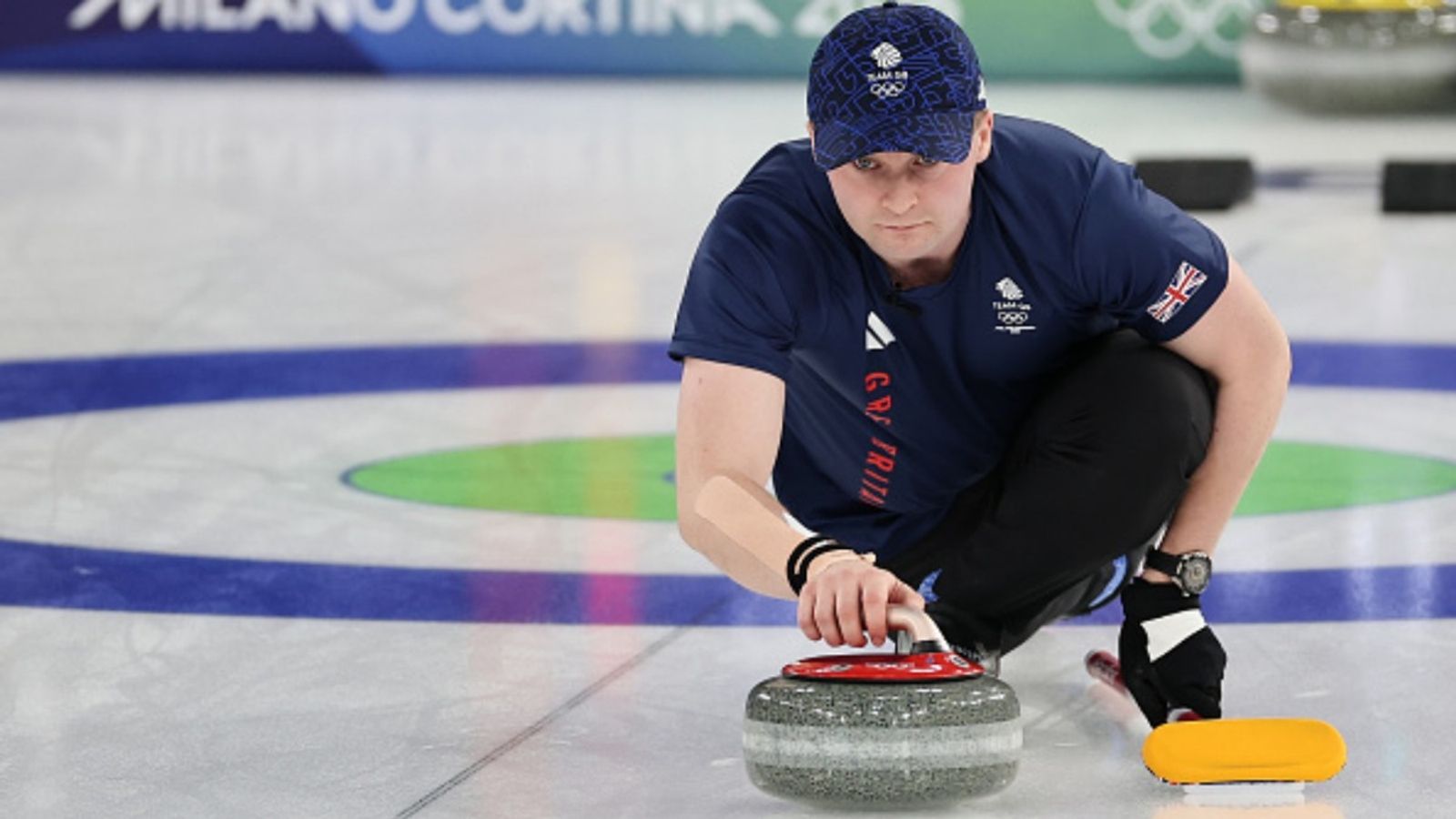
As the 2026 Winter Olympics in Milan-Cortina get underway, curling once again commands attention, especially with Team GB emerging as one of the strongest medal contenders.
After securing both of Great Britain’s medals at the Beijing Winter Games, expectations are high for another strong showing from the Scottish-led contingent. With interest in the sport surging, understanding how curling works has never been more relevant.
What is Curling and how is it played?
Curling is contested on a sheet of ice measuring just over 45 metres in length. Two teams take turns sliding polished granite stones, each weighing around 20 kilograms, toward a circular target known as the “house.”
The objective is simple in theory: finish with more stones closer to the center of the house—the “button”—than the opposition.
Often described as “chess on ice,” curling blends precision, strategy, and teamwork. At the Olympic level, competition takes place in men’s, women’s, and mixed doubles events, each with slightly different formats.
How a Curling match is won
Matches are divided into rounds called “ends.” Men’s and women’s Olympic matches consist of 10 ends, with teams throwing eight stones per end—two per player.
Only one team can score in an end, earning one point for each stone closer to the button than the opponent’s nearest stone. If no stones remain in the house, the end is considered blank and no points are awarded.
Mixed doubles follows a faster-paced structure, with each team delivering five stones per end and one pre-positioned stone placed in the house before play begins.
Player positions and the importance of the hammer
Each four-player team features a lead, second, third, and fourth—also known as the skip, who acts as captain and strategist. Players throw in that order, alternating with their opposite number.
A crucial advantage in curling is the “hammer,” which gives a team the right to throw the final stone of an end. The hammer is determined before the match by a last-stone draw and typically passes to the opposing team after a score.
Why sweeping matters
Sweeping plays a vital role in controlling a stone’s speed and movement. By brushing the ice, players slightly warm and smooth the surface, allowing the stone to travel farther or curl less.
Elite sweepers can influence a stone’s path by up to several metres, making sweeping a physically demanding and highly specialized skill.
Mixed doubles and the power play
In mixed doubles, teams may use one “power play” per game while holding the hammer. This tactical option allows stones to be repositioned before an end, creating opportunities for higher-scoring situations. Power plays cannot be used in extra ends, adding another layer of strategy.
As curling continues to captivate audiences at Milan-Cortina 2026, its blend of tactics, teamwork, and precision remains at the heart of Olympic winter sport.