




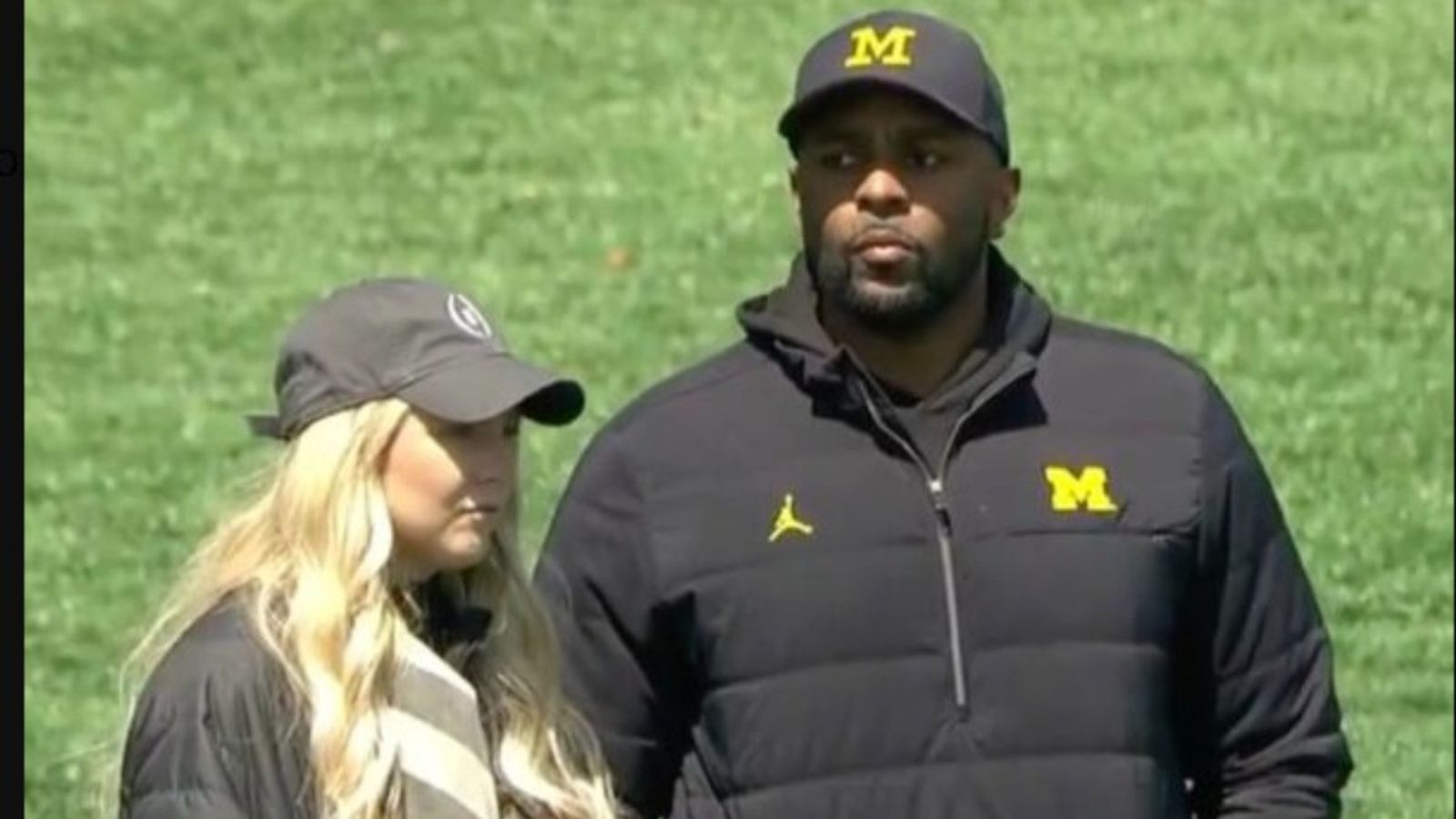
Fresh revelations have surfaced surrounding former Michigan Wolverines coach Sherrone Moore, as ex-staffer Paige Shiver spoke publicly for the first time about their controversial relationship. Her statements have reignited scrutiny over the circumstances that led to Moore’s dismissal and the university’s response.
Paige Shiver speaks out publicly
In an interview on “Good Morning America,” Shiver detailed the personal and emotional challenges she faced during her relationship with Moore. The 32-year-old revealed that she became pregnant during their time together, adding a new dimension to an already complex situation.
According to reports, she was advised that it “wouldn’t be right or healthy for me to keep the baby” due to a medical condition. The disclosure has intensified questions around the handling of the situation by all parties involved.
Allegations of emotional strain
Shiver also described the difficulties she encountered in trying to end the relationship. She claimed that Sherrone Moore repeatedly convinced her to stay, despite her attempts to walk away.
“I couldn’t leave him because he was so miserable without me,” Paige Shiver said.
She further added that Moore “always had a story, always had a way to pull me in and (make) me feel bad,” pointing to what she described as a pattern of emotional pressure.
Incident that escalated concerns
The situation escalated in December when Moore allegedly entered Shiver’s apartment following his dismissal from the university. Shiver stated that she feared for her safety during the incident, which ultimately led to Moore’s arrest.
He faced multiple charges, including felony home invasion, after reportedly threatening to harm himself. The case was later resolved through a plea deal, allowing Moore to avoid jail time.
Fallout and institutional response
Sherrone Moore was officially fired by the university on December 10 after the relationship became known. However, Paige Shiver expressed dissatisfaction with how the situation was handled, suggesting that stronger action should have been taken.
Her public comments have now brought renewed attention to the case, raising broader concerns about workplace relationships, accountability, and institutional responsibility in collegiate athletics.
As the story continues to unfold, the latest revelations add further complexity to an already high-profile controversy.