

 Home


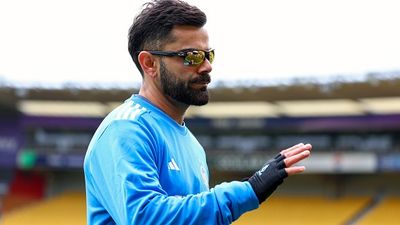
Few voices carry the moral and cricketing authority in Indian sport that Kapil Dev commands. When the architect of India’s 1983 World Cup triumph speaks on the sanctity of Test cricket, the dressing room, the selectors, and millions of supporters pay attention. Just days before India take the field against New Zealand at the Basin Reserve in Wellington for the opening match of their two-Test series on November 19, 2026, Kapil Dev reignited one of Indian cricket’s most emotional debates, Virat Kohli’s decision to walk away from the five-day format.
ADVERTISEMENT
Why Kapil Dev believes Virat Kohli will regret his Test retirement
"I think Virat Kohli made the biggest mistake. He retired from Test cricket. He will regret his decision after 10 years. He should not have retired. Kohli has fitness on his side, and his fitness is far better than any other player," Dev told Mid-Day.
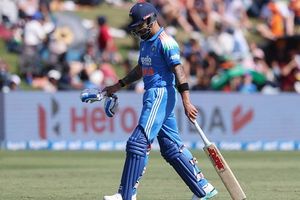
Coming on the heels of a grueling white-ball leg in New Zealand, which concluded with India’s 22-run win in the fifth ODI at Tauranga on November 15, where Kohli was dismissed for 5, the timing of Kapil’s remarks could not be more poignant. While Kohli remains active in One-Day Internationals, his absence from the red-ball squad preparing for seaming, wind-swept conditions in Wellington and Christchurch serves as a stark reminder of a chapter that closed far earlier than many thought necessary.
ALSO READ: RCB skipper Patidar whacks 13 sixes in maiden SMAT century, takes MP to 250/6 with 48-ball 135
Kohli announced his retirement from Test cricket on May 12, 2025, at the age of 36. His final appearance in whites had come four months earlier at the Sydney Cricket Ground on January 3, 2025, bringing the curtain down on a glittering 123-Test career that yielded 9,230 runs at an average of 46.85. On paper, those numbers guarantee immortality in the pantheon of modern batting. Yet, for purists and former greats like Kapil Dev, the abruptness of the exit felt jarring, especially for a cricketer who spent over a decade evangelizing Test cricket as the ultimate crucible of athletic and mental endurance.
Kapil’s critique is rooted not in sentimentality over statistical milestones, such as the elusive 10,000-run mark—but in an assessment of physical capability and competitive longevity. Across his own 131-Test career between 1978 and 1994, Kapil bowled 27,740 deliveries, claimed 434 wickets, and scored 5,248 runs without missing a single match due to injury. To a fast-bowling all-rounder who built his legacy on relentless durability, walking away while possessing peak physical conditioning represents a squandered gift.
In Kapil’s eyes, Kohli played a big role in transforming the the fitness culture of Indian cricket, turning himself into an athlete capable of matching competitors over a decade his junior. When players of previous generations retired in their mid-thirties, it was almost invariably because their knees, backs, or reflexes could no longer withstand the five-day grind. Kohli faced no such biological ultimatum. By stepping away while still possessing superior stamina and agility, Kohli, in Kapil's view, denied himself the final, deeply rewarding act of a great Test career.
Earlier in the year, Kapil suggested that Kohli had allowed frustration and anger to dictate a permanent career choice rather than riding out a turbulent phase. Following a lean patch with the bat during the 2024–25 Border-Gavaskar Trophy in Australia and shifting dynamics within the Indian team setup, speculation swirled around selection pressures and transition plans.
Kapil’s prescription for any champion facing scrutiny or a dip in form has remained consistent across decades: step back, absorb the blow, and return to domestic cricket to force the door open again. He pointed to stalwarts of his own era, such as Mohinder Amarnath and Anshuman Gaekwad, who repeatedly endured the humiliation of being dropped, went back to the Ranji Trophy, piled on runs, and reclaimed their Test berths with renewed authority.
"If the selectors did not pick you, no problem. Give yourself some time. If the captain did not pick you, no problem. Work hard and score more runs, like Mohinder Amarnath, Anshuman Gaekwad and others did. They went back and scored runs in domestic cricket," Kapil had earlier told Sports Tak.
From Kapil’s perspective, the modern superstar ecosystem sometimes insulates elite players from the humbling grind of domestic comebacks. Rather than risking the perceived indignity of being omitted from a touring squad or grinding out centuries in front of sparse domestic crowds, players opt for the finality of retirement. Kapil has repeatedly argued that pride and immediate frustration are poor counselors when making irreversible decisions—and that ten years down the line, once the noise of dressing-room politics and media scrutiny fades, the realisation of what was left on the table inevitably sets in.
ALSO READ: India named sole hosts for Champions Trophy 2029, co-hosts for 2031 World Cup 2031
What India misses ahead of New Zealand Tests
Under the captaincy of Shubman Gill, a transitional Indian side is gearing up to face Tom Latham’s New Zealand in a challenging two-Test series starting November 19 in Wellington, followed by the second Test in Christchurch on November 27.
navbharatlive.com
New Zealand remains one of the most unforgiving environments in world cricket for visiting batters. The combination of brisk crosswinds at the Basin Reserve, green-tinged pitches that offer seam movement throughout the day, and a disciplined Black Caps pace attack led by Matt Henry, Kyle Jamieson, and Jacob Duffy tests every technical and psychological flaw. India’s current squad features a promising blend of young stroke-makers—including Yashasvi Jaiswal, Sai Sudharsan, Devdutt Padikkal, Dhruv Jurel, and Nitish Kumar Reddy—alongside senior pillars like KL Rahul, Rishabh Pant, Ravindra Jadeja, and Jasprit Bumrah.
In such testing overseas conditions, Kohli’s value extended far beyond his cover drive or his runs tally. His presence at number four acted as a psychological shield for younger batters around him. Opposing bowlers spent hours plotting his dismissal, inadvertently relieving pressure on the rest of the order. Furthermore, his energy in the slip cordon and his relentless intensity in the field often dictated the tempo of a session when the ball went soft. Watching a young Indian batting unit prepare for the rigors of Wellington without its fiercest modern competitor underscores why Kapil believes Kohli’s exit left a void that cannot be filled overnight.
What triggered Kohli's decisison?
But there is an equally compelling counter-perspective regarding the timing of Kohli’s exit. Between 2020 and early 2025, Kohli’s Test average dipped considerably from his peak fifties into the low thirties, plagued by a recurring vulnerability outside the off-stump that opposing seamers—particularly in England, South Africa, and Australia—exploited with precision.
For five years, team management backed him through prolonged lean spells on the strength of his pedigree and past service. By early 2025, with a new World Test Championship cycle beckoning and a generation of domestic run-scorers knocking loudly on the door, Indian cricket stood at a natural crossroads. Had Kohli stayed on, every low score would have amplified calls for him to be dropped, potentially tarnishing the dignity of one of the finest careers in the sport's history.
Moreover, unlike players of the 1980s, modern three-format icons carry a cumulative mental fatigue that fitness metrics alone cannot measure. Fifteen years of relentless international travel, franchise commitments, and suffocating public scrutiny take an invisible toll. Walking away from Test cricket allowed Kohli to extend his longevity in ODIs, such as the recently concluded series in New Zealand, and preserve his hunger for white-ball tournaments without the grueling five-day physical and mental attrition.
Whether Kohli will indeed look back a decade from now with a pang of regret, as Kapil Dev predicts, only time will tell. For now Team India is gearing up for the two-match Test series against New Zealand, which is scheduled to get underway from November 19.
ADVERTISEMENT