

 Home


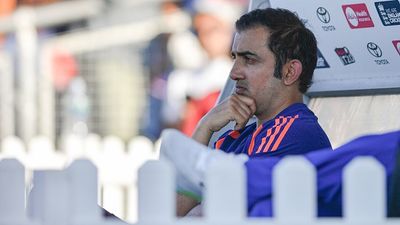
India’s 3-2 T20I series win on New Zealand soil ought to have been a moment of quiet satisfaction. Winning an overseas white-ball series in New Zealand is no small feat, particularly given the brutal travel schedules and transitional squad dynamics. Yet, following India’s deflated seven-wicket loss in the fifth and final T20I at Hamilton's Seddon Park, where a porous bowling unit failed to defend 191 runs and conceded the target with 12 balls to spare, head Coach Gautam Gambhir tackled the mounting pressure head-on. In a raw, uncharacteristically introspective session, Gambhir opened up about the personal and operational demands of managing India across tests, ODIs, and T20Is simultaneously, while defending his team’s overall trajectory amidst relentless scheduling.
ADVERTISEMENT
Ready to take bullet: Gambhir opens up on demands of his head coach role
The modern cricket calendar leaves little breathing room, and for an Indian head coach overseeing all three formats, the scrutiny is instant and unyielding. Every loss triggers a inquest; every series victory is quickly archived in favor of the next immediate challenge.
Reflecting on the psychological and physical toll of maintaining high standards across contrasting formats, Gambhir issued a defiant yet vulnerable statement regarding his workload.
"I am ready to take the bullet. It gets tough. I am also human, but I am up for the challenge, and that's my job," Gambhir said at the post-match press conference.
The logical evidence supporting Gambhir's candid admission lies in the sheer volume of cricket India has played since his appointment. Navigating back-to-back red-ball assignments and rapid-fire white-ball series requires constant squad rotation, distinct tactical blueprints, and relentless travel across time zones.
When a secondary bowling line-up bleeds runs, as seen in Hamilton where no Indian bowler managed an economy rate below 9.50, the public and media arrows point directly at the management. Gambhir’s willingness to absorb that criticism serves a dual purpose. It shields a young, evolving squad from outside noise while acknowledging that high-performance coaching does not make one immune to burnout or frustration.
Gautam Gambhir's praise for Shreyas Iyer
Despite the sour note of the fifth T20I, Gambhir was quick to contextually frame the series win, drawing attention to the broader canvas of India’s achievements in testing conditions. With senior mainstays rested or recovering from injuries, the burden of leadership in the shortest format fell on Shreyas Iyer, who skippered a largely inexperienced bowling attack.
Praising Iyer’s leadership and the squad’s sheer grit at the start of the tour, Gambhir stated:
"Shreyas Iyer has done a phenomenal job with an inexperienced bowling attack after the World Cup. Against challenging oppositions in challenging conditions. The way our boys handled pressure, winning the first game after a 15-hour flight and one practice session was commendable."
The evidence backing Gambhir’s praise is grounded in the reality of the tour's opening leg. India landed in New Zealand following a grueling 15-hour flight, stepped onto the field in Auckland with virtually no turnaround time or acclimatisation, and immediately pulled off a high-octane victory.
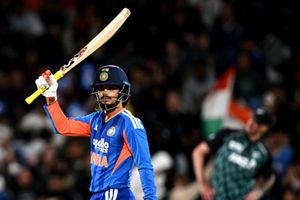
Under Iyer's captaincy, an attack lacking experience managed to hold its nerve in high-scoring affairs across the first three games to seal the series 3-0 early. Iyer himself led from the front with the bat, scoring a fiery 23-ball 50 in the fifth T20I to top-off the series. For Gambhir, focusing solely on the defensive collapse in the fifth T20I ignores the structural resilience his side displayed when contextually up against the wall.
ALSO READ: Rishabh Pant ruled out of third unofficial Test against New Zealand amid cautious recovery
3-day prep for red ball is not important: Gambhir on BCCI's scheduling
One of the recurring pain points of modern Indian cricket is the friction between commercial scheduling and ideal match preparation. As India constantly transitions between subcontinental conditions, overseas T20Is, and grueling Test series, coaches are often forced to prepare teams on the fly. India will now play a five-match ODI series against New Zealand, which will be played from November 4 to November 15. They will then play a two-match Test series, which will get underway from November 19.
Gambhir did not mince words when asked about squad logistics and the adequacy of prep time before major Test assignments:
"Planning is done at BCCI level. Prioritising is important. Every match for country is important. Three day prep for red ball is not important. 8-9 days will be good."
Gambhir’s critique targets a well-documented issue in modern international cricket: the compression of preparation windows. Historically, touring Indian sides were afforded warm-up matches and a week-to-ten-day acclimation block to adjust to the extra bounce and seam movement of foreign pitches. In the current era, multi-format players are often expected to swap white balls for red within 72 hours.
By explicitly stating that a "three-day prep for red ball is not important" compared to an optimal "8-9 days," Gambhir highlighted the structural limitations imposed on his coaching staff. While every international fixture carries national pride and commercial weight, short-changing the red-ball preparation window leaves the side vulnerable against elite Test nations—a vulnerability Gambhir is actively lobbying the BCCI to rectify in future scheduling cycles.
How did the IND vs NZ 5th T20I unfold?
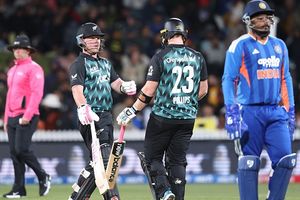
Opting to bat first, India posted 191/8 in 20 overs, driven by explosive half-centuries from Ishan Kishan (61 off 32) and skipper Shreyas Iyer (50 off 23). The pair shared a century stand to set a strong platform, but New Zealand pulled the game back effectively. Adam Milne produced a fiery spell of fast bowling, taking 4/19 in his 4 overs to break India's momentum. Chasing 192, the Black Caps raced to victory in just 18 overs. Tim Seifert anchored the chase with a blistering 93 off 50 balls (11 fours, 5 sixes), while Glenn Phillips provided imperious support with an unbeaten 65 off 38 balls. Together, the duo dismantled the Indian attack, taking down both pace and spin with absolute control. It was a tough outing for the Indian bowling unit, which proved deflated and unable to apply pressure on the batters. The bowlers leaked runs throughout the innings, with every Indian bowler recording an economy rate of 9.50 or higher—Nitish Kumar Reddy (9.50), Arshdeep Singh (10.00), Bhuvneshwar Kumar (10.25), Varun Chakaravarthy (11.25), Prince Yadav (11.67), and Abhishek Sharma (13.00).The defeat exposed critical flaws in India's bowling depth, though India takes home the series trophy 3-2.
ADVERTISEMENT