




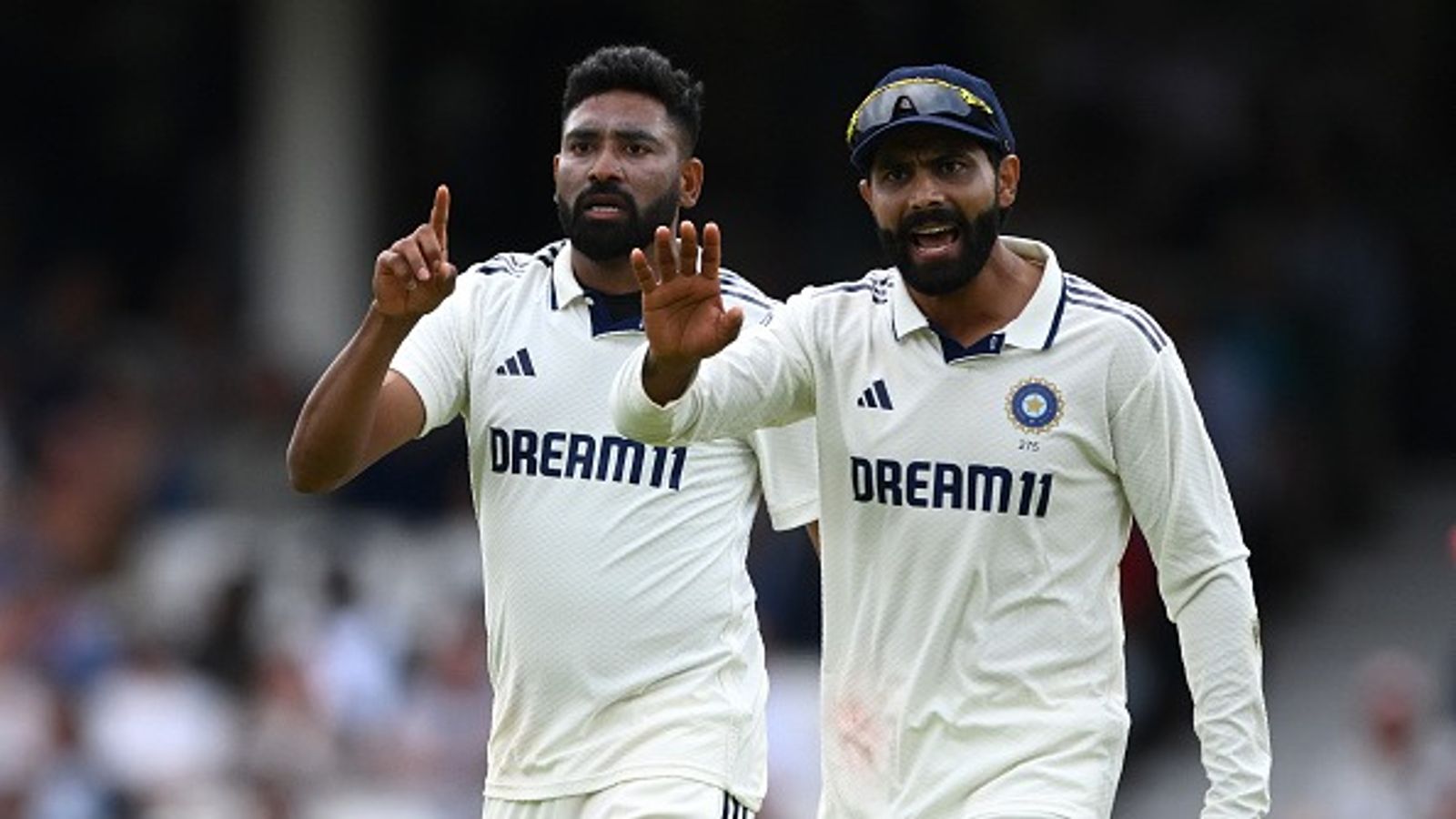
The Marylebone Cricket Club (MCC) has announced as many as 73 changes to the Laws of Cricket, with the updated rules set to come into effect from October this year after the T20 World Cup 2026, which is scheduled to start from February 7. Notably, this is the first major revision since 2022.
According to the MCC, the new laws have been introduced to make the game more aligned with modern cricket while also ensuring that the rules are fair, clear and inclusive for players at all levels.
Final Over Must Be Completed After a Wicket Falls
One of the most important changes affects multi-day matches. If a wicket falls in the final over of the day, the over must now be completed.
Earlier, the day could end immediately after a wicket, meaning the new batter would not have to face the remaining deliveries. The MCC felt this was unfair to the fielding side and took away the excitement from the game.
The club said that since the remaining balls had to be bowled the next day anyway, stopping early made little sense and allowed the incoming batter to avoid difficult conditions. Under the new rule, the last over will be fully bowled as long as conditions allow.
New Ball Sizes Introduced for Women’s and Junior Cricket
The MCC has also introduced new, clearly defined ball sizes for junior and women’s cricket after consulting current and former women players and equipment manufacturers.
There will now be three categories of balls:
Size 1
Size 2
Size 3
While the traditional men’s ball remains unchanged, the size limits are now more consistent, making it easier to choose the right ball for each level of cricket.
Laminated Bats Allowed in Open-Age Cricket
Laminated bats, made by joining two or more pieces of wood, will now be allowed in open-age cricket, not just junior matches.
The MCC said the decision was made to help reduce the rising cost of cricket bats worldwide. After testing, the club concluded that laminated bats do not offer any major performance advantage. However, at the highest level, players are still expected to use traditional single-piece willow bats.
Wicket-Keeper Positioning Rule Relaxed
Wicket-keepers will no longer be penalised for standing level with or slightly in front of the stumps before the ball is released.
Previously, this could technically be called a no-ball, even though it gave no real advantage. Under the new rule, the wicket-keeper must be fully behind the stumps only after the ball is released, bringing the law in line with general fielding rules.
However, keepers still cannot collect the ball in front of the stumps until it has passed the batter or made contact with the bat or body.
‘Bunny Hop Catch’ Removed Near the Boundary
The MCC has clarified boundary-catching rules and removed the so-called “bunny hop catch.”
A fielder who jumps from outside the boundary can now touch the ball only once while airborne. After that, they must land and remain fully inside the boundary for the rest of the play.
If a fielder taps the ball back from outside the boundary to a teammate inside and then steps outside again, it will be counted as a boundary.
Clear Definition of an Overthrow Introduced
For the first time, the MCC has clearly defined what counts as an overthrow.
An overthrow will now only apply when a fielder deliberately throws the ball at the stumps to stop runs or attempt a run-out. Simple misfields or accidental deflections near the boundary will no longer be treated as overthrows.
Fielding Captain Gets More Power in Short-Run Cases
In cases of deliberate short running, the fielding side will now have the right to decide which batter will be on strike for the next delivery.
This becomes the third situation where the fielding captain can make that decision, alongside instances involving obstruction by a batter or a fielder.
When the Ball Is Considered ‘Dead’
The MCC has also updated the definition of when the ball is considered finally settled.
The ball will now be treated as settled once it is either:
Held by any fielder, or
Lying still on the ground
It no longer needs to be in the hands of the bowler or wicket-keeper.