





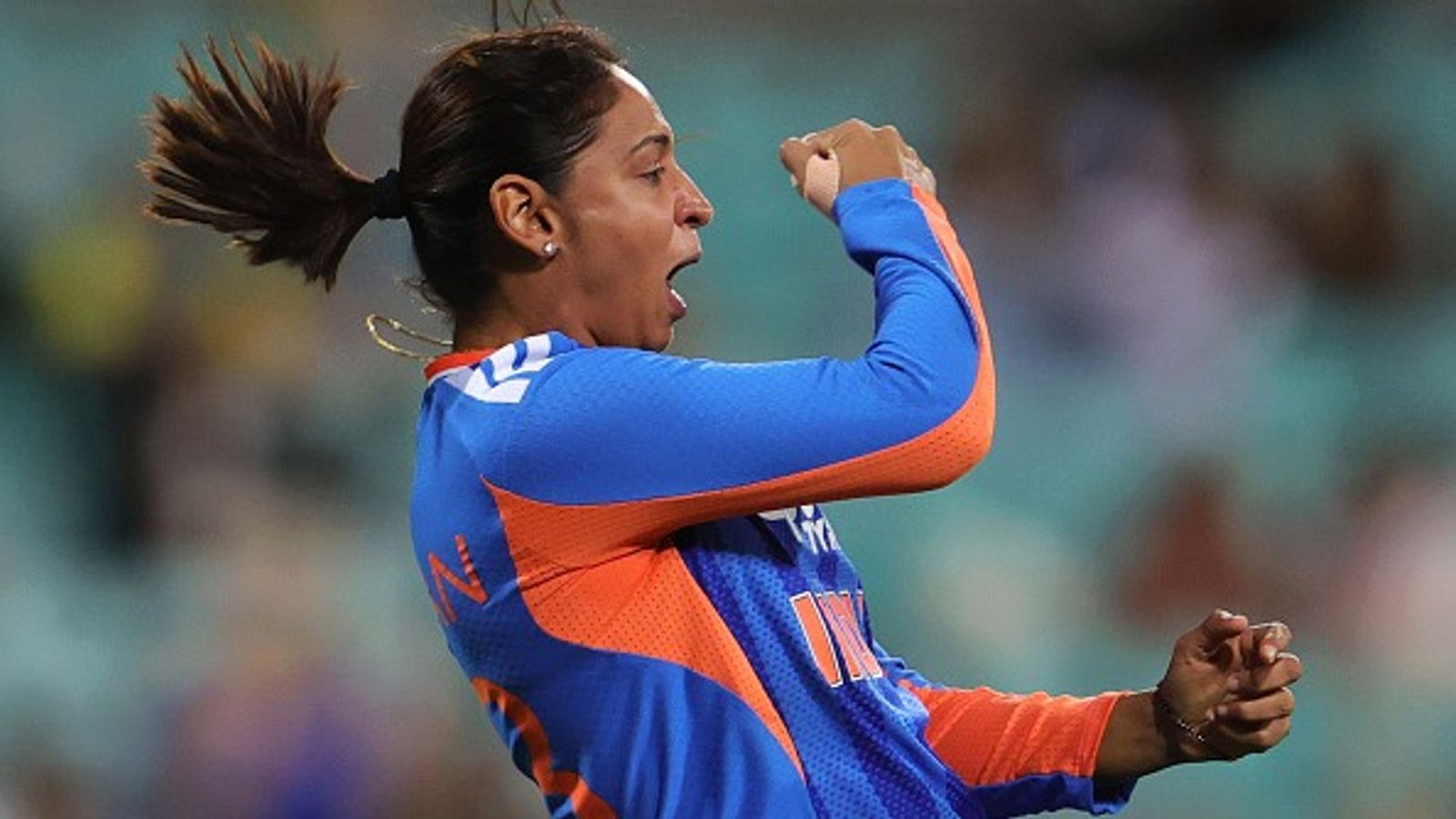
India captain Harmanpreet Kaur etched her name into the history books during the second T20I against Australia at Manuka Oval on February 19. By stepping onto the field, she officially became the most-capped international player in the history of women’s cricket, surpassing New Zealand’s Suzie Bates.
Harmanpreet is the most capped player in Women's international cricket history
Kaur’s record-breaking career now spans a total of 356 international appearances, comprising 6 Test matches, 161 ODIs, and 189 T20Is. This achievement moves her ahead of legendary figures such as Suzie Bates (355), Ellyse Perry (349), and former Indian captain Mithali Raj (333). Her journey to the top of this list is a testament to the hard work and strong character she has maintained throughout her years representing India on the global stage.
Beyond her individual records, the 36-year-old’s recent leadership has been transformative for Indian cricket. Following a historic ODI World Cup title last year and a recent T20I series victory in England, her impact on the game has been recognized at the highest levels. This month, she was also honored with the Padma Shri, India’s fourth-highest civilian award, cementing her legacy as one of the most influential figures in the sport's history.
India eye series win over Australia
In the second T20I match against Australia, Indian skipper Harmanpreet Kaur won the toss and elected to field first. The home side is currently being led by Sophie Molineux as they look to level the three-match series.
India entered this contest with a 1-0 lead, having secured a 21-run victory via the DLS method in the opening fixture. Harmanpreet’s squad is now focused on clinching a win in this second outing to seal the series early. A victory here would be a landmark achievement for the team, as India’s only previous T20I series win on Australian soil occurred a decade ago in 2016, when they triumphed with a 2-1 margin.
Batting first Australia rode on Georgia Voll's robust 57-ball 88 to post a challenging total of 163/5.