





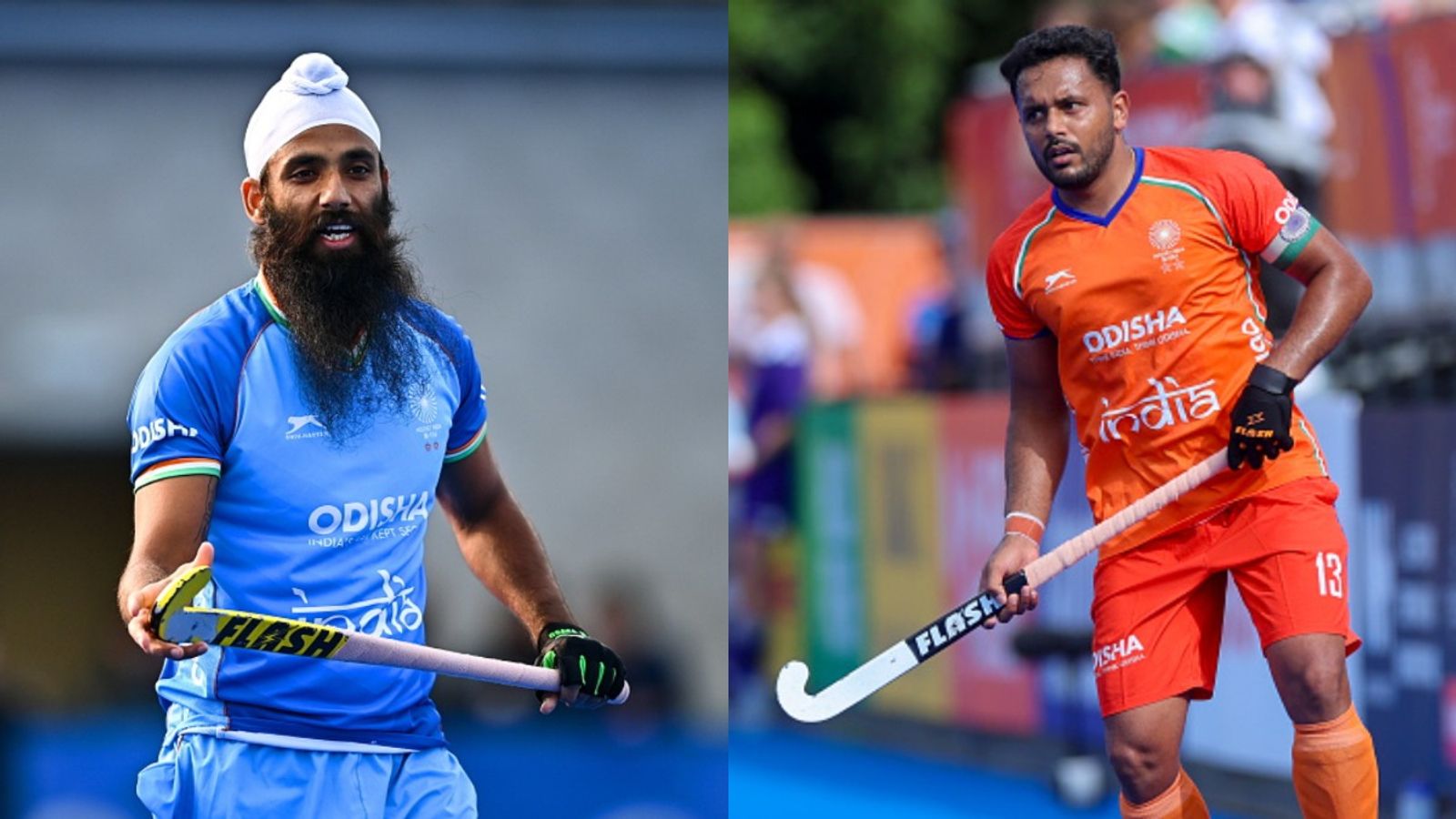
In a decisive move to reclaim its longstanding sporting identity, India's national hockey team will keep their saffron uniforms aside and will switch to blue jersey for the upcoming Asian Games 2026. The shift comes as a direct response to public dissatisfaction and disapproval surrounding the recent change in the team's visual branding.
Blue jersey returns for Indian Hockey team for Asian Games 2026
The brief departure from tradition occurred during the FIH World Cups across Belgium and the Netherlands, where the squad debuted the controversial saffron design. The transition created substantial friction within the governing body itself, with Hockey India President Dilip Tirkey revealing that the original uniform change occurred without the formal consent or awareness of the executive board.
ALSO READ: No separate hotels for Indian cricket teams in Asian Games 2026, BCCI breaks silence on controversy
The executive leadership has since moved to restore the historic aesthetic ahead of the upcoming continental competition. Speaking during a formal departure event for the national athletes, Tirkey confirmed that Hockey India officially designated blue as the squad's primary uniform selection in response to inquiries from the Indian Olympic Association, relegating orange to a secondary alternate.
HI president shuts hullabaloo around saffron jersey
Tirkey clearly said that the orange ensemble was never intended as a permanent fixture for the national side. Reiterating his prior statements from the World Cup, he clarified that the temporary design has officially been set aside, ensuring the team steps onto the turf for the Asian Games clad once again in its traditional blue colors.
The decision to swap the Indian hockey team's historic blue kit for an orange one on the eve of the World Cup in Belgium and the Netherlands sparked an immediate firestorm, quickly morphing into a heated political clash as opposition leaders criticized the administration. The internal fallout grew sharper when Hockey India President Dilip Tirkey publicly distanced himself from the move, revealing that neither he nor the governing body's executive board had approved or even been informed of the shift.
While officials initially justified the change by citing visibility concerns when competing in blue uniforms on blue artificial turf, the explanation failed to convince the sport's icons. Former national captains including Dhanraj Pillay, Pargat Singh, Viren Rasquinha, and Ajit Pal Singh voiced strong skepticism over the sudden departure from tradition. The subsequent World Cup campaign yielded mixed results on the pitch—the men’s side slumped to a disappointing eighth-place finish, whereas the women’s team delivered their strongest showing in decades by taking fifth.
Looking ahead, the Asian Games represent a critical turning point for both squads. Beyond the pursuit of continental dominance, the tournament carries massive stakes, serving as a primary pathway to earn direct qualification for the 2028 Los Angeles Olympic Games.