





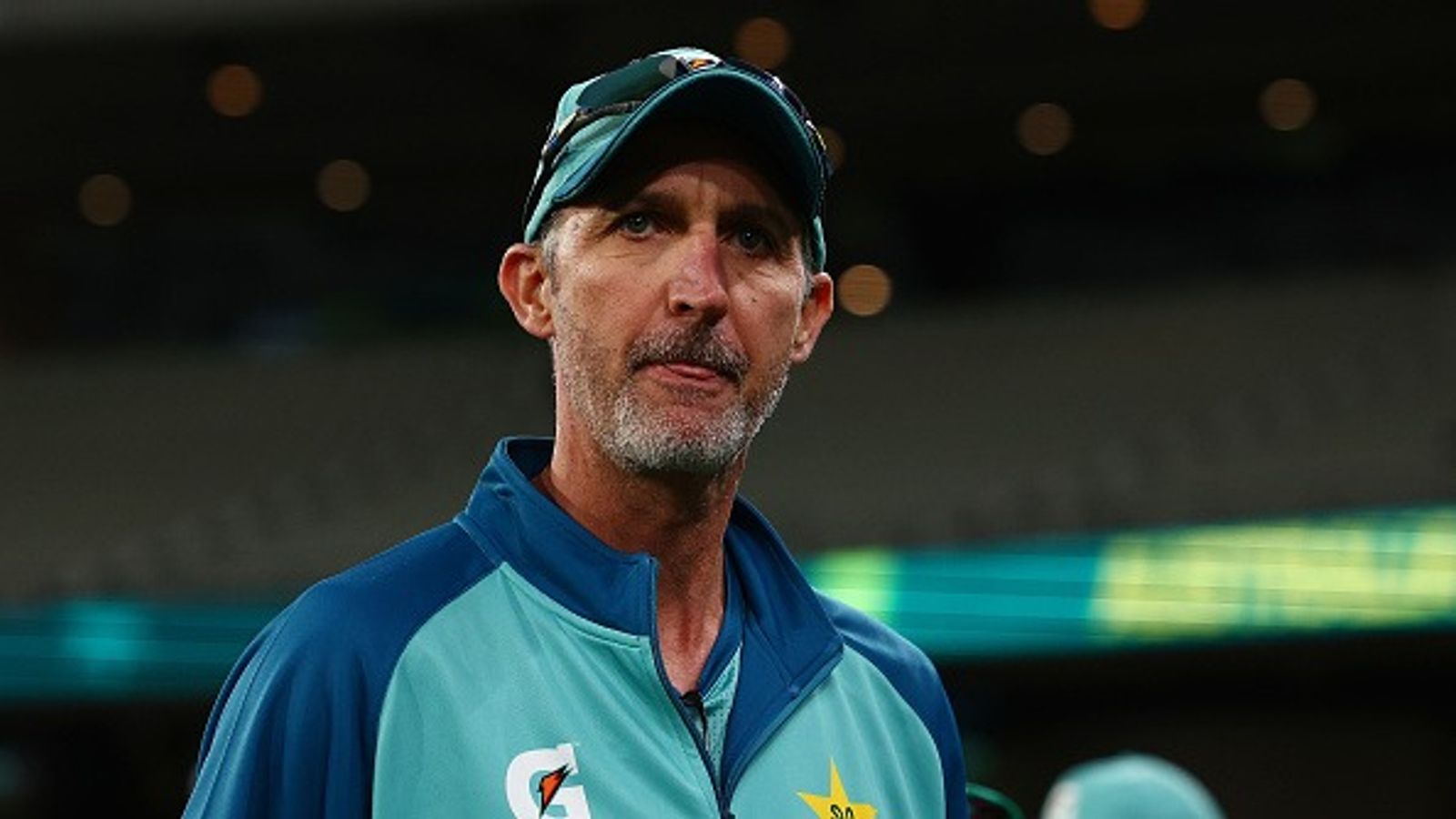
Former Australian cricketer Jason Gillespie had served as Pakistan's head coach for a very short period of time. He was appointed as Pakistan's head coach in April 2024, but he resigned just eight months later, following Pakistan’s Test series in South Africa.
Star speedster revealed that he stepped down as Pakistan men’s Test coach last year after feeling humiliated. During a Q&A session on X, Gillespie revealed that the Pakistan Cricket Board (PCB) had made several decisions that left him feeling humiliated. He added that the PCB did not communicate with him before dismissing assistant coach Tim Nielsen, which he believes is unacceptable.
ALSO READ: Harmanpreet Kaur-led India to get new strength and conditioning coach ahead of T20 World Cup 2026
ALSO READ: Usman Khawaja announces retirement from international Cricket, Sydney Ashes Test to be his final act
Why Gillespie stepped down as PCB head coach?
In the same session, one fan asked Gillespie for his opinion on the Pakistan Super League (PSL), to which he replied, “It’s a great competition.” Another fan then questioned why he left Pakistan cricket if he liked the PSL. Gillespie responded by opening up about his experiences during his stint with the Pakistan cricket team.
“I was coaching the Pakistan Test side. The PCB sacked our senior assistant coach with ZERO communication with me about it- as head coach, I found this situation completely unacceptable. There were a number of other issues which left me completely humiliated,” wrote Gillespie.
Pakistan Cricket's performance under Gillespie
Gillespie was brought in to steady a Pakistan Test team that had been struggling to find consistency in red-ball cricket. His time in charge began on a tough note when Pakistan suffered a 2–0 home series loss to Bangladesh in September. The result was a major setback and exposed ongoing problems with the batting line-up and the lack of unity within the side.
Things improved a month later, when Pakistan pulled off a memorable 2–1 series win at home against England. After losing the opening Test, the team showed strong character to fight back and win the next two matches. Those wins stood out as a high point of Gillespie’s short tenure and underlined the players’ ability to adapt and perform under pressure, especially on spin-friendly tracks.
Away from the field, however, tensions were building. Gillespie’s working relationship with the Pakistan Cricket Board gradually worsened, mainly over opinions around team selection and support staff appointments. These issues led to his decision to step aside from the role.