




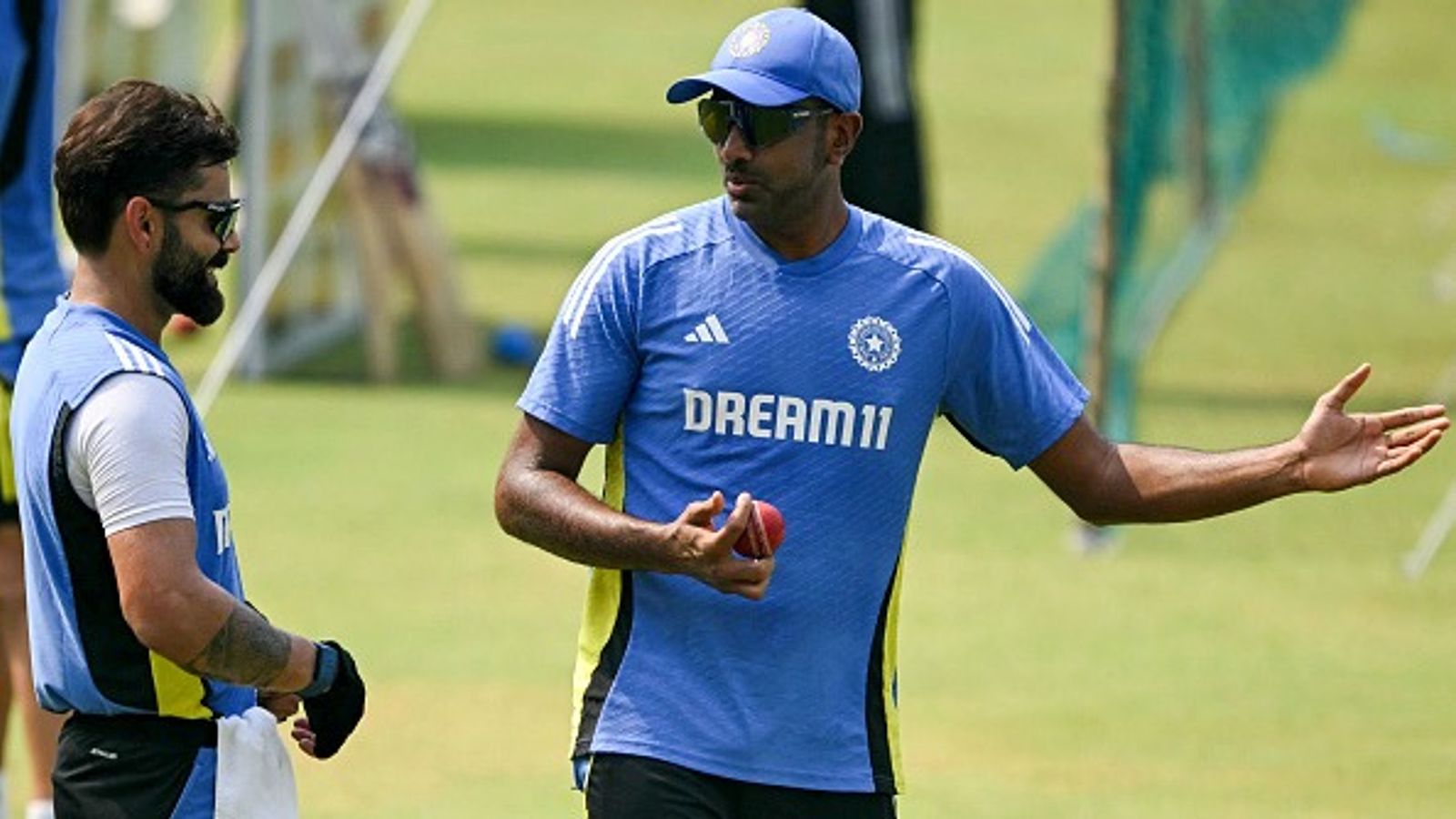
India's spin legend Ravichandran Ashwin the future of One-Day International (ODI) cricket is facing an existential crisis. He suggests that the format will find it increasingly difficult to remain relevant or even survive once legendary figures like Virat Kohli and Rohit Sharma eventually retire after the ODI World Cup 2027. Their departure may leave a void in star power that the 50-over game might struggle to fill.
ALSO READ: Australia announce squad for 2026 T20 World Cup, pick Cummins and Hazlewood despite injury concerns
I am a little worried about future of ODIs: R Ashwin
Ashwin also mentioned that while the domestic presence of stars like Kohli and Rohit in the Vijay Hazare Trophy generates temporary excitement, the broader landscape is shifting. He points out that the rapid expansion of global T20 leagues and the enduring prestige of Test cricket are squeezing the ODI format out of the schedule. In this evolving ecosystem, the space for mid-length cricket is rapidly shrinking, leaving its long-term viability in question.
"I am not sure about future of ODI after 2027 World Cup. I am a little worried about it. Of course, I am following Vijay Hazare Trophy but the manner in which I followed SMAT, I am finding slightly difficult to follow," Ashwin said on his YouTube channel 'Ash Ki Baat'.
"Also, we need to know what audience wants to watch. I feel Test cricket still has space but ODI cricket, I truly feel (it) doesn't have the space," Ashwin, who is second-highest wicket-taker across all formats with a 765 scalps, added.
He believes the format’s foundation is tied closely to the presence of its modern icons, whose eventual departure could signal a major shift in the game's popularity. Specifically, Ashwin fears that the 50-over format will lose its competitive edge and draw once Virat Kohli and Rohit Sharma, who share a monumental 86 ODI centuries between them, decide to hang up their boots. For Ashwin, the exit of these two giants represents more than just a change in personnel, it threatens the very relevance of the format itself.
"Look, Rohit and Virat came back to Vijay Hazare Trophy and people started watching it. We have known that sport is always bigger than individuals but at times these players (Ro-Ko) need to come back to make the game relevant. Vijay Hazare Trophy (national one-dayers), of course, is a domestic competition that not a lot of people follow, but they did (so now) because Virat and Rohit were playing. Even then, what happens when they stop playing ODIs?," he further stated.
ALSO READ: Suryakumar Yadav under scanner as India's WC-winner labels situation ‘Extremely Worrying’
'You don't have players like that MS Dhoni anymore': Ashwin
Reflecting on the evolution of the game, Ashwin described the 50-over game as an amazing format that played a crucial role in shaping the careers of legendary cricketers. He noted that the specific demands of ODIs allowed for a unique style of play that is becoming increasingly rare in the modern era. In particular, Ashwin highlighted how the format paved the way for a player like MS Dhoni. He credits the ODI structure for producing a specialist who mastered the art of pacing a game, specifically pointing to Dhoni's unparalleled ability to read the situation and maintain absolute control over an innings from start to finish.
"One-day cricket, once upon a time, was an amazing format because it gave a player like MS Dhoni who (would) take singles for 10-15 overs before he went berserk at the end. You don't have players like that (Dhoni) anymore and there isn't any requirement to play like that, as you are playing with two new balls and five fielders inside circle," Ashwin concluded.