




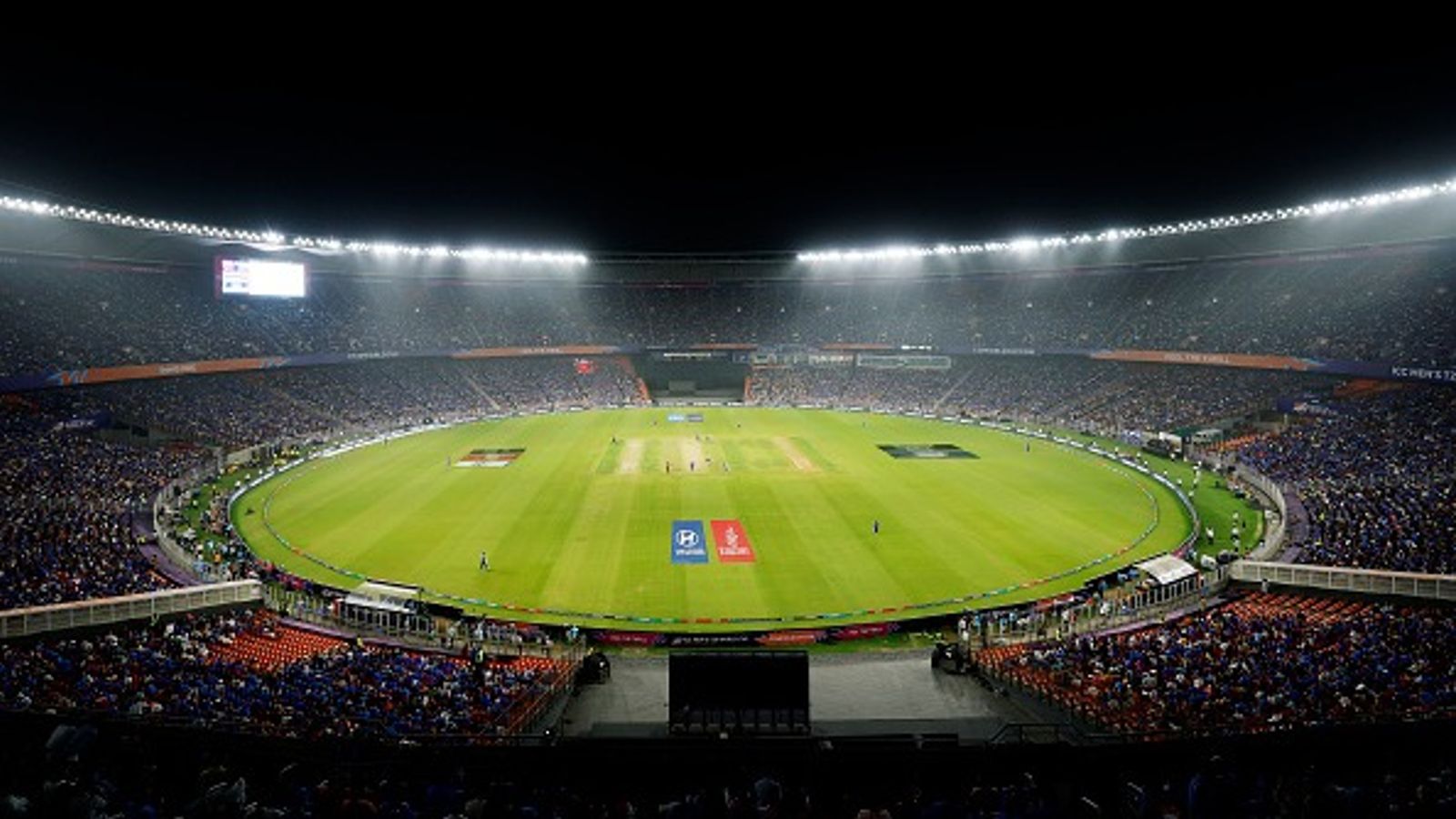
Defending champions India will lock horns with New Zealand in the T20 World Cup 2026 final, scheduled for Narendra Modi Stadium in Ahmedabad. Notably, this is the same venue where India lost their first Super Eight clash against South Africa. However, now the pitch for the title decider is expected to be good for batting, with a par score around 200 runs.
Ahmedabad pitch report
Sports Tak understands that the match will be played on the centre wicket. The same pitch was used earlier during the T20 World Cup clash between Canada and South Africa. In that match, South Africa scored 213/4 and won comfortably by 57 runs.
The pitch will offer very little help for spinners, but it should provide good pace and bounce for fast bowlers. It is expected to behave somewhat like the pitch at Wankhede Stadium, where India defeated England to seal their berth for the final.
The wicket is also said to be fresh and made from a mix of red and black soil. This is quite different from the pitch used during the 2023 ODI World Cup final at the same venue.
Back then, the surface was a used pitch made entirely of black soil, which made it dry and slow with lower bounce. India struggled on that wicket and were bowled out for 240, which proved to be below par. Australia chased the target and won the final by six wickets.
Which pitch was used in ODI World Cup 2023 final
In ICC tournaments, pitches are generally prepared under the supervision of an ICC curator. However, during the 2023 World Cup final, reports emerged that the BCCI and the Indian team had input into the pitch selection. That decision was later criticised because the surface did not suit India’s strengths and seemed to work against them.
This time, it is not clear how much say the Indian team or the BCCI has had in preparing the pitch. Still, a flat batting-friendly surface could work in India’s favour, especially for aggressive players like Suryakumar Yadav.
Usually, difficult or tricky pitches give weaker teams a better chance, because they make scoring harder for strong batting sides. On the other hand, flat pitches reward teams with more skilled and experienced players, as taking wickets becomes tougher.
Litmus Test for Indian bowlers
India showed their batting strength in the semi-final by scoring a massive 253 against England. However, they ended up winning by just seven runs, as most of the bowlers, except Jasprit Bumrah, conceded plenty of runs.
If the final is played on a flat surface, India will need their batters to deliver another big total. At the same time, the team will rely heavily on Bumrah, Varun Chakaravarthy and Hardik Pandya to use their experience and pick up crucial wickets against New Zealand’s powerful batting line-up.