




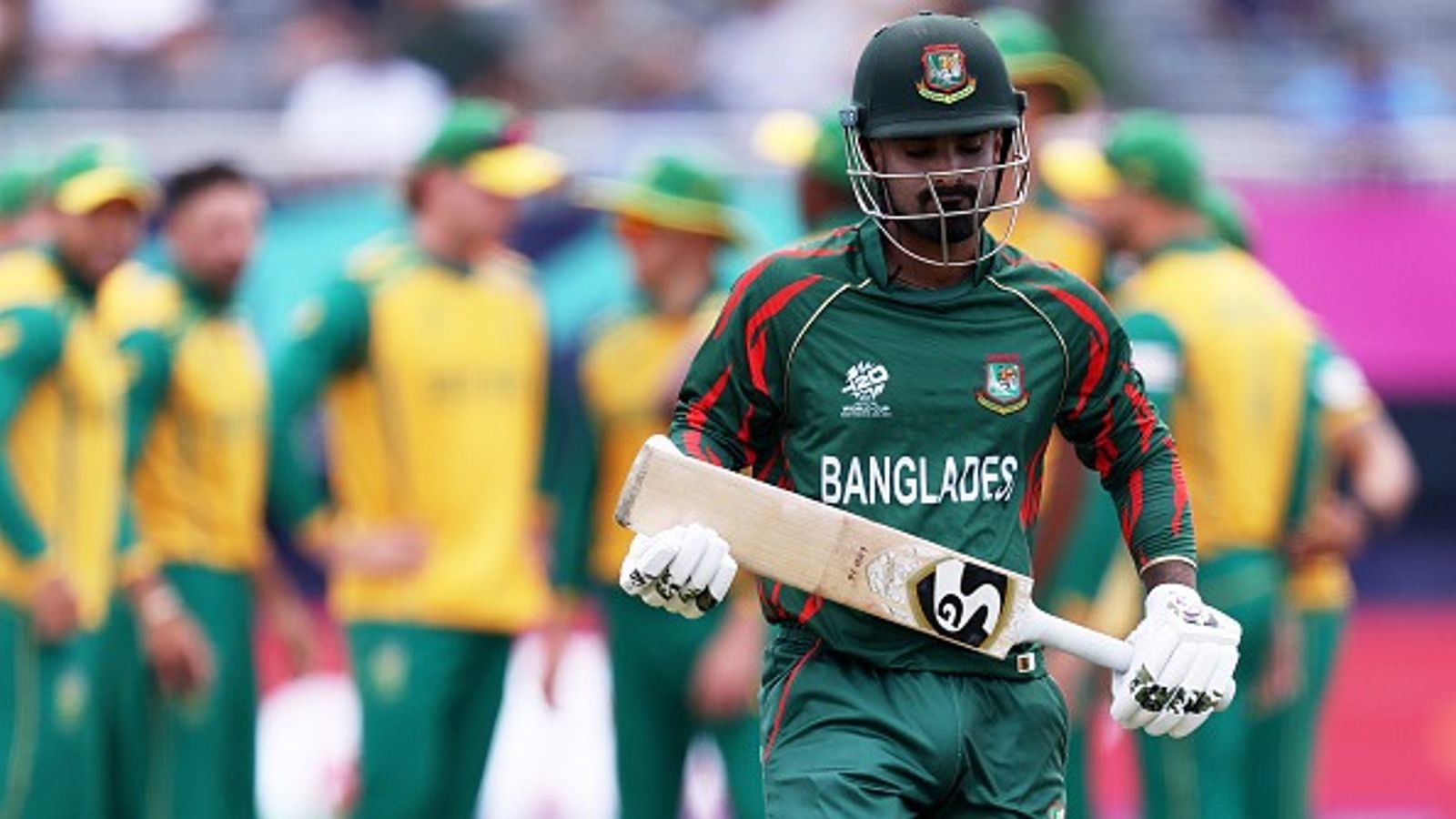
The decision by the Bangladesh Cricket Board (BCB) to withdraw from the T20 World Cup 2026 represents more than just a political statement; many experts view it as a significant act of cricketing self-sabotage. What started as simmering tension between the BCB and the ICC, with complex underlying dynamics involving the BCCI, has reached a critical breaking point. On January 22, following a decisive meeting with the government's sports advisor in Dhaka, the BCB confirmed it will not travel to India and hence pulled out of T20 World Cup 2026, insisting instead that their fixtures be relocated to co-host Sri Lanka.
Bangladesh withdraw from T20 World Cup 2026
While the BCB views this as a necessary request for player safety, the refusal to honor the original schedule carries dire consequences for the future of Bangladesh cricket. The ICC has stood firm, rejecting the venue change in a 14-2 board vote and emphasizing that independent security assessments found no credible threat. By prioritizing this standoff over participation, Bangladesh risks long-term sporting sanctions, heavy financial penalties, and a potential decline in their global standing.
ALSO READ: 'We will continue to...': BCB president cries foul after Bangladesh's exit from T20 World Cup 2026
The immediate fallout of this withdrawal is already being mapped out, as the ICC prepares to reshuffle Group C. Scotland, the highest-ranked team that did not initially qualify, is the designated replacement. While the tournament will proceed, the competitive balance of the group has shifted significantly. Bangladesh was considered the 'pressure point' of the group—a team capable of an upset against heavyweights like England or the West Indies. Without them, what was once a 'Group of Death' has become considerably less predictable and arguably less competitive.
How BCB’s exit from T20 World Cup 2026 could damage Bangladesh cricket?
A withdrawal from the 2026 T20 World Cup would trigger a severe financial crisis for the Bangladesh Cricket Board (BCB). Beyond the immediate loss of approximately $500,000 to $750,000 in group-stage participation fees, the team would forfeit any potential knockout-stage prize money, which could reach millions. More damagingly, under the ICC’s Member Participation Agreement, a late withdrawal allows the governing body to impose fines up to $2 million and slash the BCB's annual revenue share, a major blow considering they are slated to receive roughly $20 million per year through 2027.
ALSO READ: Bangladesh no more part of T20 World Cup 2026 after ICC's strong stance on venue change
Diplomatically, the move would almost certainly sever the remaining ties between the BCB and the BCCI. Since India is the primary host of the 2026 tournament, pulling out would be viewed as a direct snub, likely leading to a freeze on bilateral series between the two neighbours. In the most extreme scenario, if the ICC determines the withdrawal was politically motivated rather than based on a legitimate security threat, the BCB could face a full suspension, effectively halting all international cricket in the country.