




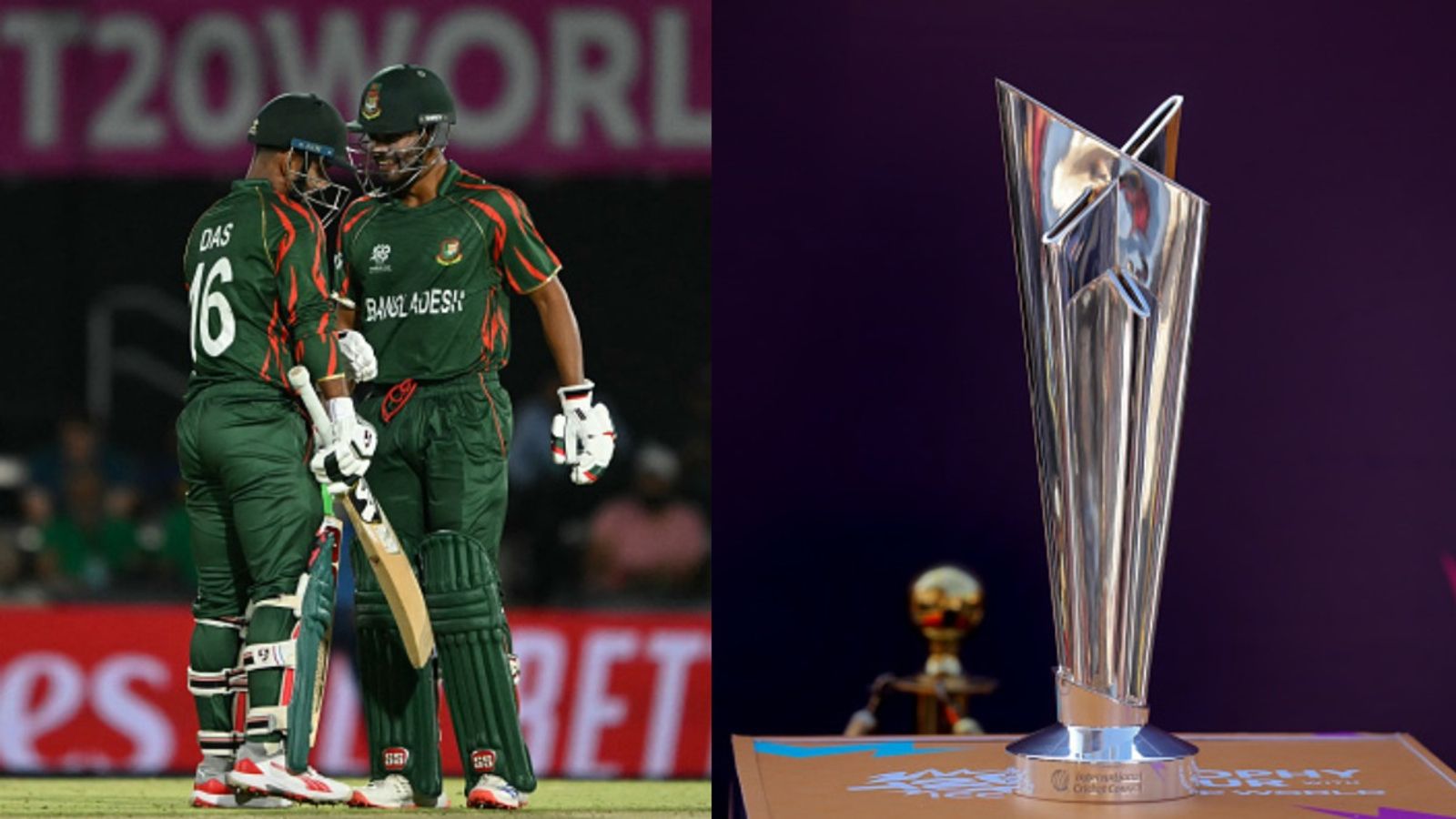
The Bangladesh Cricket Board (BCB) has written to the International Cricket Council’s (ICC) Dispute Resolution Committee (DRC), requesting a review of the decision to stage Bangladesh’s T20 World Cup matches in India. However, the appeal is unlikely to be taken up as it falls outside the committee’s jurisdiction.
ICC has kept Scotland on standby to feature in the T20 World Cup 2026 if Bangladesh is ruled out of the mega event. The BCB leadership under Aminul Islam Bulbul has turned to the DRC as a last-ditch effort. The committee is headed by English barrister Michael Beloff, a King’s Counsel.
A senior BCB official, speaking to PTI on condition of anonymity, confirmed the move. “Yes, the BCB has approached the DRC because it wants to exhaust all available options. If the DRC rules against us, the only remaining avenue will be the Court of Arbitration for Sport (CAS) in Switzerland,” the source said.
The issue escalated after Bangladesh’s interim government, along with its sports ministry advisor Asif Nazrul, publicly stated that the team would not travel to India, citing security concerns. Nazrul, known for his strong anti-India stance, made the announcement shortly after senior pacer Mustafizur Rahman was released from the Kolkata Knight Riders squad, reportedly following a directive from the BCCI.
Does DRC have the authority to change the decision?
However, a look at the ICC’s constitution and the DRC’s Terms of Reference makes it clear that the committee does not have the authority to hear appeals against decisions taken by the ICC Board of Directors.
ICC voting to change Bangladesh World Cup venues
Earlier, the ICC board had voted 14-2 in favour of hosting Bangladesh’s matches in India, based on an independent security assessment that described the threat level as “low to moderate.” Despite this, Nazrul insisted that the final call rested with the Bangladesh government, not the cricket board.
Clause 1.3 of the DRC’s Terms of Reference clearly states that the committee cannot act as an appeal body against decisions made by the ICC or any of its governing entities.
An ICC board member explained that while Bangladesh is free to approach the DRC, the case cannot even be formally heard. “The rules are very clear. The committee has no mandate to review or overturn a decision taken by the ICC Board of Directors,” the source said.
When will ICC announce the final verdict?
Meanwhile, ICC chairman Jay Shah, who was in Namibia for the Under-19 World Cup, has now reached Dubai. A final decision regarding Bangladesh’s participation, or a possible replacement, is expected to be announced by Saturday.
Sources within the ICC said there is strong displeasure over how the situation was handled by the BCB. “Board members are extremely unhappy with Aminul Islam Bulbul. A press conference was held before officially informing the ICC, which should not have happened. Asif Nazrul is effectively a persona non grata for the ICC, but Bulbul should have ensured proper communication channels were followed,” the source said.
Why does ICC's DRC do?
The ICC’s DRC operates under British law and has previously dismissed high-profile cases. One notable ruling came in 2018, when it rejected the Pakistan Cricket Board’s claim of USD 70 million against the BCCI over an alleged failure to honour a bilateral series agreement. The committee ruled that the so-called Memorandum of Understanding was merely a letter of intent and not legally binding.