





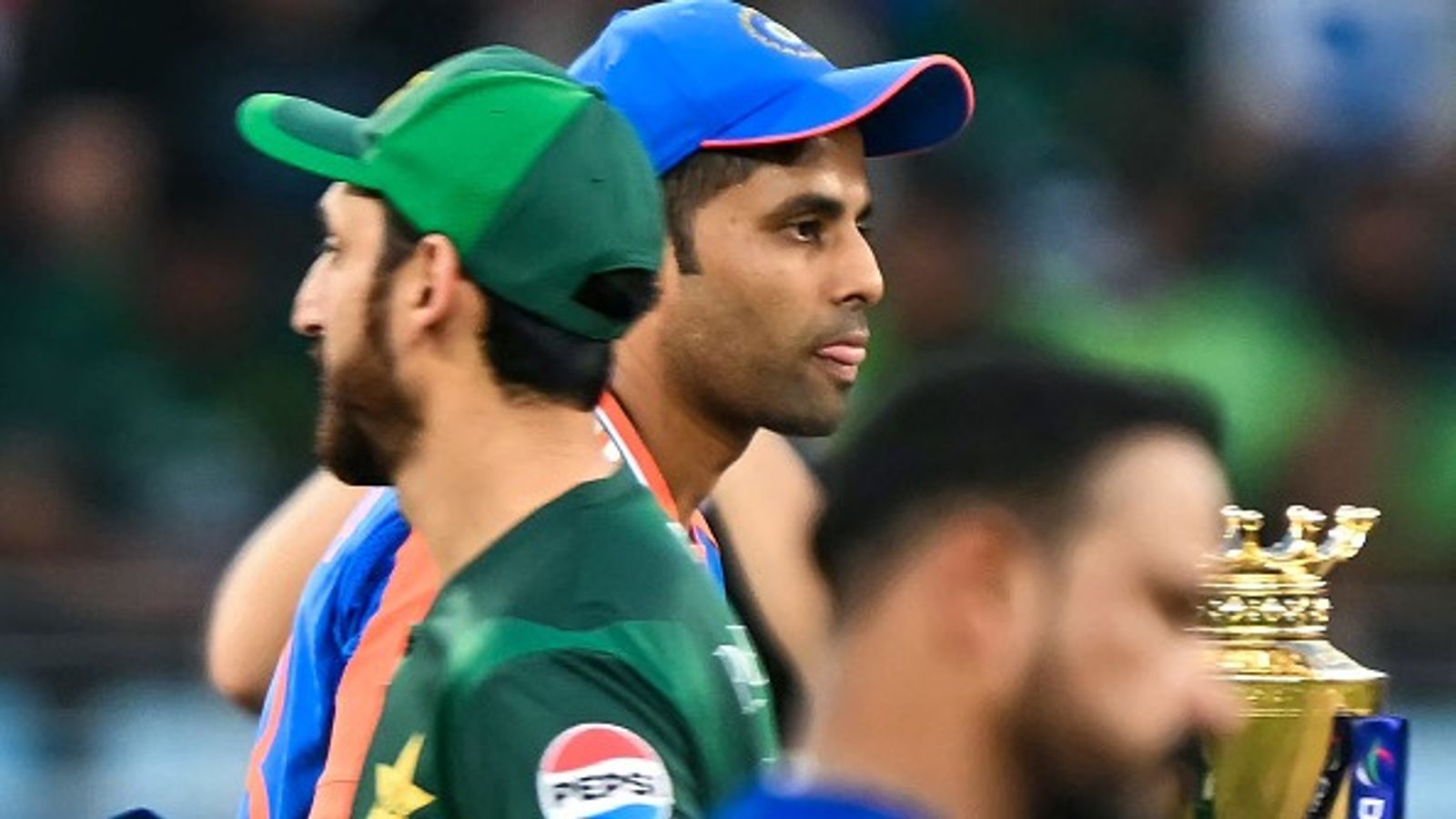
On the eve of the highly anticipated T20 World Cup 2026 Group A clash against Pakistan, Indian captain Suryakumar Yadav maintained a calculated silence regarding the team's planned conduct on the customary handshake between both the teams. When pressed by reporters on February 14 about whether his side would engage in the traditional post-match handshake with their Pakistani counterparts, Yadav opted for a coy approach. The question has become the focal point of the pre-match buildup, especially given the intense diplomatic and sporting friction that has defined their recent encounters.
Wait for 24 hours: Suryakumar Yadav's reply to India-Pakistan handshake debate
This uncertainty stems from the 2025 Asia Cup, where the two rivals met three times without a single exchange of pleasantries. Those matches took place in the immediate aftermath of the Pahalgam terror attack and the subsequent "Operation Sindoor," leading the Indian side to skip formal greetings as a mark of protest. Given that Suryakumar himself was at the helm during those tense moments, his refusal to provide a definitive answer—telling the media to simply "wait 24 hours"—has only heightened the anticipation surrounding Sunday's encounter.
“Wait for 24 hours. Eat well, sleep well, we will see tomorrow,” Suryakumar said at the pre-match press conference.
ALSO READ: Suryakumar Yadav ends suspense on Abhishek Sharma's availability for IND vs PAK T20 World Cup tie
Earlier on Saturday, Pakistan’s captain Salman Ali Agha faced similar questions regarding the potential handshake. He expressed a desire for the match to be played in the "right spirit," emphasizing that the game should be conducted with the same sportsmanship that has historically defined the rivalry. Agha remained calm, suggesting that the focus should stay on the sport rather than the political climate surrounding it.
The game should be played in the same spirit: Salman Ali Agha
Despite his call for sportsmanship, Agha placed the responsibility for the gesture on the Indian camp. He noted that while his team is open to following traditional etiquette, the final decision ultimately depends on what India chooses to do. Like his counterpart, he avoided a definitive confirmation, simply telling the media that the outcome of this off-field debate would be revealed during the match on Sunday.
“The game should be played in the same spirit. And what I expect, obviously, does not matter. But I feel that the game should be played the same way as it has been since the beginning of cricket. And the rest is up to them and whatever they want to do,” Agha said at the presser.
The recent friction between the two sides traces back to the Asia Cup 2025, where tensions reached a boiling point both on and off the field. The discord began during the group stage when the Indian team, under Suryakumar’s leadership, opted out of the customary post-match handshake as a protest following the Pahalgam terror attack and the military’s 'Operation Sindoor'. This move deeply offended the Pakistan Cricket Board (PCB), which subsequently filed a formal complaint with the ICC. The PCB alleged that match referee Andy Pycroft failed to maintain the spirit of the game, even claiming he had warned the Pakistan captain in advance that the handshake would not occur.
The lead-up to the current T20 World Cup was also mired in political uncertainty, nearly resulting in the cancellation of this marquee fixture. The Government of Pakistan initially announced a boycott of the match against India to show solidarity with Bangladesh, after the latter was replaced in the tournament following a refusal to travel to India. However, after intense negotiations and warnings from the ICC regarding the financial and legal consequences of a pullout, the Pakistani government performed a dramatic U-turn just eight days later. This reversal cleared the way for the match to proceed in Colombo, though the shadow of last year’s "handshake snub" continues to loom over the encounter.