


 Home
Home
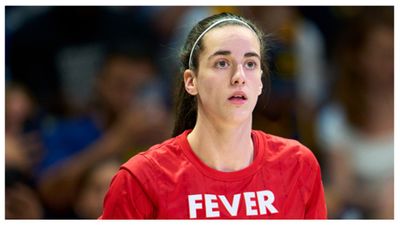
Caitlin Clark’s influence in Indiana is no longer limited to her on-court brilliance—it is now dictating how the Fever approach roster construction in an evolving financial landscape.
With the WNBA’s new collective bargaining agreement reshaping salary structures, Indiana finds itself at the center of a strategic overhaul driven largely by Clark’s rising value.
A new financial reality for Indiana Fever
The Fever’s long-term planning has taken a sharp turn with Clark’s revised earning trajectory. Her rookie deal, once modest by league standards, is now set to surge significantly, with her salary projected to jump from $78,066 in 2025 to approximately $530,000 in 2026.
More importantly, she is on track to become eligible for a max contract a year earlier than previously anticipated, potentially commanding up to $1.3 million by 2027.
This rapid escalation forces Indiana to rethink how it allocates resources, especially with the salary cap expected to hover around $7 million in the near term.
Balancing a high-value core
Caitlin Clark’s financial rise coincides with pivotal contract situations for the Fever’s other stars. Aliyah Boston has already positioned herself for a significant payday after her early career success, making her eligible for a lucrative extension that could exceed seven figures annually.
At the same time, Kelsey Mitchell remains a critical piece, entering free agency with the potential to secure a supermax deal. Retaining this trio would solidify Indiana’s competitive core but would also commit a substantial portion of the team’s cap space to just three players.
A shift in team-building philosophy
Clark’s presence has accelerated Indiana’s timeline. Rather than a gradual rebuild, the franchise is now navigating the complexities of building around a high-cost superstar while maintaining depth across the roster.
This shift demands precision—front-office decisions must strike a balance between investing in elite talent and preserving flexibility to fill out the supporting cast. Every contract, extension, and signing now carries amplified significance.
The Caitlin Clark effect
Indiana’s roster strategy is no longer conventional—it is tailored around a generational guard whose financial and competitive impact extends beyond typical rookie timelines.
Caitlin Clark has effectively become the blueprint, influencing not just who the Fever retain, but how they structure their future.
As the WNBA enters a new economic era, the Fever’s approach could serve as a case study in navigating star-driven roster construction under tightening cap constraints.
ADVERTISEMENT