

 Home



When India walked onto the green-tinged turf of the Basin Reserve in Wellington for the first Test against New Zealand, the team sheet carried a glaring omission. Despite opting for a four-pronged pace attack on a surface traditionally conducive to seam and swing, the team management left out Mohammed Siraj, a bowler who has spent the past several years serving as Jasprit Bumrah’s tireless partner-in-crime across all conditions.
ADVERTISEMENT
How Mohammed Siraj's request for Ireland tour break cost him big?
Instead, India handed the new and old balls to Bumrah, Akash Deep, Prasidh Krishna, and Anshul Kamboj. While the decision was publicly framed around pitch conditions and squad balance, behind-the-scenes developments indicate that Siraj’s exclusion from the playing XI was the culmination of a months-long communication breakdown between the right-arm seamer and the Indian team management.
Numbers behind Siraj's shock omission in IND playing XI in New Zealand
To understand why Siraj’s absence from the Wellington Test triggered widespread debate, one only needs to look at his recent body of work. Shockingly, Siraj has been India’s leading wicket-taker since January 1, 2025, with 48 wickets and two fifers. Hence, his exclusion raised eyebrows, with former cricketers questioning his absence from India's playing XI in the Test series opener against New Zealand.
Among those leading the criticism was former India head coach Ravi Shastri, who publicly questioned the logic of benching a proven workhorse in overseas conditions. Over the last two years, Siraj had repeatedly shouldered heavy bowling workloads whenever Bumrah was rested or carefully managed, most notably during India’s tour of England in 2025, where Siraj famously claimed nine wickets in the fifth Test at The Oval to help India secure a hard-fought 2-2 series draw.
Statistically, his case for automatic selection in SENA (South Africa, England, New Zealand, Australia) countries appeared airtight:
| Bowler / Group | Matches (Since Dec 2023 in SENA) | Wickets Taken | Role in Wellington 1st Test |
| Mohammed Siraj | 12 Tests | 52 wickets | Benched (Excluded from XI) |
| Prasidh Krishna, Akash Deep & Anshul Kamboj (Combined) | 15 Tests | 43 wickets | Selected ahead of Siraj |
Yet, despite boasting more SENA wickets since December 2023 than India’s other three playing seamers combined, Siraj found himself carrying drinks in Wellington.
How Ireland break triggered Siraj's communication gap with Team management
According to a report in The Times of India, the roots of Siraj’s sudden slide down the pecking order stretch back to the middle of the 2026 calendar year. As per the Times of India report, the situation began to change when Siraj requested a break from the two T20Is in Ireland after playing the one-off Test against Afghanistan in June. The BCCI subsequently confirmed that he had been withdrawn from the Ireland and England T20I squads on workload-management grounds.
For a cricketer famously known in Indian dressing rooms for wanting to bowl endlessly, often having to be forced by captains and support staff to take a breather, asking for time off was out of character. However, the aftermath of that break reportedly created friction.
The report revealed that the Indian coaching staff was dissatisfied with the volume of bowling Siraj put in during his hiatus. When he returned to red-ball action for the two-Test tour of Sri Lanka in August, the management felt his rhythm and speeds had dipped noticeably. Rather than resolving the issue through clear, direct dialogue, communication channels between the player and the management gradually eroded.
Over the ensuing months, Siraj was shuffled between domestic Ranji Trophy fixtures for Hyderabad, Duleep Trophy appearances, India 'A' assignments in New Zealand, and sporadic ODI appearances. At the same time, the team leadership—under skipper Shubman Gill and the coaching staff, began emphasising specific tactical preferences: tall fast bowlers capable of extracting steep bounce, higher pace through the middle overs, and lower-order batting depth at No. 8 and No. 9. Caught between shifting tactical goalposts and an absence of clear feedback, Siraj’s once-secure spot in the Test XI quietly slipped away.
Paras Mhambrey’s insight into handling Siraj
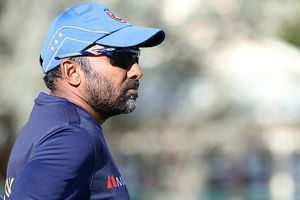
The growing disconnect between Siraj and the current regime drew pointed commentary from former India bowling coach Paras Mhambrey, who worked closely with the Hyderabad pacer from his India 'A' days through his rise as an all-format regular. Speaking to The Times of India, Mhambrey highlighted that managing Siraj effectively requires consistent, transparent communication.
"You have to have regular conversations with Siraj. He has an uncomplicated mind. If you constantly have those discussions with him, he understands the nuances of high-performance sport. And he becomes the man who can go to any lengths for you," Mhambrey told TOI.
Mhambrey further noted that at 32, Siraj still has at least three prime years of Test cricket ahead of him and possesses the experience to gauge his own bowling rhythm. Pointing out that Siraj had looked sharp and hit good speeds during both the IPL and his recent ODI outing in New Zealand, Mhambrey stressed that the solution lay in sitting the bowler down and clearly outlining his role and the road ahead.
Sitanshu Kotak Defends the Selection Call
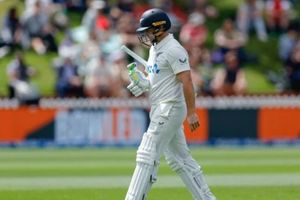
On the field in Wellington, India’s decision to omit Siraj faced immediate scrutiny during the opening day’s play. After Jasprit Bumrah tore through New Zealand’s top order to reduce the hosts to 70/5, the supporting trio of Akash Deep, Prasidh Krishna, and Anshul Kamboj struggled to maintain pressure. Henry Nicholls and Glenn Phillips capitalized on the respite, forging a massive 216-run sixth-wicket partnership that carried New Zealand to a competitive 368.
When asked about Siraj's absence at the post-day press conference, India batting coach Sitanshu Kotak briefed the press on Siraj’s exclusion and remarked that the right-arm seamer’s absence was not wrong.
"I think at a time they pick the team, they think about best XI, and that’s what played. Nothing wrong with Siraj; they thought best possible XI and played. Sri Lanka were in different conditions. Not a wrong decision to drop Siraj," Sitanshu Kotak said at the press conference.
Kotak further elaborated on the tactical reasoning behind the selection, explaining that the management wanted a balanced combination of two swing bowlers and two hit-the-deck seamers capable of sustaining intensity across all five days of a Test match, alongside off-spinner Washington Sundar to counter New Zealand’s four left-handed batters.
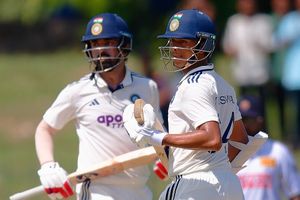
While India’s batters, led by Yashasvi Jaiswal and KL Rahul, mounted a strong reply on Day 2 to steady the ship in Wellington, the broader questions surrounding Mohammed Siraj’s standing in Indian cricket remain unresolved.
By the close of Day 2, India were firmly placed at 159/1 while replying to New Zealand's first innings' 368.
ADVERTISEMENT