

 Home
Home

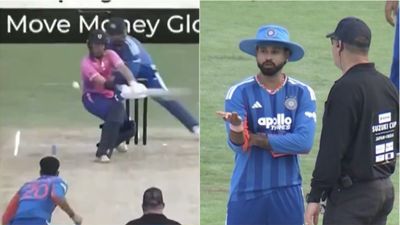
In a five overs per side game Japan gave India a scare. The visitors only managed a two-run win. While Japan making three-time T20 World Champions India sweat in a historic clash should be the main talking about, a wide ball controversy has hogged the limelight.
ADVERTISEMENT
Here’s what happened
The incident took place in the final over of Japan's run chase. On the third delivery, Alexander Shirai-Patmore attempted a reverse sweep. The ball went down the leg side and was given a wide by Japanese umpire Chris Thurgate. It should not have been called a wide as the batter attempted a reverse-sweep but the decision was not protested against.
ALSO READ: Joe Root becomes 8th batter to score 23,000 runs in international cricket: Here's the full list
However, on the next delivery, Shirai-Patmore attempted another reverse-sweep and a wide was given as the ball went down the leg side for left-handed batter. This time, Axar had a conversation with the umpire as it was deemed a wide. Then, skipper Shreyas Iyer intervened as well and had a conversation with the umpire upon which the decision was reversed and it was adjudged a legitimate delivery.
What does the ICC rule say?
As per the ICC rules, if a batter attempts a reverse-sweep or switch hit, then the ball has to be 75 cms wide of the off or leg stump to be called a wide. It does not matter whether the batter changed his stance or not, if the ball is within reach, it will be deemed a legitimate delivery. Also, it doesn't matter whether the stance was changed before or after the bowler has released the ball.
Can the umpire reverse his decision?
After conversation with leg umpire Chris Brown, a member of ICC's Elite Panel, the decision was reversed. In the match between India and Japan, there was no TV umpire available. Also, there was no DRS. The absence of a TV umpire gives the on-field umpires to reverse the decision if they want to until and unless the next delivery is bowled.
There’s also an argument on social media around why the previous delivery remained a wide. The simple answer is that Axar carried on and bowled the next delivery without taking up much time. There wasn’t much time for leg umpire to intervene.
Why the wide became a hot topic on social media?
The Suzuki Cup match was a closely-contested one. At that point, Japan needed just six runs from four balls. If the wide decision stood, Japan would've needed five runs from remaining four deliveries. In the end, Axar used the spin-friendly conditions well and helped India win the match by two runs.
ADVERTISEMENT