

 Home
Home

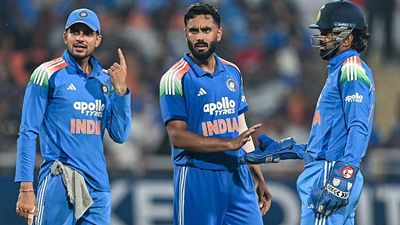
As Team India begins mapping its tactical roadmap for the ODI World Cup 2027, T20 World Cup 2028, the search for reliable, multi-dimensional all-rounders has once again taken center stage. Historically, Indian cricket's marquee World Cup victories have been anchored by dynamic all-round balance, most notably Yuvraj Singh’s immortal 362 runs and 15 wickets in 2011, and Hardik Pandya’s clutch overs and explosive hitting during India's 2024 T20 World Cup title run. With less than a year remaining before the build-up turns into final squad locking for 2027, Punjab’s explosive all-rounder Naman Dhir has burst into the national spotlight.
ADVERTISEMENT
Naman Dhir proves his case to be India's X-Factor in upcoming World Cups
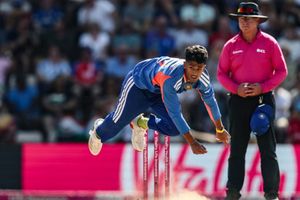
Fresh off an impactful three-match ODI series debut and a remarkable 3-wicket spell (3/31) in his T20I debut against West Indies, Dhir is making a case to edge out the injury-plagued Nitish Kumar Reddy and Washington Sundar while offering an insurance policy for Hardik Pandya.
ALSO READ: Snubbed Indian players who could benefit from Ajit Agarkar’s exit following Bhuvneshwar Kumar's suit
Naman Dhir vs Nitish Kumar Reddy
Nitish Reddy entered the national picture as a seam-bowling all-rounder with high potential. However, persistent injury setbacks and inconsistent outings, most recently leaking runs at over 7 to 9 an hour in the West Indies ODIs—have slowed his momentum. In contrast, Naman Dhir provides vital stability and high-impact flexibility.
Dhir’s ability to clean-hit spin and pace alike gives him an edge. In the IPL for Mumbai Indians, Dhir posted 710 runs across 44 matches at a strike rate of over 164.00. In domestic cricket, he made headlines by smashing a 64-ball 173 in the Sher-e-Punjab T20 League. While Nitish bowls fast-medium, Dhir offers sharp off-spin that breaks partnerships. In his T20I debut against West Indies in Lucknow, Dhir registered figures of 3/31 in 4 overs, helping stall a blazing West Indies top order.
T20I and White-Ball Standing: Edging Washington SundarIn India's T20I and ODI setups, Washington Sundar has long been favored for his powerplay economy. However, Washington's frequent injury breakdowns and limited hitting range in the late overs have often left Team India under-indexed on finish power. When Washington was withdrawn from the T20I series against West Indies to focus on red-ball match fitness, Dhir grabbed his chance with both hands: Batting Range: Washington's career T20 strike rate hovers around 120–125, making him a classical accumulator. Dhir, operating at a strike rate near 164 in IPL T20s, can seamlessly shift between middle-overs acceleration and lower-order finishing.
Bowling Impact: While Washington is primarily an economical defensive option, Dhir attacks the stumps, earning key breakthroughs, as proven by his 3-wicket haul on T20I debut.
The Perfect Backup for Hardik Pandya: Hardik Pandya remains India's premier white-ball all-rounder, but his history of ankle, back, and hamstring injuries makes sole reliance on him a tactical risk for a long World Cup campaign.
Naman Dhir offers Team India the precise attributes needed to fill or complement Hardik’s role. he excels in high-pressure finishes, boasting multiple 30+ scores at 180+ strike rates in pressure situations. Unlike fast-bowling all-rounders whose body workloads are high, Dhir’s off-spin utility allows him to bowl 4–6 tight overs in ODIs without taking the heavy physical toll of seam bowling, keeping him match-ready.
Problem with Nitish Kumar Reddy
On the other hand, Reddy’s recent outings highlight a concerning lack of consistency. While the young all-rounder briefly flashed potential against lower-ranked opponents, his performances in the recent 50-over games against the West Indies exposed vulnerabilities with both bat and ball. During the two ODIs against the West Indies, Reddy failed to make an impact. In the October 3 fixture, he scored a sluggish 9 off 16 balls before returning expensive bowling figures of 0/50 in 6.5 overs at a leaky economy rate of 7.32. This followed an uninspiring outing on September 27, where he did not get to bat and proved even costlier with the ball, conceding 45 runs in just 5 overs (economy of 9.00) while picking up a lone wicket.
This inconsistency stands in stark contrast to his outings against Afghanistan in the T20I series. Reddy shined with the ball in the third T20I on September 17, snatching 3/25 in 4 overs at a tidy 6.25 economy rate. However, even in that series, his displays blew hot and cold, he was hit for 30 runs in 2 overs (economy 15.00) in the opening T20I and managed just 1 run with the bat across the series. Ultimately, erratic bowling spells and limited lower-order runs prove that consistency remains Reddy's biggest obstacle on the international stage.
| Player | Format / Scope | Runs / Batting SR | Wickets / Bowling Econ | Key Profile / Status |
| Naman Dhir | T20s (Overall) | 1,222 runs with 164.0 SR | 8 wickets (Best: 3/31 on debut) | High-impact finisher, Off-spinner, Fit |
| Nitish K. Reddy | IPL / White-Ball | 787 runs with 145.5 SR | 13 wickets @ 10.7 Econ | Medium pacer, Injury-prone |
| Washington Sundar | T20 Internationals | 128 Strike Rate | 7.09 Economy Rate | Powerplay off-spinner, Frequent injuries |
| Hardik Pandya | White-Ball International | 4192 runs | 205 Int'l Wickets | Elite pace all-rounder, Workload managed topped with injuries |
All-rounders' roles in India's 1983, 2011 and 2024 World Cup title glory
The history of Indian cricket reveals an undeniable truth: Team India wins World Cups when it boasts game-changing all-rounders. From historic triumphs to modern silverware, dynamic multi-skilled all-rounders have always proved instrumental in providing the vital balance required to conquer the big stage.
The Historic Catalyst: Kapil Dev (1983)
In the 1983 ODI World Cup, Kapil Dev redefined Indian cricket. As captain and premier all-rounder, Kapil delivered 303 runs and 12 wickets. His legendary, unbeaten 175 against Zimbabwe rescued India from a disastrous 17/5, while his clutch bowling and iconic running catch to dismiss Vivian Richards in the final sealed India's maiden World Cup trophy. Kapil proved that an all-rounder’s individual brilliance could alter the destination of a tournament.
The Player of the Tournament: Yuvraj Singh (2011)
India’s 2011 ODI World Cup triumph was anchored by Yuvraj Singh’s extraordinary campaign. Operating as a middle-order powerhouse and a crucial left-arm orthodox spinner, Yuvraj scored 362 runs and picked up 15 wickets across 9 matches. His four fifties, one century, and multiple match-winning spells earned him the Player of the Tournament award, giving MS Dhoni the luxury of playing an extra specialist batter without compromising bowling depth.
The Modern Finisher & Wicket-Taker: Hardik Pandya (2024)
In the 2024 T20 World Cup, Hardik Pandya provided the ultimate balance. Hardik contributed vital middle-order blitzes and consistently picked up breakthrough wickets. His heroics reached a crescendo in the final against South Africa, where he defended 16 runs in the final over—dismissing Heinrich Klaasen and David Miller—to end India's 11-year ICC trophy drought.
Why selectors must act now for 2027 ODI World Cup?
With the 2027 ODI World Cup approaching, Indian team management faces a critical deadline. World Cup campaigns demand tactical flexibility, batting depth, and six genuine bowling options to handle unexpected injuries or poor match match-ups.
Wikipedia With under a year left to lock in the World Cup core, India must immediately settle on its primary and backup all-rounders, whether grooming seam-bowling options or stabilizing spin-all-round utility. History shows that waiting until the last minute compromises team balance. To repeat the glory of 1983, 2011, and 2024, Team India must establish and back its multi-dimensional match-winners today.
ADVERTISEMENT