

 Home


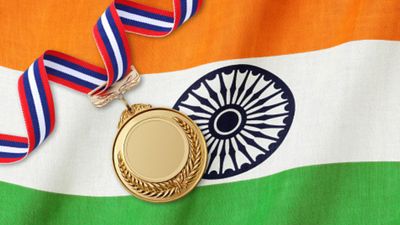
After a stunning run at the Asian Games in Japan, where India held fourth position in the medal count, the Para Games have officially begun. India’s para-athletes delivered an outstanding start to the Asian Para Games 2026, collecting a total of 11 medals on the opening day and immediately establishing the country as a serious contender.
ADVERTISEMENT
The haul of four gold, five silver and two bronze medals placed India fourth in the early medal table, behind only China, Japan and Uzbekistan. The performance has generated considerable excitement back home and underlined the growing depth and quality of India’s para-sport programme.
The Asian Para Games officially began on 19 October 2026. China, the traditional powerhouse of Asian para-sport, dominated the first day with 26 gold medals and a total of 62 medals. Host nation Japan sat second with 27 medals, while Uzbekistan occupied third place with 23. India’s 11 medals put the country ahead of Kazakhstan, South Korea, Iran and others, a ranking that reflects both immediate success and longer-term investment in coaching, facilities and athlete support.
Several of India’s medals arrived through commanding 1-2 finishes that demonstrated strength in depth. In the women’s 10-metre air rifle SH1 final, Mona Agarwal claimed gold with an Asian Para Games record score of 250.0 points. Her teammate Avani Lekhara, already a multiple Paralympic medallist, took silver with 249.6.
Asian Para Games 2026: Where does India stand after 11 medals on Day 1?
The pair’s dominance in a high-precision event signalled India’s continued excellence in shooting, a discipline that has consistently delivered medals on the continental and global stages. Athletics also produced strong results. Nishad Kumar captured gold in the men’s T47 long jump with a leap of 7.11 metres. In the women’s 1500 metres T12/T13, Soumya won gold in a personal-best time of 5:12.39, with Venkatesh Radha securing silver for another Indian one-two. The men’s F46 javelin throw followed a similar pattern: Rinku threw a season-best 65.11 metres for gold, while Ajeet Singh’s 65.02 metres earned silver. These results in field events highlighted the technical progress made by Indian throwers and jumpers in recent years.
Additional medals came from combat and swimming. Kokila claimed silver in the women’s J2 -52 kg judo category, while Kapil Parmar took bronze in the men’s J1 -70 kg division. In the pool, Ravi Karthik Budigina secured silver in the men’s 100 metres freestyle S13. A further bronze was added by Ravanni Valasanaini in the women’s 1500 metres T11 with a personal best of 5:41.85. Collectively, the medals were spread across shooting, athletics, judo and swimming, showing that success was not confined to a single sport. Beyond the podium finishes, other Indian athletes posted encouraging qualification performances. Sheetal Devi matched the world record in women’s compound archery qualifying, raising expectations of further medals later in the Games. Indian competitors also advanced to semi-finals in table tennis and badminton, disciplines in which the country has previously excelled at both Asian and Paralympic level.
These results suggest that India’s medal tally is likely to grow substantially as the competition continues. The strong opening day is the product of sustained development work. Indian para-athletes have benefited from improved high-performance coaching, better access to international competition, and greater financial and logistical support from both government bodies and private sponsors. Success at the Paris 2024 Paralympics created momentum, and the current generation appears determined to build on that foundation. Young athletes competing alongside established stars such as Avani Lekhara illustrate a healthy pipeline of talent.
China’s early dominance is expected to continue, given the country’s extensive resources and depth across almost every para-sport. Japan, competing on home soil, will also remain a formidable presence. For India, however, the goal is not simply to finish high in the overall table but to convert promising form into consistent multi-medal performances across a wider range of events. The four gold medals already secured on day one provide an excellent platform. As the Asian Para Games progress, attention will turn to how India’s athletes handle the physical and mental demands of a multi-day competition. Events still to come include powerlifting, more track and field disciplines, and further opportunities in archery, badminton and swimming.
If the opening day’s form is maintained, India could finish among the top five or six nations, a significant achievement given the strength of the regional field. The 11-medal haul has already lifted spirits and drawn public attention to para-sport. India’s day-one performance at the 2026 Asian Para Games was both impressive and encouraging. Four gold medals, multiple 1-2 finishes and representation across several sports have placed the country firmly in the upper echelons of the early medal standings. With more events still to come, the focus now shifts to sustaining that momentum and maximising every opportunity for further success.
ALSO READ: Asian Para Games: Who is Nishad Kumar? Indian athlete wins gold in men's long jump
ADVERTISEMENT