

 Home
Home

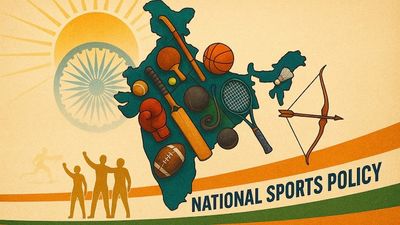
The Union Government has notified the National Sports Governance (National Sports Bodies) Rules, 2026 under the National Sports Governance Act, 2025. These rules set out how national sports organisations in the country will be run and regulated.
ADVERTISEMENT
The rules explain how sportspersons of outstanding merit (SOMs) will be included, how the General Body and Executive Committee of National Sports Bodies will be formed, and how elections will be conducted. They also list the grounds on which members can be disqualified. Clear procedures have been laid down for the registration of affiliated units and for keeping their details updated with the National Sports Board.
One of the key features of the rules is the mandatory inclusion of at least four sportspersons of outstanding merit in the General Body of every National Sports Body. To ensure proper representation of women, at least half of these sportspersons must be women. The rules also aim to increase women’s presence in decision-making by requiring National Sports Bodies to ensure that at least four women are part of the Executive Committee. This can be done by reserving specific posts for women through their bylaws.
ALSO READ: KL Rahul reveals his conversation with Harshit Rana while batting during 1st ODI against New Zealand
The rules set general eligibility conditions as well as a tier-based system for selecting sportspersons of outstanding merit for the General Body and Executive Committee. To qualify as a SOM, a sportsperson must be at least 25 years old, must have retired from active competition, and should not have taken part in any event that leads to selection at the district, state or national level for at least one year before applying.
The tier system takes into account the type of sport and the level of achievement. Ten different tiers have been created, ranging from medal winners at the Olympic, Paralympic and Winter Olympic Games to those who have won medals at the National Games or National Championships. This structure has been kept broad so that it suits different sports and disciplines.
Detailed steps and timelines for elections to the Executive Committee have also been laid out. These cover everything from applying for SOM status to announcing elections, publishing the final electoral roll and inviting nominations.
The rules clearly mention who cannot be a member of the General Body or any committee. Anyone convicted by a court and sentenced to imprisonment is barred from being part of the General Body or contesting elections to the Executive Committee or Athletes Committee.
It has also been stated that the National Sports Election Panel must always have at least 20 qualified members, as required under the Act. The fee for an electoral officer chosen from this panel will be fixed by the National Sports Body in agreement with the officer, with an upper limit of ₹5 lakh. A separate fee may also be paid for an assistant, if appointed.
All National Sports Bodies have been asked to amend their bye-laws to align with the new law within six months. The Central Government has the power to relax the rules for up to 12 months if a National Sports Body applies for it and valid reasons are recorded in writing.
The notification of these rules is an important step towards implementing the National Sports Governance Act, 2025, and marks a major move towards a more structured and transparent sports governance system in India.
ADVERTISEMENT