

 Home
Home

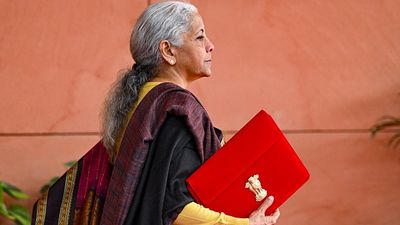
In the Union Budget presented by Finance Minister Nirmala Sitharaman this Sunday, the Ministry of Youth Affairs and Sports received a significant financial boost. The ministry’s total allocation rose to Rs 4,479.88 crore, marking a substantial increase of over Rs1,133 crore compared to the previous year’s revised estimate of Rs 3,346.54 crore. A standout feature of this budget is the first-time allocation of Rs 500 crore specifically for the sports goods manufacturing sector, signaling a strategic shift toward industrial growth within the sports ecosystem.
ADVERTISEMENT
Sports Budget Jumps by Rs 1,133.34 Crore
This investment aligns with the government's vision to transform India into a global hub for affordable, high-quality sports equipment. During her speech, Sitharaman highlighted the country's manufacturing potential, echoing a priority frequently championed by Sports Minister Mansukh Mandaviya. By providing dedicated funding to this sector, the government aims to strengthen local production and compete on an international scale.
ALSO READ: Big Breaking: Pakistan stage another drama, to not play India matches in T20I World Cup
Funding for key athletic institutions also saw an upward trend, with the Sports Authority of India (SAI) receiving an increase to Rs 917.38 crore. As the primary body responsible for athlete training camps, logistical support, and stadium maintenance, this extra capital is intended to bolster the nation's sporting infrastructure. However, the budget wasn't an increase across the board; both the National Anti-Doping Agency (NADA) and the National Dope Testing Laboratory (NDTL) faced modest funding cuts for the upcoming cycle.
Breaking new ground, the sports goods sector has received its first-ever dedicated budgetary provision, a move warmly welcomed by the Sports Ministry. To capitalise on this historic funding, officials have announced that a comprehensive strategy will be developed to provide structured support for the industry. This initiative is expected to act as a catalyst for growth, particularly for emerging manufacturing start-ups under the 'Make in India' banner, positioning the nation as a more self-reliant producer of athletic equipment.
Khelo India Mission Begins
In terms of grassroots development, the government’s flagship Khelo India programme has been allotted Rs 924.35 crore. While this figure is slightly lower than the Rs 1,000 crore earmarked in the previous year's budget, it represents a significant increase over the actual final expenditure of Rs 700 crore. This adjustment suggests a focus on aligning budget projections more closely with the program's practical spending capacity and execution.
Looking toward international competition, there is a notable 78% surge in funding for the Commonwealth Games (CWG), with assistance rising from Rs 28.05 crore to Rs 50 crore. This financial boost is timely, as it ensures Indian athletes are well-supported heading into the 2026 CWG in Glasgow, scheduled for this July and August.
Building on the success of the original initiative, Finance Minister Nirmala Sitharaman has proposed the launch of a revamped Khelo India Mission. This new phase is designed to shift the focus toward the long-term, systemic development of training centers and coaching expertise over the next decade. By inter-linking various sporting pathways, the mission aims to create a more integrated and seamless talent development program for the nation's youth.
This evolution marks a significant expansion of the programme since its inception in 2017. While the primary objective of the original Khelo India was to host national-level competitions across various age groups to identify raw talent, the new mission seeks to move beyond mere identification. It focuses on nurturing that talent through a more sophisticated and sustainable support structure for both athletes and their mentors.
"Sports sector provides multiple means of employment, skilling and job opportunities. Taking forward the systematic nurturing of sports talent which is set in motion through the Khelo India programme, I propose to launch a Khelo India mission to transform the sports sector over the next decade," Sitharaman said during her Budget speech in the Lok Sabha.
"The mission will facilitate: (a) an integrated talent development pathway supported by training centres which are foundational, intermediate and elite levels; (b) systematic development of coaches and support staff; (c) integration of sports science and technology; (d) competitions and leagues to promote sports culture and provide platforms; (e) development of sports infrastructure for training and competition," she added.
In addition to the primary sports programs, several other sectors within the ministry saw notable shifts in funding. The National Sports University faced a budget reduction, with its allocation dropping from Rs 78.64 crore to Rs 46.98 crore. Conversely, the National Sports Development Fund, established in 1998, received an increase to Rs 5 crore. Furthermore, the government has prioritized direct athlete support by hiking incentives for sportspersons from Rs 28 crore to Rs 40 crore this year.
Support for governing bodies and youth programs also trended upward. The National Sports Federations saw a marginal increase to Rs 425 crore, while the National Programme for Youth and Adolescent Development received Rs 58.41 crore, effectively reversing previous cuts. The most dramatic percentage increase, however, was reserved for Youth Hostels, which saw their funding leap from a nominal Rs 1.10 crore to Rs 19.20 crore, signaling a renewed focus on youth travel and accommodation infrastructure.
Community-focused initiatives also received a substantial boost. The National Service Scheme (NSS), which focuses on developing young citizens through social work and community service, saw its budget raised to Rs 357.39 crore from the previous Rs 275 crore.
ADVERTISEMENT