



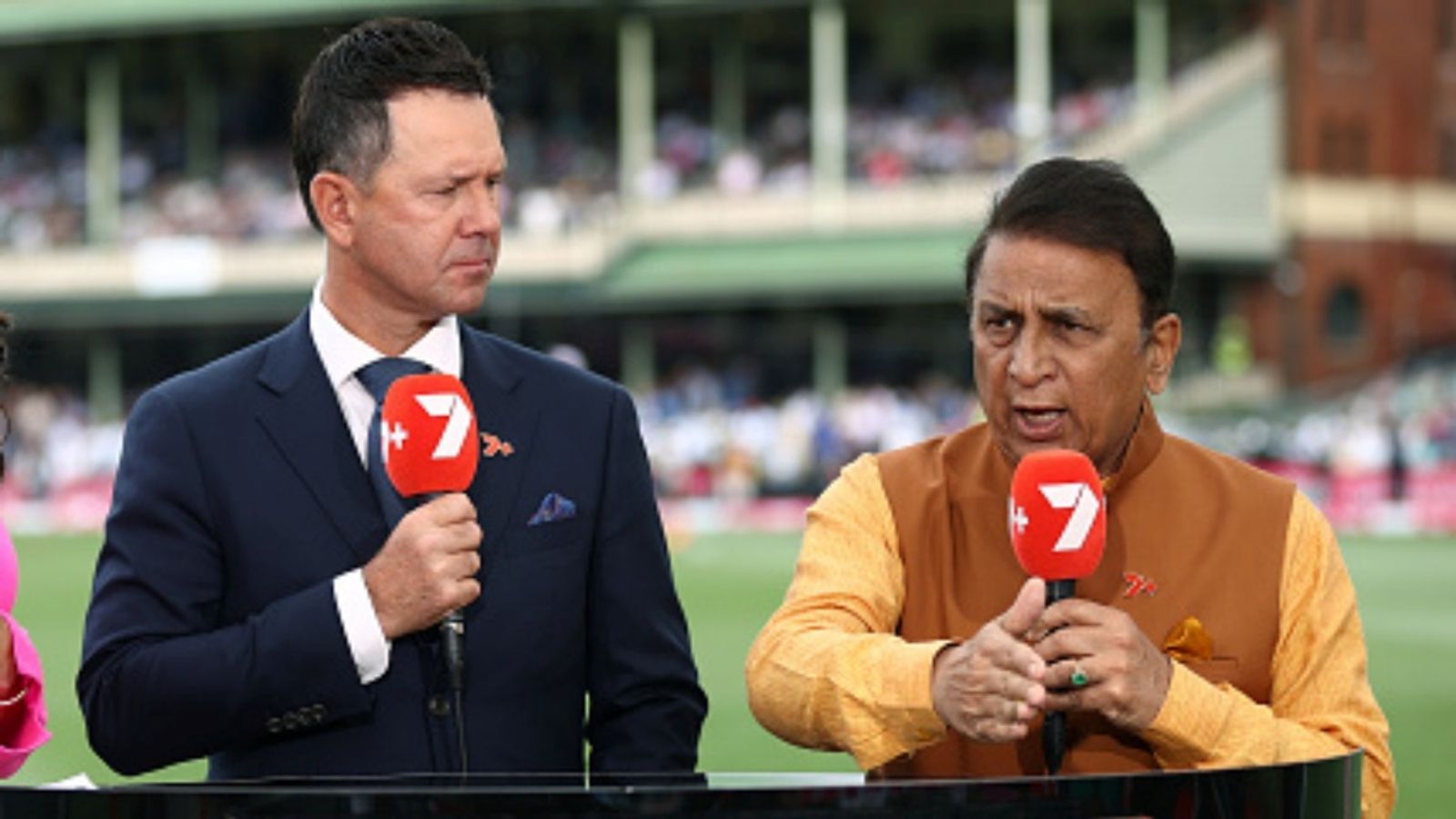
India’s legendary batter Sunil Gavaskar has accused International Cricket Council (ICC) of having double standards when they are rating a pitch. Gavaskar feels that dangerous bouncy pitches like the one at Perth for Ashes opener was rated ‘very good’ whereas subcontinent tracks don’t are criticised for being spin-friendly.
“Khawaja seems to have escaped censure from Cricket Australia, but if he doesn’t score runs in the Gabba Test, it won’t be a surprise if he is left out of the team. Australia now has another opener in Travis Head, whose unorthodox century delivered an easy win. Mind you, 13 wickets fell on day two also, but that century took away any chance of the pitch being rated ‘shit’ by anybody else. That century wasn’t always with what you would call Test match strokes and was more like white-ball cricket shots, but hey, who is complaining? Not the old powers, for sure,” Gavaskar wrote in his column for Sportstar.
“Their narrative that a pitch with bounce and danger to life and limb is never bad, but that a pitch where the ball turns and keeps low is a disgrace, is sadly still believed even by the complexed ones in the sub-continent. They will rate a batter only if he scores tons on pacy, bouncy pitches, but if a batter from their part of the world doesn’t get a century in the sub-continent, he will still be called great,” he added.
Gavaskar explains why batting on spin-friendly track is tougher
Gavaskar, the first batter to score 10,000 Test runs, further explained how battling it out against spin is tougher than countering the pacers.
“Having played a bit of cricket myself, I can say that batting against pace requires just two movements, forward or back. To counter spin, it is not just about playing forward or back, but also about going down the pitch to smother the turn and attack the ball. That’s where skill comes in. Yes, I am well aware that today some batters do advance down the pitch to the quicks, but it’s more a desperate, premeditated measure than a reflex technical move. It can come off, just as it does when batters move away from the stumps or across them to play limited-overs shots. More than skill, it is luck that makes it come off, but never on a consistent basis,” the 76-year-old explained.
“So, for me, playing on a turning pitch requires more talent and footwork than playing pace. That is why, if you don’t score runs on such surfaces, you are not a great batter. Since top-quality spin is seldom, if ever, seen in these countries and their pitches, the moment they see spin in the sub-continent, they get uncomfortable and question the quality of the pitch. That’s typical, but unless you score in foreign conditions, how can a batter be called great?” he asked.
Gavaskar recalls the dangerous Gabba pitch
The second Test of the Ashes 2025-26 will be played at The Gabba, Brisbane. Ahead of the pink-ball encounter, Gavaskar recalled a Test at the same venue a few years ago. He feels that the batters were lucky that they did not suffer any serious injury.
“Remember a Test against South Africa a few years back at the Gabba that also finished in a couple of days, with the ball flying off a length and bouncing over the keeper’s head for byes. It was sheer luck that no player got seriously injured. The excuse? The curator got it wrong by leaving a bit more grass on it, or so the world was told. Did the pitch get a poor rating? No, sir, those are reserved only for the pitches in the sub-continent,” the batting great concluded.
Meanwhile, Gavaskar has been critical of India batters’ flawed technique to counter the spinners. India suffered a whitewash at home against South Africa. After failing to chase down 124 at Eden Gardens, they lost the Guwahati Test by 408 runs.