




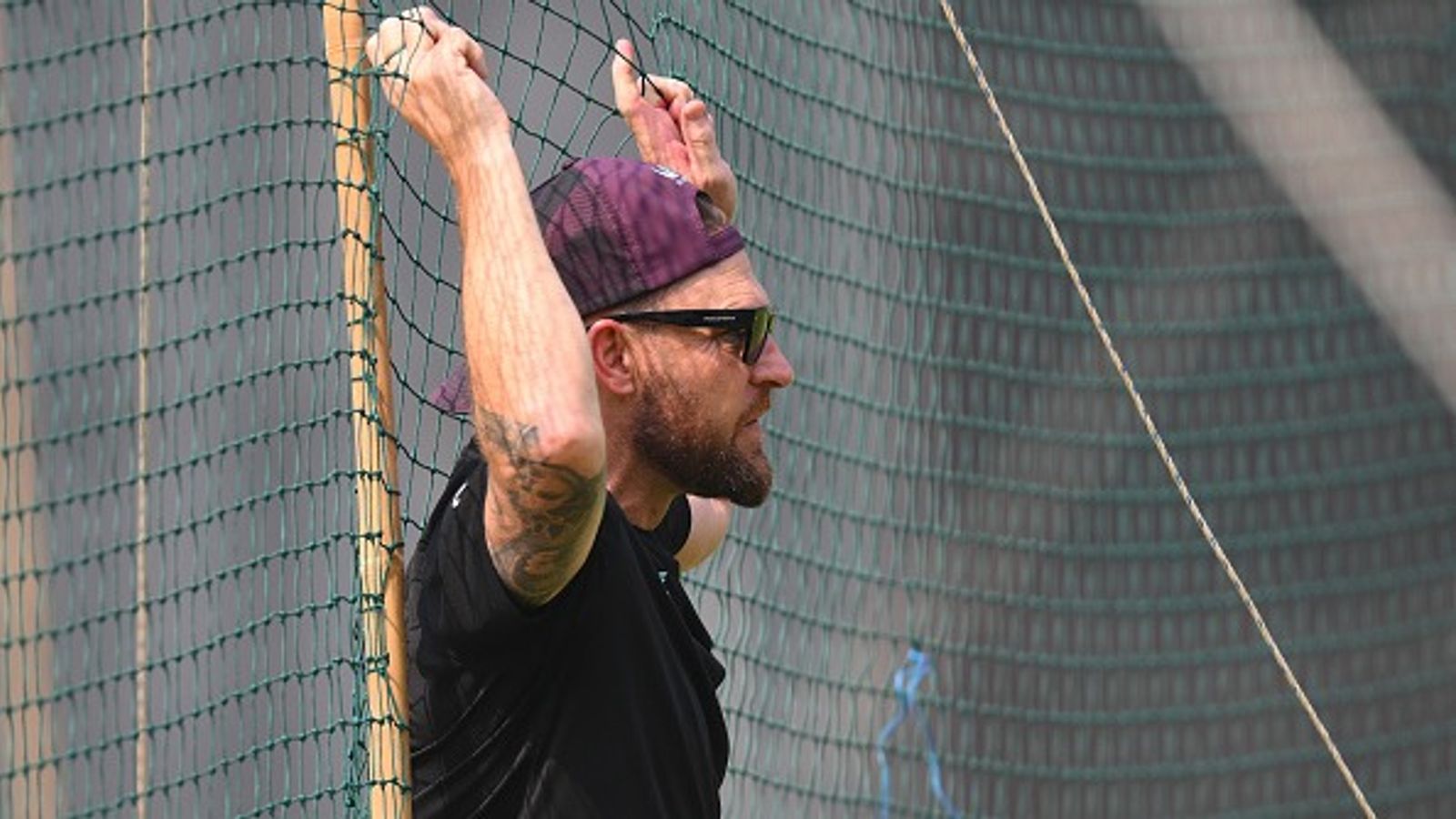
England and Wales Cricket Board (ECB) confirmed on March 23 that Brendon McCullum will retain his position as head coach across all three formats. This decision comes despite a period of underwhelming results and mounting scrutiny regarding the team's internal dressing-room culture. The governing body’s vote of confidence ensures continuity in leadership, even as critics call for a shift in the 'Bazball' era's approach following recent setbacks.
No damage done, McCullum, Stokes' posts remain intact
As part of the same comprehensive review, Ben Stokes has been confirmed to continue as Test captain, with Harry Brook serving as his deputy. Additionally, Rob Key will remain in his role as the managing director of England's men's cricket. The review was primarily triggered by a disappointing Ashes series in Australia earlier this year, where England suffered a heavy 4-1 defeat and faced intense backlash over perceived casual preparations for such a high-stakes tour.
The team’s struggles extended into the shortest format this month, where they were eliminated in the semi-finals of the T20 World Cup by the eventual champions, India. Captained by Brook in the white-ball format, the campaign was frequently overshadowed by off-field distractions, specifically revolving around Brook's altercation with a nightclub bouncer in New Zealand last year.
ALSO READ: Irfan Pathan likens SRH's 23-yr-old uncapped star with Abhishek Sharma ahead of IPL 2026
They are all committed to doing the best for England: ECB chief
Internal friction has also surfaced publicly, with veteran all-rounder Liam Livingstone voicing sharp criticism of the current team environment. Livingstone suggested that the leadership group has become overly exclusive, claiming the regime shows little regard for players who fall outside of a specific "core group." This public dissent adds a layer of complexity to McCullum’s task as he looks to rebuild squad unity ahead of the next international cycle.
"I've seen the driving ambition and determination that we're lucky enough to have within our leadership group to take the lessons from the Ashes and move forward. These are all individuals that have got other things that they can do in their lives. They are all committed to doing the best for England and to learning the lessons that are evident," ECB chief executive Richard Gould told the BBC.
The aggressive Bazball philosophy championed by Brendon McCullum has faced mounting criticism as its high-risk approach continues to yield inconsistent results. While the term was coined by the British media to describe England's relentless attacking intent in Test cricket, the strategy famously backfired during last year’s home series against India. That series concluded in a 2-2 draw, though many observers noted that with a stroke of luck, the Indian side could have secured their first series victory on English soil in decades. The recent Ashes tour further intensified the scrutiny, becoming mired in both tactical and behavioral controversy. Reports surfaced suggesting a growing rift between McCullum and captain Ben Stokes, indicating the two were no longer aligned on the team's direction. Compounding these leadership concerns were allegations of a lack of discipline; several players were reportedly seen partying in the holiday destination of Noosa, indulging in excessive celebrations even as England’s campaign on the field was faltering.
ALSO READ: DC captain Axar Patel reveals KL Rahul's new batting order for IPL 2026
Following the Ashes debacle, a formal probe was launched into the team's performance, leading many to predict that McCullum’s tenure was nearing its end. These rumors reached a peak earlier this month when England was decisively knocked out of the T20 World Cup semifinals. At that stage, it appeared almost certain that the former New Zealand opener would be relieved of his duties as the team's white-ball struggles mirrored their red-ball inconsistencies.
In a move that caught many by surprise, the ECB chose to double down on the current regime rather than initiate a complete overhaul. On Monday at Lord’s, Chief Executive Richard Gould, accompanied by Rob Key, officially confirmed the retention of McCullum, Stokes, and Key himself. Gould defended the decision by emphasizing a commitment to long-term stability, signaling that the board still believes this leadership group is the right one to navigate England through the next major international cycle.
England face busy home summer
ECB has clarified that McCullum remains under contract to oversee England team across all formats through the end of the 2027 ODI World Cup, which will be hosted in South Africa, Zimbabwe, and Namibia. This commitment ensures that the current coaching philosophy will remain in place for the next major global tournament cycle, providing a clear window for the team to recalibrate after their recent setbacks. Looking ahead, England faces a busy home summer that will serve as a critical test of their current trajectory. The schedule begins in June with a high-profile three-Test series against New Zealand, followed immediately by an extensive white-ball campaign. The team is also slated to host India for eight limited-overs matches.