





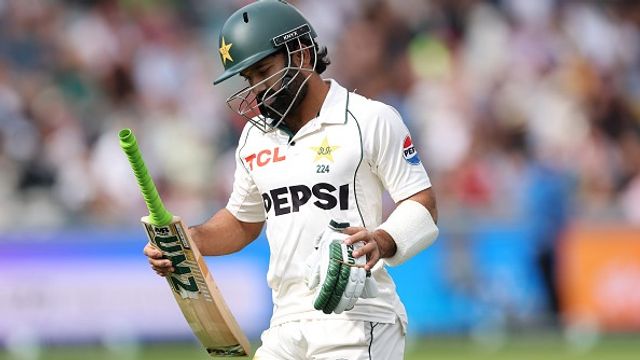
Pakistan cricket has witnessed one of its most sweeping administrative and structural resets in recent memory. On Saturday, November 21, 2026, the Pakistan Cricket Board (PCB), under the leadership of chairman Mohsin Naqvi, unveiled its men’s central contract list for the 2026–27 cycle, sending shockwaves across the cricketing world by omitting three of its most prominent senior batters: wicketkeeper-batter Mohammad Rizwan, former Test captain Shan Masood, and veteran opener Imam-ul-Haq.
PCB axes Rizwan, Masood, Imam from Central Contracts
After months of delay that left national players without central retainers since the previous contracts expired in June 2026, the board finally unveiled a radically redesigned, format-based contract system covering 38 players across five distinct categories. While the overhaul signals a decisive generational shift ahead of the 2027 ODI World Cup and the remainder of the 2025–27 World Test Championship (WTC) cycle, the exclusion of Rizwan, Masood, and Imam underscores a ruthless accountability drive triggered by on-field collapses and off-field controversies.
A Radical Format-Based Contract Structure
For years, the PCB relied on traditional tiered groupings (Categories A, B, C, and D) that often rewarded reputation and all-format presence regardless of specialized workload. In a major departure from convention, the 2026–27 model—which runs retroactively from July 2026 to June 2027—introduces five format-specific tiers designed to align compensation directly with active squad roles:
Category AB (Test & ODI): Babar Azam and Salman Ali Agha
Category A (Test Only): Azan Awais, Mohammad Abbas, Sajid Khan, and Saud Shakeel
Category BC (ODI & T20I): Abrar Ahmed, Arafat Minhas, Fakhar Zaman, Faheem Ashraf, Haris Rauf, and Shaheen Shah Afridi
Category C (T20I Only): Hasan Nawaz, Maaz Sadaqat, Mohammad Salman Mirza, Naseem Shah, Sahibzada Farhan, Shadab Khan, and Usman Tariq
Category D (Development): 19 emerging players, including Abdul Samad, Abdullah Fazal, Ahmed Daniyal, Ali Raza, Farhan Yousaf, Hunain Shah, Mohammad Taha, Mohammad Tayyab Arif, Muhammad Ghazi Ghori, Muhammad Imran Randhawa, Razaullah, Saad Baig, Saad Masood, Sameer Minhas, Saqib Khan, Shahzaib Khan, Shamyl Hussain, Sufiyan Muqeem, and Ubaid Shah.
Notably, not a single Pakistani cricketer has been awarded an all-format contract. Even Babar Azam, reinstated as Test captain, and Salman Ali Agha sit exclusively in the Test and ODI bracket, reflecting a deliberate move by the PCB and head coach Mike Hesson to separate red-ball and white-ball ecosystems.
Why Mohammad Rizwan and Imam-ul-Haq Were Axed
Among the 12 players dropped from the previous retainer list, the omissions of Mohammad Rizwan and Imam-ul-Haq stand out as the most dramatic. Just two years ago, Rizwan was placed in the elite Category A alongside Babar Azam as one of the undisputed pillars of Pakistan’s batting lineup across formats. His sudden fall from grace stems from a combination of declining white-ball impact, red-ball selection axes, and lingering off-field scrutiny.
Both Rizwan and Imam-ul-Haq were abruptly sent home mid-way through Pakistan’s disastrous Test tour of England earlier in 2026—a series that culminated in a humiliating 3–0 whitewash and left Pakistan languishing at ninth and last place on the 2025–27 World Test Championship table. While Salman Ali Agha was also recalled during that tumultuous tour, he managed to rehabilitate his standing with the board. Rizwan and Imam, however, have remained under a dark cloud.
Reports surrounding the contract announcement indicate that both Rizwan and Imam-ul-Haq remain subject to ongoing disciplinary and regulatory inquiries, including scrutiny from the PCB as well as an investigation by the National Cyber Crime Investigation Agency (NCCIA) over external allegations involving the pair. With their international futures clouded by unresolved probes and younger wicketkeeping and opening options emerging, the board opted to sever their central retainers completely rather than carry them on the payroll.
Shan Masood’s exclusion marks the definitive conclusion of a turbulent leadership experiment. Appointed Test captain in late 2023 amid high hopes that his county cricket experience and articulate leadership style would modernize Pakistan’s red-ball approach, Masood endured a grueling tenure marked by historic home defeats and away whitewashes.
Having already been demoted from Category B to Category D in the 2025–26 cycle, Masood’s fate was sealed following the 3–0 series sweep in England. Stripped of the Test captaincy in favor of Babar Azam and overlooked in the red-ball-only Category A, where selectors instead backed specialists like Saud Shakeel, Mohammad Abbas, Sajid Khan, and youngster Azan Awais—Masood now finds himself entirely outside the central contract framework at age 37.
Other Notable exclusions from PCB's Central Contract list
Rizwan, Masood, and Imam are far from the only recognizable names missing from the 2026–27 roster. In total, a dozen contracted players from the previous cycle were shown the door. Among the prominent casualties are explosive top-order batter Saim Ayub, veteran fast bowler Hasan Ali, left-arm spinner Noman Ali, opener Abdullah Shafique, wicketkeeper-batter Mohammad Haris, all-rounder Mohammad Nawaz, and pacers Khurram Shahzad and Abbas Afridi.
In their place, Mohsin Naqvi’s administration has doubled down on youth. Nearly half of the 38 contracted spots—19 in total—are allocated to the newly expanded Category D development tier. Rising talents such as Ubaid Shah, Ali Raza, Sufiyan Muqeem, Shahzaib Khan, Saad Baig, and recent senior debutants like Razaullah, Mohammad Taha, Sameer Minhas, and Muhammad Ghazi Ghori have been brought directly under the board's financial and developmental umbrella.
This aggressive injection of fresh blood aligns closely with white-ball coach Mike Hesson’s expanded mandate, which now includes overseeing the Test side in an effort to rescue Pakistan’s flatlining red-ball fortunes. By tying contracts strictly to current format utility and expanding the development pool, the PCB is signaling that past stature will no longer guarantee central protection.
For Mohammad Rizwan, Shan Masood, and Imam-ul-Haq, losing a PCB central contract does not formally bar them from domestic cricket or future international selection should circumstances change. However, in practical terms, it represents a massive vote of no confidence from the board's top brass. With the 2027 ODI World Cup on the horizon and Pakistan desperately seeking to climb off the bottom of the World Test Championship standings, the selectors have drawn a clear line in the sand.