





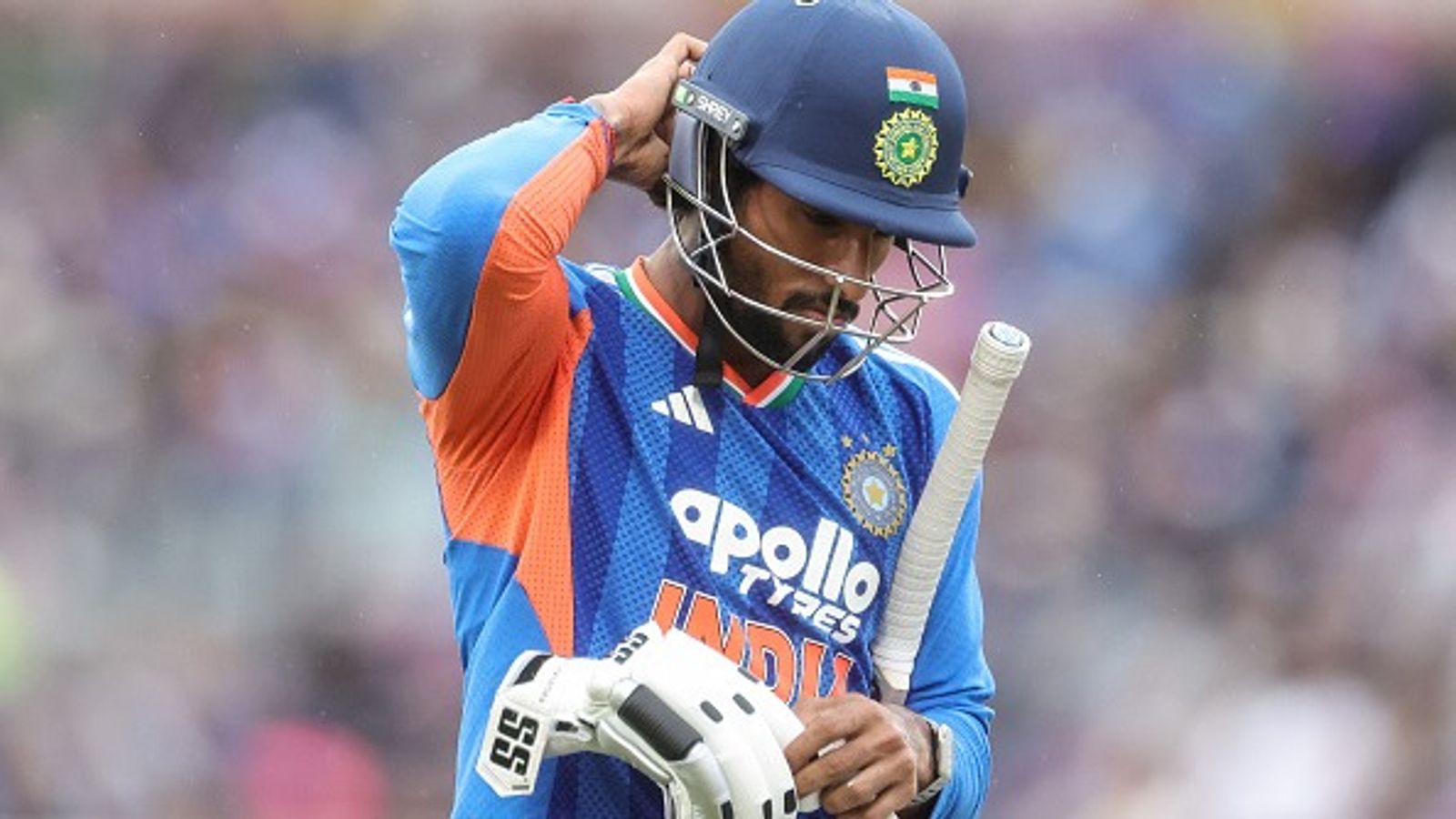
Versatility is often touted as a virtue in international cricket, yet for a young batter attempting to consolidate his spot, constant movement in the batting order presents an intricate test of technical skill and mental resolve. Among the modern generation of Indian cricketers, star batter Tilak Varma stands out as a prime exponent of this chameleon-like adaptability. From bursting onto the scene as an aggressive top-order asset to being utilised as a flexible middle-to-lower-order anchor and finisher, Varma’s journey through positions No. 3 to No. 7 has required an extraordinary degree of maturity.
Tilak Varma speaks out on flexible batting role
The Hyderabad-born batter has now broken his silence on the reality of being shuffled across the order. Addressing the tactical demands, psychological shifts, and technical recalibrations required to thrive anywhere from the top order to the death overs, Varma provided a candid glimpse into the mind of a modern-day international batter.
Since making his international debut for Team India and establishing himself as a vital cog in the Mumbai Indians line-up in the Indian Premier League (IPL), Tilak Varma has rarely enjoyed the luxury of a fixed batting slot. While traditional cricket development grooms players for specific roles, the modern T20 and ODI formats demand fluid dynamic setups based on match matchups, entry points, and required run rates.
Varma’s position has fluctuated wildly depending on squad balance, injuries, and tactical floaters. In international T20s and domestic franchise cricket, he has walked out to bat at No. 3, No. 4, No. 5, No. 6, and occasionally at No. 7 when quick-fire acceleration or lower-order rebuilding was demanded.
Navigating these shifts isn't merely a matter of walking out at a different over; it fundamentally alters the physics of the game a batsman faces. At No. 3, a batter faces a fresh hard ball, standard field restrictions during or just after the Powerplay, and pace off the pitch. Lower down at No. 5 or No. 6, the ball is scuffed, reversing or gripping, fielders are spread across the boundary, and the opposition bowl almost exclusively to wide-yorker or slower-ball fields.
'When the team needs you, you have to accept the role'
Reflecting on these demands, Tilak talked about the necessity of accepting selfless utility roles for team success.
“But when the team needs you, you have to accept the role and earn your position. I have worked a lot on myself, both in practice and mentally, to adjust to this role. I have focused on staying still while playing my shots and understanding how to deal with different situations,” Tilak said on Star Sports.
Despite displaying impressive selfless flexibility across various roles, Varma has made no secret of where his natural instinct lies. His upbringing in junior cricket was anchored in the top order—a foundation that shaped his tempo, strokeplay, and ability to construct big innings.
He also elaborated on his historical roots as a top-order batsman and where he feels most comfortable out in the middle:
“I have always loved batting in the top order, especially at No. 3. I have been an opener since childhood, and I also played at No. 3 in the Under-19 World Cup. Later, I batted at No. 4 in the IPL and then moved to No. 5 and No. 6. I have played in different positions, but personally, I have always been an opener. If I get the chance to open, I will always be ready for it, but I really enjoy batting at No. 3.”
For him, batting at No. 3 offers the ideal balance, the opportunity to capitalize on field restrictions, time to read the surface, and the autonomy to set the tempo of the innings rather than reacting solely to an escalating required run rate.
From top order to finisher, Tilak tasted it all
Transitioning from a No. 3 anchor to a No. 6 or No. 7 finisher requires far more than a simple shift in mindset; it demands distinct technical adjustments. Lower down the order, there is virtually zero warm-up period. A batsman must hit the ground running against specialized death bowlers armed with lethal yorkers, disguised slower balls, and protective field setups.
Varma detailed the nuanced mechanical and mental adjustments he had to make when pushed down into the lower middle order:
He signed off by saying, “For example, when a yorker is missed slightly, you have to be ready to hit it. When you bat lower down the order, the ball is older and can come slower, while bowlers also use more yorkers. The entire batting approach can change. So mentally, I have accepted that this is the role I have to perform for the team.”
This awareness highlights why Varma has succeeded where many top-order purists fail when moved lower down. By training specifically to capitalise on small margin-of-error deliveries like fractionally missed yorkers or low full tosses, he transformed himself into a multi-dimensional threat.
Tilak's number across positions
Tilak’s career numbers reflect a compelling narrative: while he is dependable and functional in lower-middle-order roles, his statistical output skyrockets when elevated to his preferred No. 3 position.
The table below illustrates his performance dynamics across different positions in T20 Internationals:
| Batting Position | Innings | Runs | Batting Average | Strike Rate | Top Scores |
| No. 3 | 7 | 300+ | 80.00+ | 160+ | 107*, 120*, 51* |
| No. 4 | 10 | 230+ | 32.80 | ~138.00 | 51, 49* |
| No. 5 | 6 | 110+ | 22.00 | ~130.00 | 26 |
| No. 6 / No. 7 | 4 | 55+ | 18.33 | ~125.00 |
31* |
The No. 3 Surge: When batting at No. 3, Varma’s average and strike rate climb significantly compared to lower positions. The extra overs allow him to settle before accelerating.
The Middle-Order Grind: At No. 4 and No. 5, his role shifts toward stabilizing collapses or rotating strike against spin, reflected in a lower strike rate but steady overall contributions.
Finishing Duties: At No. 6 and 7, high-risk entry conditions mean fewer total balls faced, resulting in lower personal averages but situational value.
The most striking evidence of Tilak’s elite capability at No. 3 came during India’s T20I series away against South Africa. Having requested skipper Suryakumar Yadav for an opportunity to bat at his preferred No. 3 slot, Varma responded with one of the most brilliant series performances by an Indian batsman in recent T20 history.
In the 3rd T20I at Centurion, Varma produced a masterclass of controlled aggression, smashing an unbeaten 107 off 56 balls*, laced with 8 fours and 7 sixes, driving India to a commanding victory. He backed it up immediately in the very next match at Johannesburg (4th T20I), hammering a sensational 120 off just 47 balls* with 9 fours and 10 sixes.
Series Total: 280 runs across 4 innings at an astounding average of 140.00 and a strike rate exceeding 198, earning him the Player of the Series award.
This remarkable series made Tilak only the second Indian (after Sanju Samson) and fifth player globally to score back-to-back centuries in T20 Internationals, emphatically validating his claim to the No. 3 position.
Stepping into his new role as vice-captain, he demonstrated remarkable leadership by voluntarily surrendering his preferred batting slot to help optimise the team's tactical balance. That selflessness is paying immediate dividends on the field. His explosive 29-ball 60 against Zimbabwe offered a vivid showcase of his game-changing potential in the middle order—a blistering display that incidentally compounded the selection pressure on UP middle-order batsman Rinku Singh, who was also featured in that same playing XI. This recent brilliance reflects a broader pattern of success down the order throughout the year. Operating from number 5 or lower across 19 innings, the left-hander has amassed 427 runs at an aggressive strike rate of 158.73, anchored by four decisive half-centuries. Rather than hindering his output, the positional demotion has underscored Varma's expanding versatility as a reliable middle-order weapon.
By mastering the art of staying still at the crease, adjusting to the older ball, and capitalizing on missed yorkers in the death overs, Varma has rendered himself indispensable to Team India.
Yet, as his recent heroics at No. 3 demonstrated, unlocking his maximum output often aligns with placing him in his natural habitat at the top of the order. With age, temperament, and dynamic shot-making on his side, Tilak continues to prove that whether he is asked to open, anchor at No. 3, or finish at No. 6, he possesses both the skill and the mental fortitude to answer the call.