

 Home


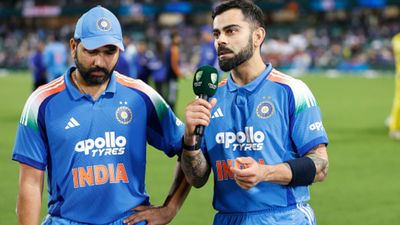
A former selector has reflected on the importance of Rohit Sharma and Virat Kohli’s presence for India. Sridharan Sharath, the former Tamil Nadu batsman who served as chairman of the BCCI’s junior selection committee for five years and as a senior national selector for three of those years, has spoken about his time in the role after his tenure ended on October 23.
ADVERTISEMENT
Sharath highlighted the successes of Indian cricket during his involvement and stressed that the continued presence of veterans Rohit Sharma and Virat Kohli remains important for the team’s balance and development. His period as junior chairman overlapped with two Under-19 World Cup triumphs for India. On the senior side, during his three years on the selection panel headed by Ajit Agarkar, the men’s team secured a T20 World Cup title, the ICC Champions Trophy, two Asia Cups and an Asian Games gold medal. India also reached successive World Test Championship finals.
Former selector reflects on importance of Rohit and Virat’s presence for India
In an exclusive with The Indian Express, he said:
“Our aim was to make India champions across formats.”
Sharath reserved particular praise for Rohit Sharma’s leadership qualities and added:
“You will come across great players, but in terms of taking care of players individually and putting the team’s interest first, Rohit was outstanding.”
The former selector added:
“He treated everyone equally. He wanted to ensure that those who were not playing were also taken utmost care of because you never know when an opportunity would come by.”
Sharath addressed the sensitive issue of the veterans’ ongoing roles under new captain Shubman Gill. After the Champions Trophy victory, the selection committee removed Rohit as ODI captain specifically to begin grooming younger leaders while the seniors remained available, thereby avoiding any future vacuum. Yet both Rohit and Kohli continue to exert influence. While talking about how he felt after Rohit was dropped from the captaincy, he, as per the aforementioned exclusive interview, said:
“Rohit is playing under Shubman, but he is still a leader in the team. Same with Virat. That is what makes them both special and respected. Their presence still matters to the team and that’s the way the youngsters will learn. You can’t remove them totally.”
The comments come at a time when questions about the long-term futures of the two batting greats, both now focused primarily on ODIs after retiring from other formats, continue to surface ahead of the 2027 World Cup. Sharath’s explanation states a measured approach that values experience alongside the necessary transition. He also pointed to the importance of looking beyond IPL performances alone when selecting players, explaining domestic cricket and performances under pressure as key indicators. Sharath’s own path into selection was rooted in extensive domestic experience.
A prolific left-handed batsman with more than 100 first-class matches and nearly 9,000 runs, he later served as a BCCI match referee before moving into selection roles, including as Tamil Nadu’s chief selector. He has spoken previously about the emotional significance of contributing to Indian cricket after missing out on a national playing career himself. His junior panel’s work included identifying talents such as Vaibhav Suryavanshi, whose fearless batting featured prominently in recent Under-19 success.
Looking back, Sharath described the overall experience as satisfying despite challenges, including those posed by the COVID period, which required careful management through training camps. He credited support from senior administrators for enabling the committees to function effectively. The junior selection panel has now been reconstituted under new chairman Parvinder Awana, a former India T20I player, with the Under-19 Asia Cup in Oman among its immediate tasks. Sharath’s reflections offer insight into the balancing act required of selectors in a high-pressure environment where short-term results and long-term squad building must coexist.
By retaining experienced figures like Rohit and Kohli in the dressing room while deliberately developing the next generation of leaders, the approach aims to sustain India’s competitiveness across formats. As the senior team continues its programme and the junior structure turns over, the principles Sharath outlined team-first thinking, careful observation of players, and recognition of leadership beyond the captaincy are likely to remain relevant to those who follow. Meanwhile, Virat Kohli has confirmed that the 2027 ODI World Cup will be his last; Rohit Sharma has hinted that he will play more and will be analysing his performance at the World Cup.
ALSO READ: Where will Cameron Green bat in 3rd Test vs South Africa? How all-rounder's return can change batting order?
ADVERTISEMENT