

 Home
Home

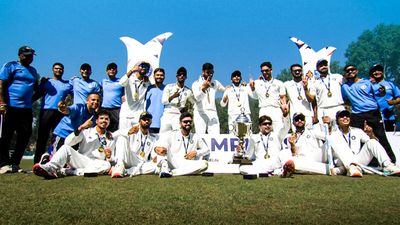
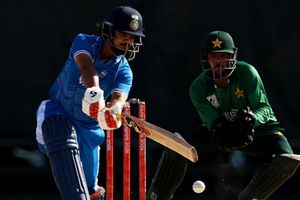
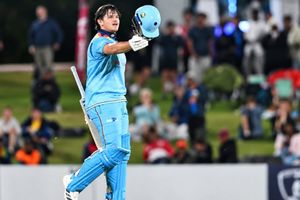
Rest of India (RoI) sealed a resounding 167-run win over newly crowned Ranji Trophy champions Jammu & Kashmir (J&K) to lift the Irani Cup 2026 title at Sher-i-Kashmir Stadium in Srinagar.
ADVERTISEMENT
Rest of India thrash J&K to become Irani Cup 2026 champions
Chasing a target of 279 in the final innings, Jammu & Kashmir were dismantled for just 111 runs in 28.4 overs as Rest of India's fast-bowling unit engineered a catastrophic collapse. Despite J&K taking a valuable 41-run lead in the first innings, Rest of India mounted a gritty comeback led by Smaran Ravichandran’s second-innings century and an unplayable seam-bowling display on Day 4.
After winning the toss and opting to bowl, Jammu & Kashmir's bowling lineup made quick work of Rest of India’s top order. RoI were bowled out for 237 in 68.1 overs. Openers and marquee names found runs hard to come by as J&K’s seamers Umar Nazir Mir and Sunil Kumar extracted significant movement off the deck.
In reply, Jammu & Kashmir posted 278 in their first innings to secure a crucial 41-run lead. Veteran Paras Dogra anchored the J&K innings with a resolute 75, while the explosive Abdul Samad chipped in with a brisk 57. All-rounder Nasir Muzaffar also played a vital hand, scoring 64 to put the home side in a position of command.
High-Profile star performances: Pant & Sarfaraz under fire
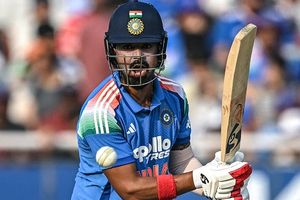
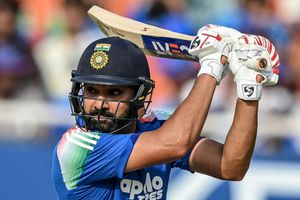
With heavy spotlight on national Team India regulars, Rishabh Pant captained Rest of India while Sarfaraz Khan held down the middle order. However, neither star could make a defining statistical contribution with the bat during the match.
Rishabh Pant: Leading the side, Pant was under the scanner in his return to red-ball leadership. In the first innings, Pant fell cheaply on 10 as Umar Nazir Mir exploited a tight line outside off stump. While his tactical bowling changes and aggressive field placements in the fourth innings proved decisive, Pant was unable to post a major individual score across both innings, notching just 8 in the latter essay.
Sarfaraz Khan: Sarfaraz faced similar struggles against J&K’s discipline. Dismissed by Umar Nazir Mir in the first essay at 45, Sarfaraz was unable to construct one of his trademark big centuries to bail RoI out of trouble when the top order tottered early on. But the worse was yet to come as he recorded a five-ball duck in the second innings.
Despite their quiet outings with the bat, their tactical presence and experience kept Rest of India focused through the mid-game deficit.
Second Innings Fightback: Smaran’s ton and top-order grit
Facing a 41-run deficit, Rest of India required a disciplined batting performance in their second turn at the crease. Opening batter Sanat Sangwan set the foundation with a solid 55, absorbing the initial seam movement.
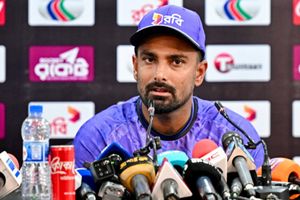
The defining turn of the match came through Smaran Ravichandran, who constructed a brilliant 135 off 153. Smaran countered J&K’s spinners Sahil Lotra (3/71) and Sunil Kumar (3/56) with crisp footwork and sweepless authority. His hundred pushed Rest of India’s second-innings total to 319 in 99.5 overs, setting Jammu & Kashmir a stiff target of 279 runs on a deteriorating surface.
While the batters provided a target to defend, it was Rest of India’s triumvirate of fast bowlers who truly tore the game open.
Mukesh Choudhary’s first-innings lifeline
Left-arm pacer Mukesh Choudhary kept Rest of India in the contest during J&K’s first innings. Choudhary relentlessly targeted the stumps and generated dynamic swing, finishing with figures of 5/78 in 19 overs. His five-wicket haul prevented J&K from building a massive, game-ending lead.
Akash Deep’s dual-innings precision
Akash Deep proved to be the ideal bridge between accuracy and pace across both innings.
In the first innings, Akash Deep picked up 3/43, breaking crucial partnerships when J&K looked set to cross the 300-run mark.
In the second innings, he provided the lethal pairing alongside Mukesh Kumar, snaring 3/25 in 8 overs to wipe out J&K’s middle and lower order.
Mukesh Kumar’s fourth-innings destruction
Chasing 279, Jammu & Kashmir started steadily at 89/3 and looked comfortably placed to fight out a draw or make a tilt at the target. Enter Mukesh Kumar. In a devastating spell of seam bowling on Day 4, Bengal pacer Mukesh Kumar ripped through J&K’s batting unit. Finding immaculate length and late deviation off the seam, Mukesh took 6 wickets for 33 runs, including a staggering window where he took three wickets in four balls. J&K collapsed from 89/3 to 111 all out in a matter of minutes.
Rest of India’s 167-run victory underscored their pacers' supreme skill set on a day when conditions demanded high-level accuracy. Between Mukesh Kumar, Akash Deep, and Mukesh Choudhary, the pace trio accounted for 17 of the 20 Jammu & Kashmir wickets to fall in the match.
While Jammu & Kashmir demonstrated why they won the Ranji Trophy through strong performances by Dogra, Samad, and Muzaffar, Rest of India’s resilience and fast-bowling pedigree proved too formidable in the final session. The win sealed another Irani Cup title for Rest of India, capping off a red-ball spectacle in Srinagar.
All about Irani Cup and its history?
The Irani Cup (officially the Z.R. Irani Trophy) is a premier first-class cricket tournament in India's domestic calendar. Organised annually by the Board of Control for Cricket in India (BCCI), it features a traditional five-day red-ball clash between the reigning Ranji Trophy champions and a Rest of India (RoI) squad, a team comprising top performers across the rest of the domestic circuit. The tournament made its debut in the 1959–60 season to commemorate the silver jubilee (25th anniversary) of the Ranji Trophy. It was named in honor of Zal R. Irani, a prominent cricket administrator who served as the treasurer and president of the BCCI between 1928 and 1970. What began as a one-off anniversary fixture became a permanent fixture on the Indian cricket calendar.
The Rest of India team is the most successful side in the competition's history, securing over 30 titles. Among state teams, Mumbai leads with 12 victories.
ADVERTISEMENT