

 Home
Home


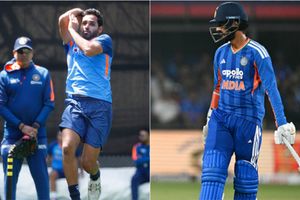
India’s home white-ball assignment against West Indies has exposed a gaping vulnerability in their bowling. What was expected to be a routine domestic series has instead turned into a punishing reality check for the Indian bowling unit, as high-scoring thrillers and boundary-laden powerplays have repeatedly put the hosts on the back foot. Facing sharp scrutiny, India’s bowling coach Morne Morkel finally addressed the team's ongoing bowling plight, offering a candid assessment of the underlying issues while highlighting young pacer Prince Yadav as a rare ray of light amidst the chaos.
ADVERTISEMENT
Morne Morkel on India’s bowling concerns in West Indies series
Throughout the ongoing T20I series, Indian bowlers have found themselves relentlessly taken to the cleaners by a powerful West Indian batting lineup. The fundamental concern stems from an inability to apply pressure during the middle overs and stem the flow of runs in the death overs.
In match after match, opposition batters have breached the 200-run mark with ease. The second T20I in Ranchi saw West Indies comfortably hunt down India’s total of 249/5, reaching 252/4 with nine balls to spare. In the third T20I at Indore, India conceded 209/7 while defending 223. The fourth T20I in Hyderabad brought more of the same, as West Indies piled up 247/3—powered by Shai Hope’s blistering 102—and restricted India to win by 24 runs. With the last six innings in the series yielding totals consistently exceeding 200, the bowling unit’s lack of execution under pressure has become impossible to ignore.
Leaking Runs: Key bowlers under the scanner
The numbers paint a stark picture for India’s frontline pace and spin options, who have struggled to find consistency across flat tracks:
Mayank Yadav: The speedster’s raw pace has often backfired on fast, true surfaces. In the fourth T20I at Hyderabad, Mayank went wicketless while leaking 52 runs in his 4 overs at an alarming economy rate of 13.00.
Arshdeep Singh: Expected to lead the pace attack, the left-arm seamer has endured a volatile series. In the fourth T20I, Arshdeep conceded 52 runs in his 4 overs for just 1 wicket (economy of 13.00), leaving the attack without an early breakthrough or death-over containment.
Axar Patel & Nitish Kumar Reddy: The all-rounders haven't provided control either. Axar went for 45 runs in 4 overs (11.25 economy) in the fourth game, while Nitish conceded 39 runs off 3 overs (13.00 economy).
Looking spineless without Jasprit Bumrah
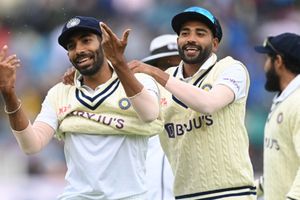
The stark contrast between India’s bowling unit with and without Jasprit Bumrah has been laid bare. In Bumrah’s absence, the attack appears devoid of leadership, tactical variation, and a go-to option when the opposition goes on the rampage.
Without Bumrah’s pinpoint yorkers and deceptive change of pace at the death, young and inexperienced pacers have looked flustered, frequently missing their lengths and straying onto the pads or bowling hittable slot balls.
The Real Problem Behind India’s Bowling Woes
Addressing the media, Morkel pinpointed the exact tactical and execution flaws haunting the squad. The core issue is not a lack of talent or raw pace, but a failure in decision-making under intense pressure. Morkel admitted that bowlers are failing to read conditions quickly and are reverting to predictable lines when attacked.
“It’s tough to operate in these conditions. It’s tricky especially when there’s a lot of dew around, and especially with the way the West Indies take the game on. In the past you would say, ‘Ok, that will give opportunities to take wickets’. But mistimed shots still go for sixes. We can just make sure every ball is the best ball we bowl. What we have not been good at is that we have changed things too quickly at times. We have to see if it was about execution or a good shot. But you can have all the plans in modern cricket, and players still adapt quite quickly,” Morkel said in the pre-match press conference.
Prince Yadav Impresses Morkel
Amidst the bowling struggles, young Delhi and Lucknow Super Giants pacer Prince Yadav has earned high praise from the bowling coach. Having worked with Prince previously, Morkel highlighted the youngster's work ethic and composure under fire.
Prince delivered crucial death-over overs in Indore during the 3rd T20I, conceding just 20 runs in two high-stakes overs to secure India's 14-run win. He also chipped in with a vital six-ball 13 cameo with the bat. In the 4th T20I, Prince was India’s most economical bowler, recording figures of 1/36 in 4 overs (9.00 economy) on a night where every other pacer conceded over 13 an over.
"It has been a great learning for our bowling group. Prince Yadav, who came into the squad, has done really well in executing his skills. He's a guy that keeps it very simple. He understands his strengths, and he sticks to that. So, yeah, I think for us, it's more sort of having those conversations in the group and learning from each other, understanding each other's bowling," Morkel said, praising the youngster's ability to stick to his plans and bowl effective death yorkers when others struggled.
Morkel on Arshdeep Singh and recall of Bhuvneshwar Kumar
The injury desk brought further complications ahead of the final T20I in Bengaluru. Left-arm pacer Arshdeep Singh sustained a blow to his bowling shoulder during the fourth match. Morkel expressed hope regarding Arshdeep's recovery, acknowledging his role as a vital cog in India’s short-format setup while stressing the need for better consistency in his execution.
To cover for Arshdeep’s injury, veteran swing bowler Bhuvneshwar Kumar was added to the squad for the fifth T20I. Commenting on Bhuvneshwar’s sudden inclusion, Morkel welcomed the experience he brings to a group that has struggled for powerplay control and death-over poise. However, experts and former players have pointed out that recalling a veteran as cover highlights the lack of depth among the current pool of young fast bowlers when injuries strike.
“Arshdeep took a blow on the shoulder; he is recovering well. He is definitely not ruled out, still available, they will make a call at some stage," Morkel further stated.
“On Bhuvi, very excited to have him back in the mix. He has done really well for RCB here. I think his experience will add a lot of value to a youngish sort of bowling attack. Very excited to have him,” he concluded.
The Looming Shadow of ODI World Cup 2027
The bowling concerns are far from isolated to T20Is. In the preceding ODI series against West Indies, Indian bowlers were similarly pushed to the limits. In the 2nd ODI at Guwahati, India surrendered 405 runs, and in the 3rd ODI at Tira, the Caribbean side successfully chased down 352 runs to claim a 5-wicket victory.
With the 2027 ICC ODI World Cup fast approaching, these defensive frailties serve as a major red flag. A team aspiring to win a world title cannot rely solely on its batting line-up to chase down 350-plus targets or out-score opposition attacks every game.
ADVERTISEMENT