

 Home
Home

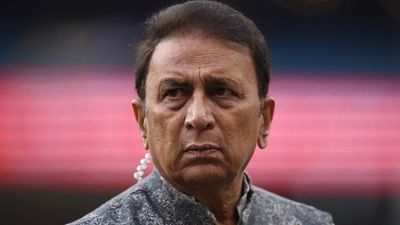
Cricketing legend Sunil Gavaskar has taken an indirect swipe at English commentator Nasser Hussain over his comments on the Pakistan boycott issue, calling such views “jaundiced” and rooted in old power thinking.
ADVERTISEMENT
Hussain, speaking on a Sky Sports show, said he admired Bangladesh for “sticking to their guns” in support of Mustafizur Rahman after the bowler was dropped from the IPL, and also praised Pakistan for backing Bangladesh. He accused the ICC of double standards, saying the board would have quickly moved matches if India had raised similar concerns. Hussain also urged the BCCI to understand the responsibility that comes with its financial strength and work towards a more balanced global game.
Without naming Hussain directly, Gavaskar responded strongly in his Sportstar column. He wrote that some voices from traditional cricketing powers have never been comfortable with India replacing them as the centre of influence in world cricket. According to Gavaskar, these critics were quick to question whether the ICC would have acted differently if India had refused to play in a particular country.
Gavaskar pointed out that India had already refused to tour Pakistan for the Champions Trophy last year, after which the ICC arranged India’s matches at a neutral venue in the UAE. He explained that India had informed the ICC well in advance, even before the draw was made, and stressed that no Indian government would allow its players to tour Pakistan due to security concerns.
The former opener said double standards have always existed in international cricket. He recalled how Sri Lanka returned to play in Pakistan after the 2009 terror attack, even though those responsible were never caught and Pakistan continued to blame “non-state actors” for the violence.
Gavaskar also mentioned how Australia chose not to play in Sri Lanka during the 1996 World Cup because of security worries, while England skipped a tour of Zimbabwe in 2003 for political reasons without facing any serious punishment. According to him, the ICC has often shielded powerful cricket boards and presented bias as principle, whether in umpiring decisions, pitch-related disputes, or voting matters.
ADVERTISEMENT