

 Home
Home

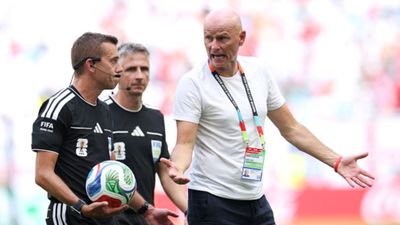
Norway head coach Stale Solbakken has disclosed what referee Clement Turpin told him following the controversial equaliser scored by Jude Bellingham during their FIFA World Cup 2026 quarter-final clash against England.
ADVERTISEMENT
The incident sparked debate after Norwegian players claimed the ball had struck an overhead spidercam wire in the build-up, an occurrence that could have led to play being stopped under the IFAB Laws of the Game.
Also Read: WATCH: Emotional Erling Haaland walks off after Norway’s FIFA World Cup exit
Stale Solbakken shares referee's explanation after controversial goal
Bellingham's equaliser early in the second half came under scrutiny after Norway argued that goalkeeper Ørjan Nyland's goal kick had changed direction after making contact with one of the overhead wires above the pitch.
Speaking after the match, Solbakken revealed that referee Turpin explained he had not personally seen the incident and had received no communication suggesting the ball had touched the wire.
"He said that he didn't see it himself and that he didn't get any message that it actually happened."
The Norway boss added that the referee informed him he could not overturn the decision because FIFA's review found no evidence of contact. Solbakken, however, maintained that everyone near the Norwegian bench believed the ball had clearly struck the overhead cable, calling it a bizarre moment that ultimately worked against his side.
Despite disagreeing with the decision, the Norwegian coach refused to dwell on the controversy, praising his players for their efforts throughout the tournament and acknowledging that such incidents are sometimes part of football.
FIFA explains why England's goal was allowed
Following the controversy, FIFA released an official statement explaining why Bellingham's goal stood despite Norway's protests.
According to football's governing body, data from the Connected Ball technology showed no indication that the ball made contact with the overhead spidercam wire before England's equaliser. FIFA stated that the ball's internal sensor registered no "heartbeat" spike while it was airborne, leading officials to conclude there was no evidence that its trajectory had been altered.
Under the IFAB Laws of the Game, play would have been stopped and restarted with a dropped ball had the ball been confirmed to have touched an overhead fixture. Since no such evidence was found, the goal was allowed to stand as England went on to secure victory and book their place in the FIFA World Cup 2026 semi-finals.
ADVERTISEMENT