

 Home
Home

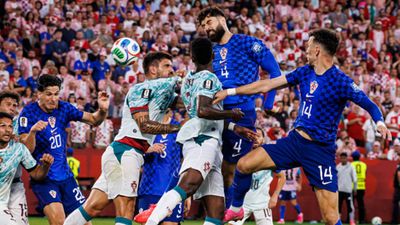
FIFA has officially explained the controversial VAR decision that denied Croatia a dramatic extra-time equaliser against Portugal in their FIFA World Cup 2026 Round of 32 clash.
ADVERTISEMENT
The incident sparked widespread debate after Josko Gvardiol thought he had rescued Croatia in the 103rd minute, only for the goal to be ruled out following a lengthy VAR review. FIFA has now clarified that the decision was backed by data generated through the tournament's Connected Ball Technology.
Also Read: Mohamed Salah injury update: Will Egyptian talisman return in time for Australia clash?
FIFA explains why Croatia's late goal was disallowed
Croatia looked set to force the match to penalties after Gvardiol found the back of the net deep into extra time.
However, Norwegian referee Espen Eskas was instructed to review the incident after VAR flagged a possible offside in the build-up involving Igor Matanovic and Mario Pasalic.
Replays initially appeared inconclusive over whether Matanovic had made contact with the cross before the ball reached Pasalic, whose subsequent assist allowed Gvardiol to score.
FIFA later confirmed that the decision was made using Connected Ball Technology, with sensors inside the official Adidas Trionda match ball detecting a touch from Matanovic. As a result, Pasalic was judged to have received the ball from an offside position, leading to the goal being correctly disallowed.
According to FIFA, the Integrated Measurement Unit (IMU) sensors inside the ball are capable of registering even the slightest contact, providing officials with precise data to assist VAR in making accurate offside decisions.
"According to the data provided by Connected Ball Technology housed within the Adidas ball Trionda, the official match ball of the FIFA World Cup, it was proven that contact was made by Croatia's Igor Matanovic in the build up to the goal against Portugal, allowing the referee to correctly determine offside and disallow the goal," FIFA wrote on their X.
Portugal advances after a dramatic World Cup battle
The decision proved decisive as Portugal secured a dramatic 2-1 victory to book their place in the Round of 16.
Croatia had taken the lead through Ivan Perisic before Cristiano Ronaldo equalised from the penalty spot, scoring his first-ever FIFA World Cup knockout-stage goal.
Roberto Martínez's side then completed the turnaround in stoppage time when substitute Goncalo Ramos found the winner, ending Croatia's World Cup campaign despite their spirited performance.
While the ruling generated significant controversy among fans, FIFA's explanation has highlighted the growing role of technology in ensuring greater accuracy during football's biggest tournament.
ADVERTISEMENT