

 Home
Home
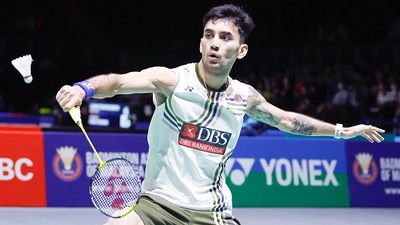
India's ace shuttler Lakshya Sen has rolled into the India Open Super 750 quarterfinal in New Delhi. The 2021 World Championships bronze medalist displayed a masterclass in tactical discipline and composure during his second-round clash against Japan’s Kenta Nishimoto. After a tightly contested first game, Sen dominated the second to secure a 21-19, 21-11 victory, booking his place in the quarterfinals at the Indira Gandhi Indoor Stadium.
Lakshya Sen marches into India Open quarterfinals
While Sen advanced, it was a somber day for the rest of the Indian contingent. Veterans Kidambi Srikanth and HS Prannoy were both knocked out of the tournament, despite putting up spirited performances in their respective matches. Their exits left the home crowd pinning their singles hopes entirely on Sen as the competition moves into its business end.
The most unexpected blow, however, came in the men’s doubles. The top-seeded duo of Satwiksairaj Rankireddy and Chirag Shetty, widely considered favorites for the gold, suffered a grueling second-round defeat. In a marathon three-game battle that kept fans on the edge of their seats, the Indian pair ultimately fell to Japan's Hiroki Midorikawa and Kyohei Yamashita with a heartbreaking scoreline of 27-25, 21-23, 19-21, marking a significant upset in the $950,000 tournament.
ALSO READ: Watch: Jasprit Bumrah gears up for NZ T20Is with 2-year-old son Angad by his side, Video goes viral
Kidambi Srikanth, HS Prannoy eliminated
The singles competition saw several hard-fought battles where Indian veterans pushed their opponents to the limit. Kidambi Srikanth displayed immense grit against France's Christo Popov, the reigning World Tour Finals champion. Despite a spirited comeback in the second game, Srikanth ultimately succumbed in a tense third-set decider, falling 21-14, 17-21, 21-17. Similarly, HS Prannoy engaged in a grueling three-game marathon against the eighth-seeded Loh Kean Yew. Although Prannoy managed to snatch the second game to stay alive, the Singaporean star pulled away in the final set to secure an 18-21, 21-19, 21-14 victory.
In the women’s singles draw, Malvika Bansod faced a formidable challenge in China’s fifth-seeded Han Yue. Bansod showed flashes of brilliance and kept the score close in the opening game, but the clinical precision of her opponent eventually proved too much. The Indian youngster bowed out with a straight-game defeat of 18-21, 15-21, ending her run in the tournament.
The most agonizing exit of the day occurred in the women’s doubles, where Treesa Jolly and Gayatri Gopichand were involved in an epic 84-minute encounter. Facing the seventh-seeded Chinese duo of Li Yijing and Luo Xumin, the Indians fought for every point in a match characterized by incredibly long rallies and narrow margins. Despite holding their ground in two deuce-settled games, Jolly and Gopichand narrowly lost the decider, exiting with a final score of 22-20, 22-24, 21-23.
In the opening stages of the match, Lakshya Sen appeared to struggle with his timing and depth, which allowed Kenta Nishimoto to dictate the tempo. The Japanese shuttler took full advantage of these early errors, building a commanding 16-11 lead by the mid-game interval. It seemed as though Sen was on the back foot, unable to find the rhythm necessary to penetrate Nishimoto’s defense.
ALSO READ: Watch USA pacer's aggressive celebration after knocking Vaibhav Sooryavanshi's stumps
However, trailing 14-18, Sen staged a remarkable comeback rooted in tactical discipline and sheer resilience. He began extending the rallies and retrieving shots with incredible intensity, frustrating his opponent and forcing a series of unforced errors. By reeling off five consecutive points, Sen completely swung the momentum in his favor, allowing him to snatch the first game at the very first opportunity.
The second game saw a shift in dominance as Sen noticeably raised his intensity. He dismantled Nishimoto’s game plan by intelligently mixing his pace, alternating between sharp half-smashes and cleverly disguised drop shots. This tactical variety denied the Japanese player any chance to settle into a rhythm, turning the set into a largely one-sided affair.
With his own defense remaining impenetrable and his shot selection growing more precise by the minute, Sen never allowed his opponent back into the contest. He clinicaly wrapped up the match in 50 minutes, proving his maturity as a world-class competitor and moving one step closer to the title.
ADVERTISEMENT