





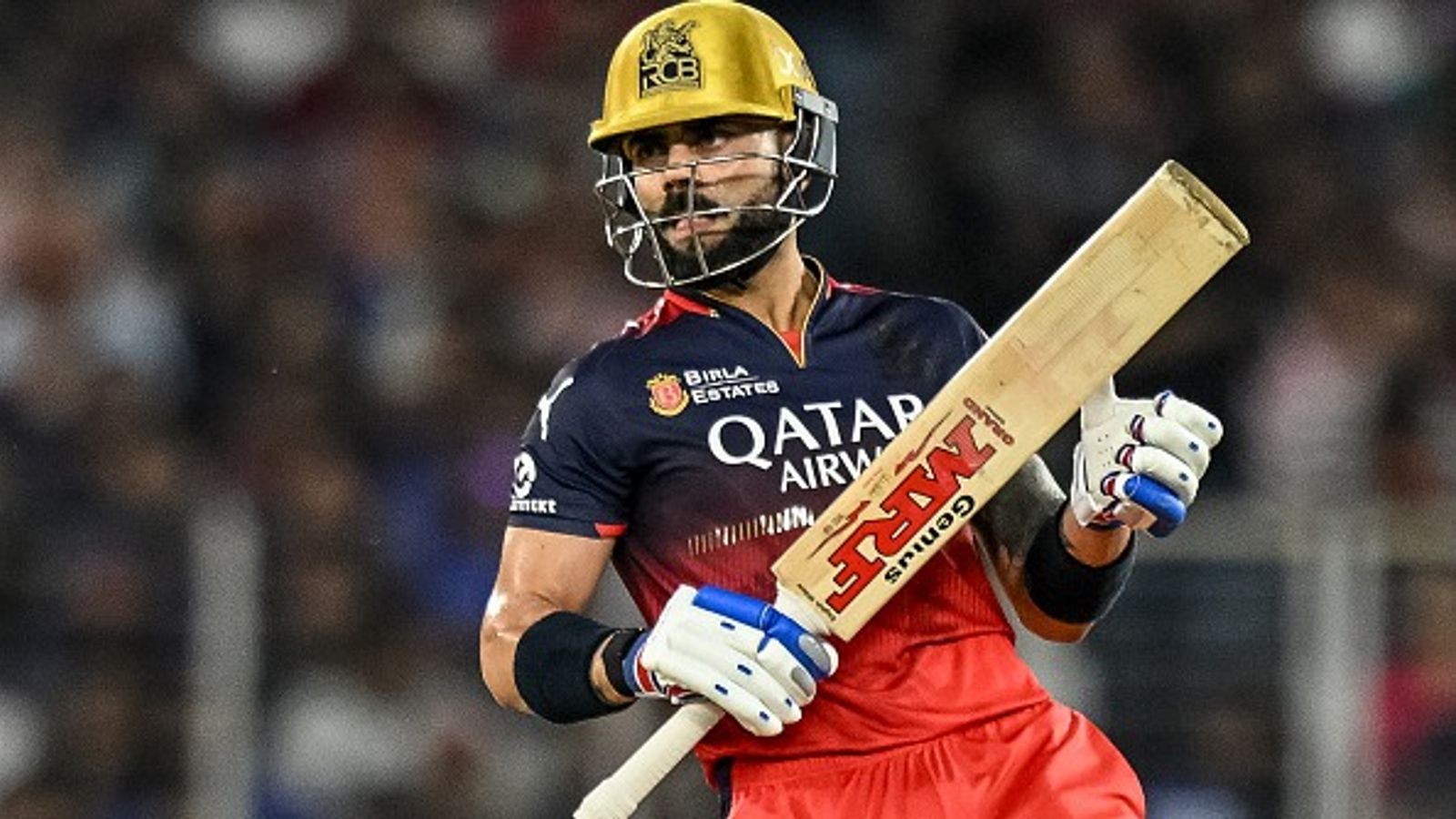
The Indian Premier League has crossed a monumental threshold, with its overall business enterprise valuation surging 11.4 per cent year-on-year to hit a record $20.6 billion. According to Houlihan Lokey's 2026 IPL Brand Valuation Study, the league's standalone brand value also grew 10.3 per cent to $4.3 billion, solidifying its trajectory alongside the world’s premier sports properties. Leading the franchise charge is Royal Challengers Bengaluru (RCB), which became the first team in IPL history to surpass the $300 million mark—rising 16 per cent over the past year to reach a market-leading $312 million.
IPL reaches new heights as RCB hits record $312M valuation
RCB’s landmark valuation caps off a historic year for the franchise, which recently changed hands in a record $1.78 billion transaction—the highest buyout figure ever seen in the league. These twin milestones signal a fundamental shift in the global sports market, where cricket is no longer evaluated as a seasonal tournament, but as an enduring entertainment asset. Investors are increasingly prioritizing franchises that can secure stable media rights, maintain year-round international fan bases, and seamlessly expand into broader media and lifestyle ventures.
The IPL's financial landscape continues to reach unprecedented heights, bolstered not only by RCB’s landmark buyout but also by the Mittal family and Adar Poonawalla acquiring the Rajasthan Royals at a reported $1.65 billion valuation. According to the report, these landmark transactions underscore deep global investor confidence in the league's durable business model—a system driven by centralized media rights, equitable revenue-sharing, and structured cost controls.
MI stand second at $264 million valuation
While RCB’s historic 2026 title win offered a marquee moment on the pitch, its position atop the valuation charts stems from deeper commercial fundamentals: a massive digital footprint, brand maturity, and an intensely loyal fan base. The franchise expanded its brand value by $43 million over the past year to reach $312 million, pulling further ahead of heavyweights like Mumbai Indians ($264 million), Kolkata Knight Riders ($245 million), and Chennai Super Kings ($244 million). Notably, CSK’s growth has tempered as the franchise manages its transition beyond MS Dhoni, proving how critical icon succession plans have become to enterprise value. Echoing this sentiment, RCB Co-Owner and Times Internet Chairman Satyan Gajwani highlighted that the franchise's passionate community remains its core commercial engine.
ALSO READ: Gulveer Singh becomes first Indian to win silver medal in men's 10,000m race in CWG history
A fundamental evolution in fan viewing habits is driving the IPL’s soaring market valuation, effectively turning digital platforms into the league’s primary arena. During the 2026 season, overall viewership expanded 7 per cent year-on-year to hit an unprecedented 1.06 billion screens, according to JioStar. This growth was spearheaded by Connected TV, which surged by 26 per cent even as traditional linear television ratings fell by 18.8 per cent. The sheer scale of this migration was evident right from launch, with the opening weekend alone drawing 515 million viewers and accumulating an astonishing 32.6 billion minutes of watch time.
This massive pivot toward digital streaming is reshaping the economic foundation of the tournament. With overall league revenues surpassing $1.8 billion for the season, the transition enables both broadcasters and franchises to move beyond traditional broadcasts. By leveraging precise digital metrics, they are unlocking highly targeted advertising partnerships and data-backed sponsorship models that maximize value far beyond the physical stadium.