





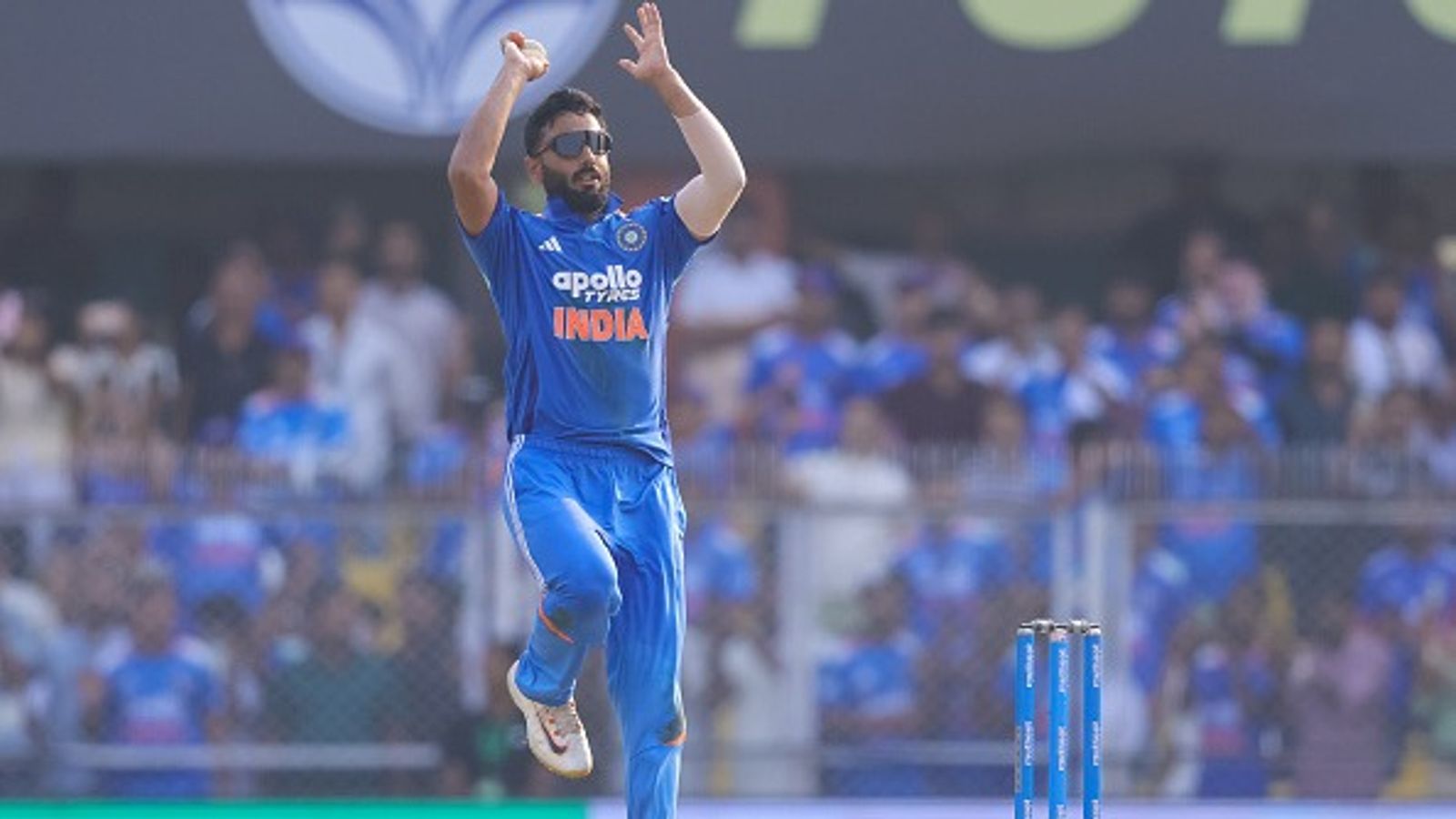
Ahead of the third and final ODI against the West Indies, Indian all-rounder Naman Dhir offered an honest assessment of the bowling unit's performance in the second match of the series in Guwahati. Despite India successfully chasing down a massive target to claim an unassailable 2-0 series lead, thanks to a spectacular, historic double-century by captain Shubman Gill, and a stellar ton by Rohit Sharma, the match highlighted major execution flaws in the bowling setup.
West Indies took full advantage of a flat batting surface to post a colossal 405/7 in their 50 overs, propelled by centuries from John Campbell (101), Shai Hope (104), and Amir Jangoo (114). Speaking ahead of the final game, Dhir admitted that while the batting unit came through in triumphant fashion, the bowling attack failed to execute simple, defensive, or wicket-taking strategies when under pressure.
We Leaked Runs: Naman Dhir’s honest assessment on India bowlers
Reflecting on the defensive breakdown during the second ODI, Dhir, during India's press conference ahead of third match in New Chandigarh, acknowledged that the bowlers strayed away from disciplined tactical execution.
“As a bowling unit, yes, we would like to do better and try to stop the West Indies to a lower total. If you see, that wicket was also good, and the ground’s dimensions on one side were small. Yes, we leaked more runs and could have gone with better plans. But bounce will be more in South Africa, and it will help the fast bowlers there,” Dhir said.
Dhir, who bowled 6.1 overs before experiencing cramps on the field, noted that learning to adapt in high-pressure situations remains a crucial growth area for the bowling unit. He emphasized the invaluable guidance he received from senior spin partner Ravindra Jadeja to keep bowling approaches uncomplicated:
"I have spoken to Jaddu bhai. He has given me simple plans to bowl according to the batsman. Like, I can bowl in an attacking manner if I have to get wickets, or if I have to contain the batsman, then I can have simple lines to bowl to them."
Bowler-by-Bowler statistical breakdown
The second ODI in Guwahati turned into an absolute nightmare for India’s bowling unit. A combination of disciplined West Indian striking, a belter of a pitch, and an early injury to seam-bowler Prasidh Krishna left India struggling to stem the flow of boundaries.
Here is how India's bowlers fared during the West Indies' 405/7 innings:
| Bowler | Overs | Runs Conceded | Wickets | Economy Rate | Key Highlights & Struggles |
| Gurnoor Brar | 10.0 | 96 | 2 | 9.60 | Bore the brunt of the death-overs onslaught, conceding heavily at nearly 10 runs per over despite taking two wickets. |
| Ravindra Jadeja | 10.0 | 75 | 2 | 7.50 | Targeted during the middle overs by the centurions, though picked up crucial late breakthroughs to slow down the scoring. |
| Kuldeep Yadav | 10.0 | 78 | 2 | 7.80 | Reached his milestone 200th ODI wicket, but proved unusually expensive on a pitch offering minimal spin assistance. |
| Naman Dhir | 6.1 | 48 | 0 | 7.78 | Took on additional bowling responsibilities following Prasidh's injury before leaving the field late due to cramps. |
| Prasidh Krishna | 5.0 | 45 | 1 | 9.00 | Bowled an expensive opening spell before pulling up abruptly due to a hamstring strain, leaving the team a bowler short. |
| Part-time Options | 8.5 | 63 | 0 | 7.13 | Used to fill in the missing overs following Prasidh's exit, leaking runs without creating genuine chances. |
Key takeaways ahead of 3rd ODI
Injury Management & Pace Depth: With Prasidh Krishna sidelined due to a hamstring strain, India’s pace department faces immediate selection challenges. Youngsters like Gurnoor Brar will need to show greater variation and discipline in the closing overs to avoid being targeted by aggressive batting lineups.
Tactical Execution Over Complexity: As highlighted by Naman Dhir, India's bowlers often tried too much on a surface that offered no assistance. Implementing simple, disciplined lines—particularly on small grounds or flat pitches—remains a top priority.
Balancing the Playing XI: With the 2027 ODI World Cup long-term preparations underway, India's management will treat the third ODI as a crucial opportunity to refine bowling plans under pressure rather than relying solely on individual batting heroics to chase down 400-plus totals.
Why India's bowling unit need to step up with ODI World Cup in mind?
As India builds towards the 2027 ODI World Cup in South Africa, Zimbabwe, and Namibia, a stark concern has emerged: while the batting lineup continues to post and chase massive totals, the bowling attack risks becoming the team's Achilles' heel.
India’s dominant run to the 2023 ODI World Cup final was anchored by a legendary bowling performance. During that tournament, Jasprit Bumrah (20 wickets at 18.65), Mohammed Shami (24 wickets at 10.70), and Mohammed Siraj (14 wickets at 33.50) consistently dismantled opposition lineups, bowling teams out under low scores. However, recent white-ball outings reveal a worrying drop in defensive capability and wicket-taking consistency.
| Recent ODI Performance | Match Result | Bowling Performance Highlights |
| 2nd ODI vs West Indies (2026) | Won by 2 wickets | Conceded 405/7 in 50 overs (Gurnoor Brar 2/96, Kuldeep Yadav 2/78, Ravindra Jadeja 2/75) |
| 1st ODI vs West Indies (2026) | Won by 5 wickets | Conceded 312/8 in 50 overs (Pace unit went at 7.20+ runs per over) |
| 3rd ODI vs Sri Lanka (2024) | Lost by 110 runs |
Conceded 248/7 & skittled for 138 (Spinners lacked middle-over control)
|
In the high-scoring second ODI against the West Indies, Indian bowlers leaked 405/7 at an economy rate of 8.10. While skipper Shubman Gill’s historic double-century rescued the victory, relying solely on heavy runs is an unsustainable blueprint for World Cup success. Overseas pitches in South Africa offer pace and bounce, but also true carry that punishes wayward lengths.
Without a disciplined, razor-sharp bowling unit capable of taking wickets in middle overs and holding lines under pressure at the death, batting alone will not suffice. For India to lift the 2027 crown, the bowling corps must rediscover the lethal precision that defined their 2023 campaign.
India's ODI World Cup 2027 schedule
India is set to open its 2027 ICC ODI World Cup journey with a high-stakes encounter against Australia on October 7 in Cape Town, followed immediately by a blockbuster showdown against arch-rivals Pakistan three days later in Johannesburg. The Men in Blue will keep their group-stage momentum going in Tshwane when they meet Afghanistan on October 14, before traveling to Bloemfontein for a matchup against Qualifier A on October 17. India's opening round concludes on October 24 with a fixture against co-hosts Zimbabwe in Victoria Falls.
Should India advance into the Super 7 stage, a demanding run of fixtures lies ahead. Their second-round campaign would kick off with another high-voltage battle against Australia in Victoria Falls on October 28, followed by a showdown with host nation South Africa in Johannesburg on October 31. The Indian team would then head to Paarl to take on New Zealand on November 4, before wrapping up their Super 7 commitments against Sri Lanka in Durban on November 14.