

 Home
Home

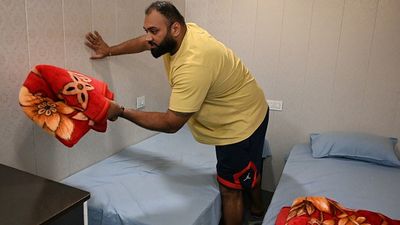
To help Indian athletes adapt to unconventional living conditions ahead of the Asian Games in Japan, the Sports Authority of India (SAI) has introduced a novel trial run at its elite training facilities in Bengaluru and Patiala. Athletes are trading traditional dormitories for cramped, purpose-built shipping containers equipped with little more than a six-foot bed and basic amenities. Rather than a test of endurance, this setup serves as a practical rehearsal to ensure the tight quarters do not disrupt their focus during the quadrennial event.
ADVERTISEMENT
SAI recreates container rooms to acclimatise Indian athletes for Asian Games
Because the upcoming Aichi-Nagoya Games will forego a traditional games village in favor of modular cabins and cruise ships, sports administrators are taking proactive measures to eliminate potential culture shock. At SAI centers, competitors rotate through overnight stays in these mock-up container units, stepping straight from their compact living quarters into their daily training schedules. By turning the strange living setup into a routine habit, officials hope the accommodation will feel completely natural long before match day arrives.
ALSO READ: Why BCCI is insisting on Ranji Trophy participation for Jasprit Bumrah before NZ tour? Know here
The simulation strategy was set in motion as soon as host organizers revealed their non-traditional housing plans two years ago. Highlighting the initiative, SAI Deputy Director General Vineet Kumar shared with reporters at NSNIS Patiala that the Sports Ministry envisioned these living pods as simulation tools. By acclimating athletes to confined spaces beforehand, the initiative aims to prevent claustrophobia or sudden stress, allowing the Indian contingent to step onto the big stage entirely unbothered by their surroundings.
Tajinderpal Singh Toor has his say on this unique psychological prep
Accustomed to spacious living quarters with ample room to store their heavy sporting gear, athletes face a noticeable adjustment when stepping into these compact spaces. However, two-time Asian Games shot put champion Tajinderpal Singh Toor considers the preliminary trial a crucial advantage. Standing at six feet four inches, the double gold medalist told PTI that while the exterior appears tiny, the interior is surprisingly comfortable and fully equipped. He emphasized that experiencing the cramped layout in advance prevents the distraction of adjusting during the first few days in Japan.
ALSO READ: India to play T20I match against Japan for first time ever on this date, know all details here
To ensure absolute accuracy, a delegation from the Ministry and SAI conducted an on-site reconnaissance mission to Japan. Based on their findings regarding the precise room dimensions and layouts expected at the Games, two exact replica units—one designated for male athletes and the other for female athletes—were constructed at the Patiala facility.
ADVERTISEMENT