

 Home
Home
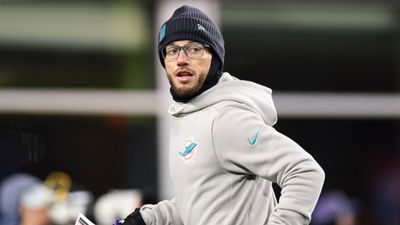
Miami Dolphins’ decision to move on from Mike McDaniel after four seasons was not driven by panic or a single disappointing year.
Instead, it stemmed from a calculated shift in opportunity, timing, and ceiling—one that forced the franchise to reassess whether stability was enough in an AFC that continues to evolve rapidly.
For much of the early 2026 offseason, McDaniel appeared safe. Miami was navigating organizational change, including a front-office reset and uncertainty surrounding Tua Tagovailoa’s future.
With Tyreek Hill nearing his mid-30s and coming off a major knee injury, the Dolphins were staring at a potential transitional year, one where continuity at head coach made sense.
That outlook changed abruptly when the NFL coaching market expanded
The unexpected availability of proven head coaches reshaped Miami’s options. Instead of choosing from a thin pool of untested coordinators or high-risk hires, Miami Dolphins suddenly had access to veteran leaders with established postseason credibility.
That shift reframed McDaniel’s tenure not as a foundation to build upon, but as a benchmark the franchise felt it could surpass.
McDaniel’s body of work was undeniably strong on the surface. He engineered one of the league’s most efficient offenses and helped Tagovailoa post elite passing metrics over multiple seasons.
Miami consistently ranked among the NFL’s most explosive teams, leaning heavily on speed, spacing, and timing to overwhelm defenses during the regular season.
The problem was sustainability
Miami repeatedly faded when the stakes rose. Late-season collapses, cold-weather struggles, and playoff shortcomings became a pattern rather than an exception.
While injuries played a role—most notably Tagovailoa’s availability in earlier seasons and Hill’s absence later—those factors didn’t fully explain the team’s inability to adjust when opponents closed the gap.
Roster construction also became a limiting factor. Aggressive trades to assemble a win-now core cost Miami valuable draft capital, leaving little depth behind its stars.
When injuries mounted, Miami Dolphins lacked the defensive consistency and offensive adaptability needed to remain competitive.
The result was a defense that steadily regressed and an offense that became increasingly dependent on short-area efficiency rather than game-breaking plays.
Ultimately, McDaniel fell into the league’s most difficult category: a coach good enough to raise the floor, but not one who convincingly raised the ceiling.
With ownership willing to be patient, an attractive market for free agents, and a draft rich in early selections, Miami chose ambition over familiarity.
Miami Dolphins are betting that a more seasoned voice can finally convert potential into postseason relevance—something that eluded McDaniel despite four years at the helm.
ADVERTISEMENT