

 Home
Home

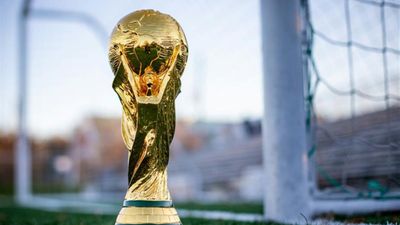
Just days before the FIFA World Cup, several changes have been made to football's rules and regulations. These changes will come into effect from the 2026-27 season and will also apply during the World Cup.
ADVERTISEMENT
The International Football Association Board (IFAB) has green-lit the new rules and confirmed that they will be implemented from June 11, when the competition begins across the United States, Mexico, and Canada. The changes have been introduced to tackle discrimination, curb time-wasting tactics, and improve the tempo of the game.
What changes have been made?
Using a hand to cover the mouth while using offensive language
As per the new guidelines, a player involved in a fight who intentionally covers their mouth with hand, arm or shirt while speaking could be shown a red card. The measures came into force after allegations that Benfica's Gianluca Prestianni was found guilty in making discriminatory remarks towards Vinicius Junior. Later, Prestianni was handed a six-game ban.
Leaving the field in protest
Players who leave the pitch while protesting against the referee's decision will be given a straight red card according to the new rules. The rules will also apply to any team officials who encourage players to leave the pitch.
On the top of it, if a team causes a match to be abandoned by leaving the pitch, they will be declared as the loser.
Throw-in and Goal kick countdown
Referees will now start a five-second countdown by raising their hand during throw-ins and goal kicks. If the ball is not put back into play before the countdown expires, possession will be given to the opposition team.
For throw-ins, the opposition will get the throw-in if the restart is delayed beyond the countdown. Similarly, if a team fails to take a goal kick within the time, the opponent team will be awarded a corner kick.
Protocol for substitution
As per the new guidelines, a player being replaced must exit the pitch within the 10 seconds countdown and exit through the nearest point on the boundary line.
If the outgoing player fails to exit the field within the countdown within the allotted time, the substitute will not be allowed to enter quickly. Instead, the incoming layer can only enter the field after one minute has passed after the restart of play. The measure has been introduced to restrict the time-wasting tactics.
On-field treatment
If a player receives medical treatment on the field, they will be needing to stay off the pitch for one minute after play restarts before being allowed to make a return.
However, this rule will not be applied in cases involving an injured goalkeeper or when two players are injured as an outcome of a collision. These exceptions are intended to ensure player safety while minimizing unnecessary disturbances in the game.
Protocol VAR check
Under the new guidelines, VAR may no longer be used in certain situations, including:
- When a player is wrongly shown a red card instead of a yellow card.
- Cases of mistaken identity, where a yellow or red card is issued to the wrong player for an offense committed by someone else.
- Situations involving the incorrect award of a corner kick.
Drinks break
A three-minute drinks break will be given once in each half of the game. The break is set to take place around the midway point of each half, approximately the 22nd minute.
Referees will have the discretion to determine the exact duration of the break. For instance, if a player endures an injury close to the 20th minute , the referee may choose to combine the stoppage with the scheduled drinks break to reduce disruptions to the flow of the match.
Goalkeeper injury rule
If a goalkeeper gets medical treatment on the field, players from both sides will be allowed to stay on the pitch during the stoppage. They will not be needing to leave the field while the goalkeeper is being attended to.
This exception identifies the unique role of goalkeepers and helps to ensure that treatment can be given without causing unnecessary disruptions to the game.
ADVERTISEMENT