

 Home
Home

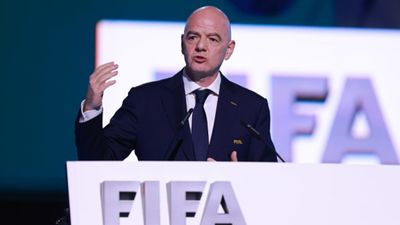
A major uncertainty looms over the broadcast of the FIFA World Cup 2026 in two of the world’s biggest markets, with India now at the center of a growing rights standoff. With the tournament just weeks away, a Reliance-Disney joint venture led by billionaire Mukesh Ambani has emerged with a $20 million offer, significantly below FIFA’s expectations.
ADVERTISEMENT
The development has intensified concerns around accessibility for millions of football fans, as negotiations remain unresolved. The absence of a finalized deal at this stage marks a rare situation, especially considering the scale and global appeal of the tournament.
Also Read: Manchester United secure Champions League return with Premier League triumph vs Liverpool
Reliance-Disney’s offer signals strategic stance
The Reliance-Disney combine’s $20 million bid reflects a calculated approach amid shifting market dynamics. FIFA had initially sought close to $100 million for the 2026 and 2030 World Cup rights, later reducing expectations, but the current offer still falls well short of its valuation.
"Discussions in China and India regarding the sale of media rights for the FIFA World Cup 2026 are ongoing and must remain confidential at this stage," FIFA said in a statement.
Sony, another major player in India’s broadcast landscape, reportedly held discussions but ultimately chose not to submit a bid, citing lack of commercial viability.
The reluctance from broadcasters underscores concerns around viewership, especially with the tournament being hosted across the United States, Canada, and Mexico — leading to late-night match timings for Indian audiences.
The Reliance-Disney venture, having already invested heavily in cricket broadcasting, appears to be leveraging its market influence while factoring in potential returns.
Global broadcast gap raises concerns
The delay is not limited to India. China, which contributed nearly half of global digital World Cup viewership in 2022, also remains without a confirmed broadcaster. This dual-market uncertainty is unusual, given that FIFA has already secured agreements in over 175 territories worldwide.
Historically, deals in both India and China were finalized well in advance, allowing broadcasters to roll out promotional campaigns and infrastructure preparations. With the 2026 World Cup set to begin on June 11, the narrowing timeline adds urgency to ongoing negotiations.
The lack of clarity raises questions about how FIFA and broadcasters will bridge the gap in time, especially in markets that collectively account for a significant share of global audience reach.
ADVERTISEMENT